
Sony Patents a Method to Build 3D Maps From Photos in Smaller Chunks
Sony is filing patents around a more efficient way to reconstruct 3D spaces from ordinary photographs, targeting one of the most computationally expensive steps in the process.
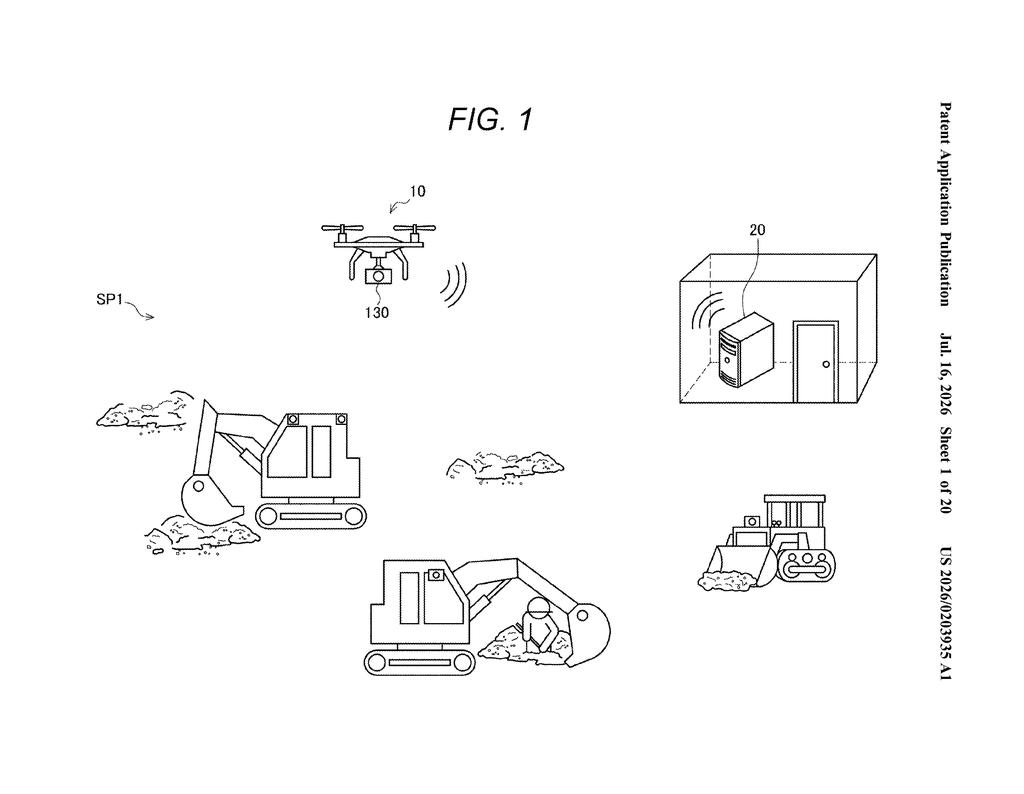
How Sony's photo-to-3D mapping system cuts the workload
Imagine you take dozens of photos of a room from different angles, and a computer tries to stitch them together into an accurate 3D model. That process, called Structure from Motion, is incredibly useful for everything from game design to robotics to AR headsets, but it's also very slow and processor-hungry.
The problem is that every photo has landmarks (called feature points) that need to be precisely located both in the flat 2D image and in the reconstructed 3D space. Getting those two coordinate systems to agree, across dozens or hundreds of photos, requires a lot of back-and-forth correction that can bog down even powerful machines.
Sony's patent describes a system that breaks that correction work into smaller batches, fixing errors in a rotating subset of data each pass rather than trying to handle everything at once. The goal is to reach the same accuracy with less total computing effort, which could make 3D reconstruction practical on devices that don't have a server farm sitting behind them.
How the batched correction loop refines 2D and 3D positions
The patent centers on a correction processing unit that iteratively refines two types of positional data:
- 2D position information: where a landmark pixel sits on a flat image
- 3D position information: where that same landmark sits in the reconstructed three-dimensional point cloud (a point cloud is essentially a 3D scatter plot made of thousands of coordinate dots)
Rather than running one giant optimization pass over all images and all feature points simultaneously, the system selects a subset of that data as the target for each correction round. Across multiple rounds, different subsets get refined, and the overall model gradually converges on an accurate 3D structure.
This approach is a variation on bundle adjustment, the standard math-heavy step in Structure from Motion (SfM) pipelines that aligns camera positions with 3D point positions. Full bundle adjustment on large datasets is notoriously expensive; batching it is a known strategy to reduce peak memory and CPU/GPU load without sacrificing final quality.
The patent doesn't specify the exact selection strategy for which data gets processed each round, which suggests Sony may be protecting the general framework rather than one specific algorithm.
What this means for 3D scanning and spatial computing
Structure from Motion is the backbone of a surprising number of real-world applications: AR and VR scene capture, autonomous vehicle mapping, drone surveying, and even smartphone camera features that reconstruct depth. Any reduction in the compute required to run it opens the door to doing that work on-device rather than in the cloud, which is faster and more private for the end user.
For Sony specifically, this kind of patent fits naturally with its camera hardware business, its PlayStation and XR ambitions, and its robotics work. Making 3D reconstruction more efficient is a building block, not a finished product, but patents like this often signal where a company is investing engineering attention before a product announcement arrives.
This is a solid but fairly narrow engineering patent covering an optimization to a well-known computer vision pipeline. The batched-processing idea isn't new to the academic literature, so the real question is whether Sony's specific implementation is distinctive enough to hold up. Still, it points toward a real priority: making 3D spatial computing cheaper to run, which matters a lot for the next generation of AR and robotics hardware.
There are more where this came from
We read every patent application Big Tech publishes and send you the ones worth knowing. Plain English, free, every week.
Want this weekly breakdown for a company we don't cover? Patentlyze Pro →
Be the first to weigh in