
Qualcomm Patents a System That Builds Driving Maps Directly Inside the Car
Self-driving cars need maps, but they also need to update those maps on the fly. Qualcomm's new patent describes a chip-level system that processes raw sensor data and converts it into structured map information in real time.
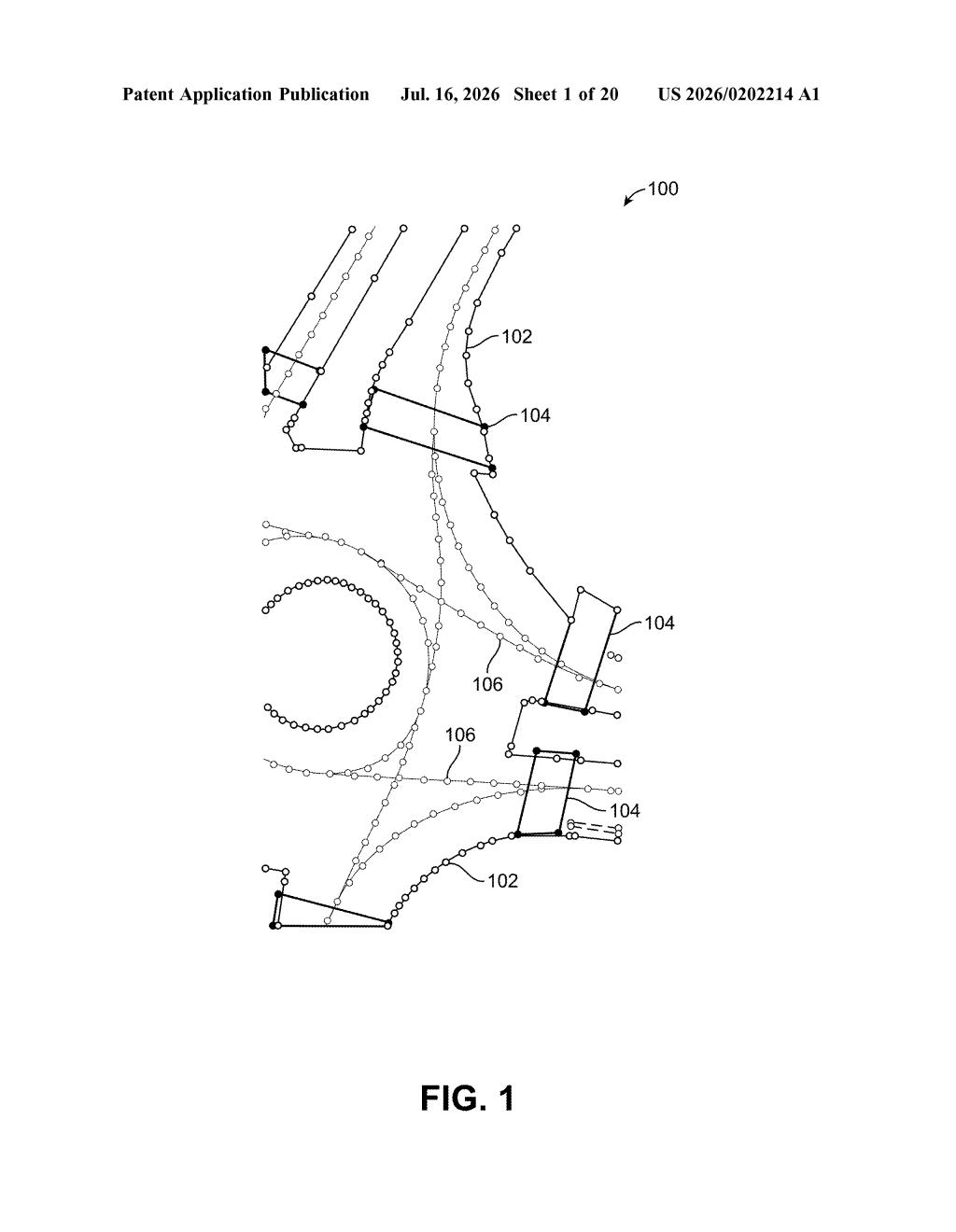
How Qualcomm turns sensor readings into a drivable map
Imagine your car's sensors are constantly scanning the road around you, picking up lane lines, curbs, parked cars, and road signs. Your car needs to turn all those raw measurements into something it can actually use to navigate. That's the problem this patent is trying to solve.
Qualcomm's approach takes those sensor readings, identifies the key objects in the scene, and then processes them through several encoding steps to produce a clean set of "representative points" that describe the environment in a structured way. Think of it like a translator that converts noisy sensor chatter into a precise, usable map.
The whole process is designed to run directly on the chip inside the vehicle, without needing to send data to a remote server. That matters for speed and reliability, especially when a car needs to react to something that wasn't on any pre-loaded map.
How the chip encodes points and vectors into map data
The system starts by taking perception data (readings from cameras, radar, or lidar sensors) and building a feature map, which is an internal representation of the environment as the vehicle currently sees it.
From that feature map, the processor picks out points representative of objects, such as the edges of a lane or the boundary of an obstacle. It then runs two separate encoding steps:
- Encoding the points themselves, so their positions are represented in a format the neural network can work with.
- Encoding the feature vectors at those point locations, which capture richer context about what kind of object is at each point.
Those two encoded representations are combined into a single set of features, which the system then uses to determine a smaller collection of representative points. These are a distilled, structured summary of what's in the environment. Finally, the system generates map data from those representative points, essentially producing a machine-readable map of the vehicle's immediate surroundings.
The patent is focused on the apparatus level, meaning Qualcomm is claiming the chip-based hardware that runs this pipeline, not just the software algorithm.
What this means for self-driving chips and real-time navigation
Qualcomm's automotive chip business, centered on its Snapdragon Ride platform, is in direct competition for contracts with automakers building next-generation driver-assistance and self-driving systems. A patent like this signals that Qualcomm is investing in the on-device map generation layer, not just raw sensor processing. If a car's chip can build its own local map in real time, it reduces dependence on pre-loaded HD maps, which are expensive to maintain and can quickly become outdated.
For you as a driver, the practical promise is a car that can handle roads it has never seen before, because it's building its own map of the environment as it drives. That's a meaningful step toward vehicles that can operate reliably in areas where cloud-connected HD maps don't exist.
This is solid, focused chip-level IP in an area where Qualcomm genuinely competes. It's not a flashy consumer-facing concept but rather the kind of foundational patent that matters when automakers are evaluating whose silicon to put in their next platform. Worth tracking as Qualcomm pushes deeper into autonomous driving hardware.
There are more where this came from
We read every patent application Big Tech publishes and send you the ones worth knowing. Plain English, free, every week.
Want this weekly breakdown for a company we don't cover? Patentlyze Pro →
Be the first to weigh in