
Qualcomm Patents a Way to Focus a Self-Driving Car's Attention on What Actually Matters
Self-driving cars generate enormous amounts of sensor data every second, but not all of it is equally important. Qualcomm's new patent describes a system that automatically narrows the car's attention to the areas that matter most, based on where the car is going and what its sensors can actually reach.
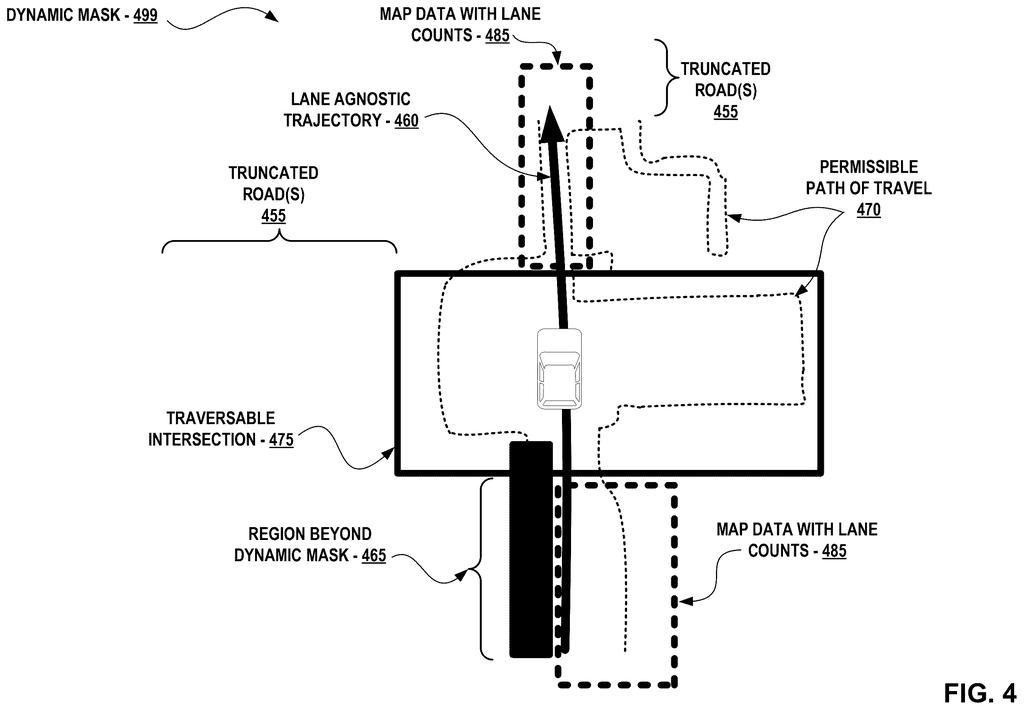
How Qualcomm's combined focus zone helps cars see better
Imagine you're driving and you instinctively focus more on the intersection you're about to enter than on the parking lot two blocks to your right. You're not ignoring the world around you, you're just prioritizing. That's roughly what this Qualcomm system does for a self-driving car.
The system calculates two zones: one based on where the car is predicted to drive next, and one based on the physical range of the car's cameras and sensors. It then combines those two zones into a single focus area. The car's perception software concentrates its analysis on that combined zone rather than treating every pixel of sensor data as equally important.
The practical effect is that the car spends its computing power on the parts of the scene where something is most likely to happen, or most likely to be detectable, rather than processing everything at equal intensity. That's a meaningful efficiency gain for systems that need to make split-second decisions.
… determine a first region of interest (ROI) based on a predicted trajectory of the vehicle through the scene; determine a second ROI for the vehicle based on a sensing range of the one or more sensors; merge the first ROI and the second ROI to generate a combined ROI; …
Translation: It figures out where the car is heading and what its sensors can see, then combines those zones.
How the two regions merge into one attention zone
The patent describes processing circuitry that handles two parallel calculations during a drive.
Region of Interest 1 (trajectory-based): The system predicts the vehicle's upcoming path through the scene, essentially asking "where is this car going?" The area along that predicted route becomes the first region of interest (ROI). Objects and events in that zone are most likely to affect vehicle decisions.
Region of Interest 2 (sensor-range-based): The system also maps out the physical sensing range of the car's onboard sensors (cameras, lidar, radar, and so on). This produces a second ROI that captures everything the sensors are actually capable of detecting reliably, rather than areas where data quality degrades at the edges.
- The two ROIs are then merged into a single combined zone.
- All downstream perception tasks (object detection, classification, scene analysis) are run against that combined zone.
- This reduces wasted compute on irrelevant or low-quality sensor data at the margins of the scene.
The system is designed to run at inference time, meaning it does this calculation live while the car is moving, not just during pre-trip planning.
The processing circuitry is configured to obtain sensor data from one or more sensors corresponding to a scene in the vicinity of a vehicle. The apparatus detects objects in the scene using the sensor data and determines a first region of interest (ROI) based on a predicted trajectory of the vehicle.
Translation: The computer gathers surrounding data and pinpoints important areas based on the car's path.
What this means for autonomous vehicle perception systems
Autonomous vehicle perception is computationally expensive. Cameras, lidar, and radar produce dense streams of data, and the AI systems that interpret that data require significant processing power to run in real time. Anything that reduces how much data needs to be analyzed at full intensity is a meaningful optimization, not a minor one.
Qualcomm makes the chips that power many automotive AI systems, so a patent in this space is directly relevant to its core product line. A system that focuses perception compute on the highest-value areas of a scene could improve both the speed and the accuracy of object detection, which are both critical for safety. For vehicles where Qualcomm's Snapdragon Ride or similar platforms handle perception, this kind of efficiency improvement could translate into faster reaction times or the ability to handle more sensor inputs on the same hardware.
This is solid, practical engineering rather than a flashy AI announcement. The idea of combining a trajectory-based focus zone with a sensor-range-based focus zone is intuitive and well-suited to real-world deployment constraints. It matters precisely because it's the kind of unglamorous optimization that separates vehicles that work reliably in production from ones that struggle at the edges.
There are more where this came from
We read every patent application Big Tech publishes and send you the ones worth knowing. Plain English, free, every week.
The drawings
7 drawing sheets from US 2026/0228900 A1 · click any drawing to enlarge


Want this weekly breakdown for a company we don't cover? Patentlyze Pro →
Be the first to weigh in