
Meta Patents a Decentralized Group Audio System for AR Headsets
Meta is patenting a way for a cluster of AR headsets to form their own ad-hoc voice chat group — no Wi-Fi router, no cloud server, no middleman — with one device in the group quietly handling traffic coordination.
How Meta's headset group chat works without a server
Imagine you're at a theme park wearing a Meta AR headset, and your group of friends wants to set up a voice channel — but there's no reliable Wi-Fi and you don't want to rely on a cellular connection. This patent describes exactly that scenario.
One headset in your group becomes the primary device. It broadcasts a periodic signal — think of it like a radio beacon — that nearby headsets can pick up. When your friends' headsets hear that beacon, they signal back saying "I want in." The primary device then hands each participant a time slot: a reserved window in which that device is allowed to broadcast audio to the rest of the group.
The result is a self-organizing local mesh for group voice chat. No app server needs to know you exist. The coordination happens entirely between the devices themselves, device-to-device, over short-range wireless.
How slot assignment and periodic signals coordinate the group
The patent describes a primary device — likely an AR headset — that bootstraps a group communication session using two types of periodic broadcast signals.
- First periodic signal: Broadcast openly to any device within range. It carries enough information for nearby secondary devices to know a session exists and how to request entry — essentially an open invitation.
- Joining handshake: Secondary devices that receive the first signal send back a message expressing intent to participate. The primary device collects these responses and builds a membership list.
- Resource assignment: The primary device divides the shared wireless channel into slots (time-division multiplexing — imagine a round table where each person is assigned a fixed speaking turn). Each group member gets one or more slots reserved for their transmissions.
- Second periodic signal: A follow-up broadcast to confirmed group members, announcing the slot schedule so everyone stays synchronized.
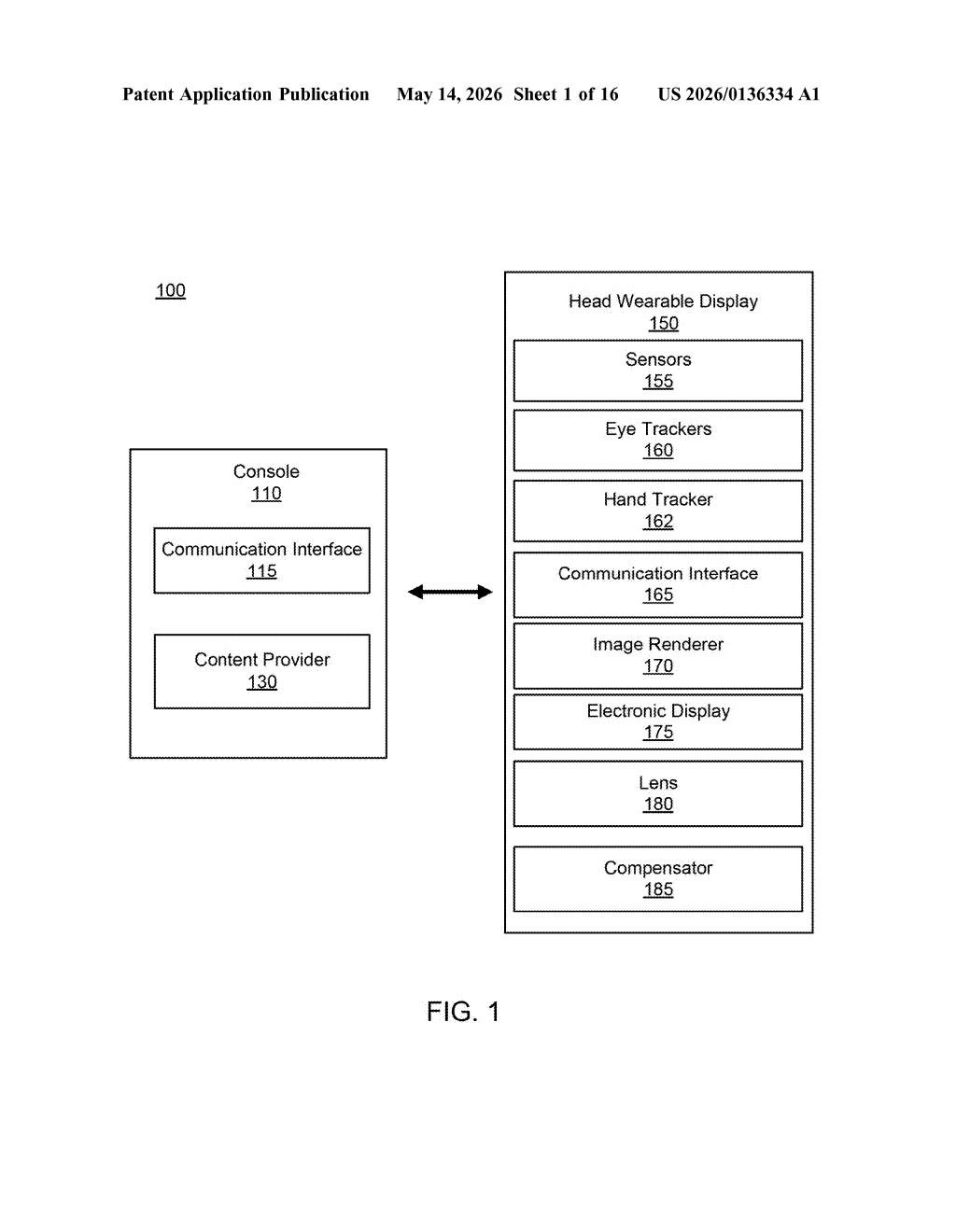
The USPC classification 370/312 places this squarely in multiplex communications — specifically time-division systems. The architecture is intentionally infrastructure-free: the primary device does the coordination work that a router or server would normally handle, but entirely peer-to-peer. The patent also references a Head Wearable Display with eye trackers, hand trackers, and an image renderer — confirming the target platform is Meta's AR/mixed-reality headset lineup.
What this means for untethered AR social experiences
For Meta's AR headsets — like the Quest line or any future glasses-form-factor device — this kind of local mesh voice chat is a meaningful capability. Social AR scenarios (gaming, shared workspaces, live events) often happen in environments where Wi-Fi is congested or unavailable. A system that lets your headset self-organize a voice group with nearby devices removes a real friction point.
It's also worth noting the strategic angle: if Meta can own the coordination protocol for local device-to-device audio, that's a layer of the social stack that doesn't depend on any third-party infrastructure. You stay in Meta's ecosystem even when you're offline. That's not a small thing for a company that wants to own the next social computing platform.
This is solid infrastructure work for a specific, real use case — local group voice chat on AR headsets without a network dependency. It's not flashy, but the combination of time-slot coordination and infrastructure-free bootstrapping is genuinely useful for the kinds of shared physical-space experiences Meta is building toward. If Quest-class devices ever become mainstream social hardware, patents like this are the unglamorous plumbing that makes them work.
There are more where this came from
We read every patent application Big Tech publishes and send you the ones worth knowing. Plain English, free, every week.
Want this weekly breakdown for a company we don't cover? Patentlyze Pro →