
Meta Patents Frequency-Band Volume Control for Head-Wearable Devices
Instead of just turning everything up when it's loud, Meta's new patent describes a smarter approach: analyzing ambient noise across individual frequency bands and adjusting your audio output band-by-band to match. It's the difference between a blunt volume knob and a precision equalizer that reacts to the world around you.
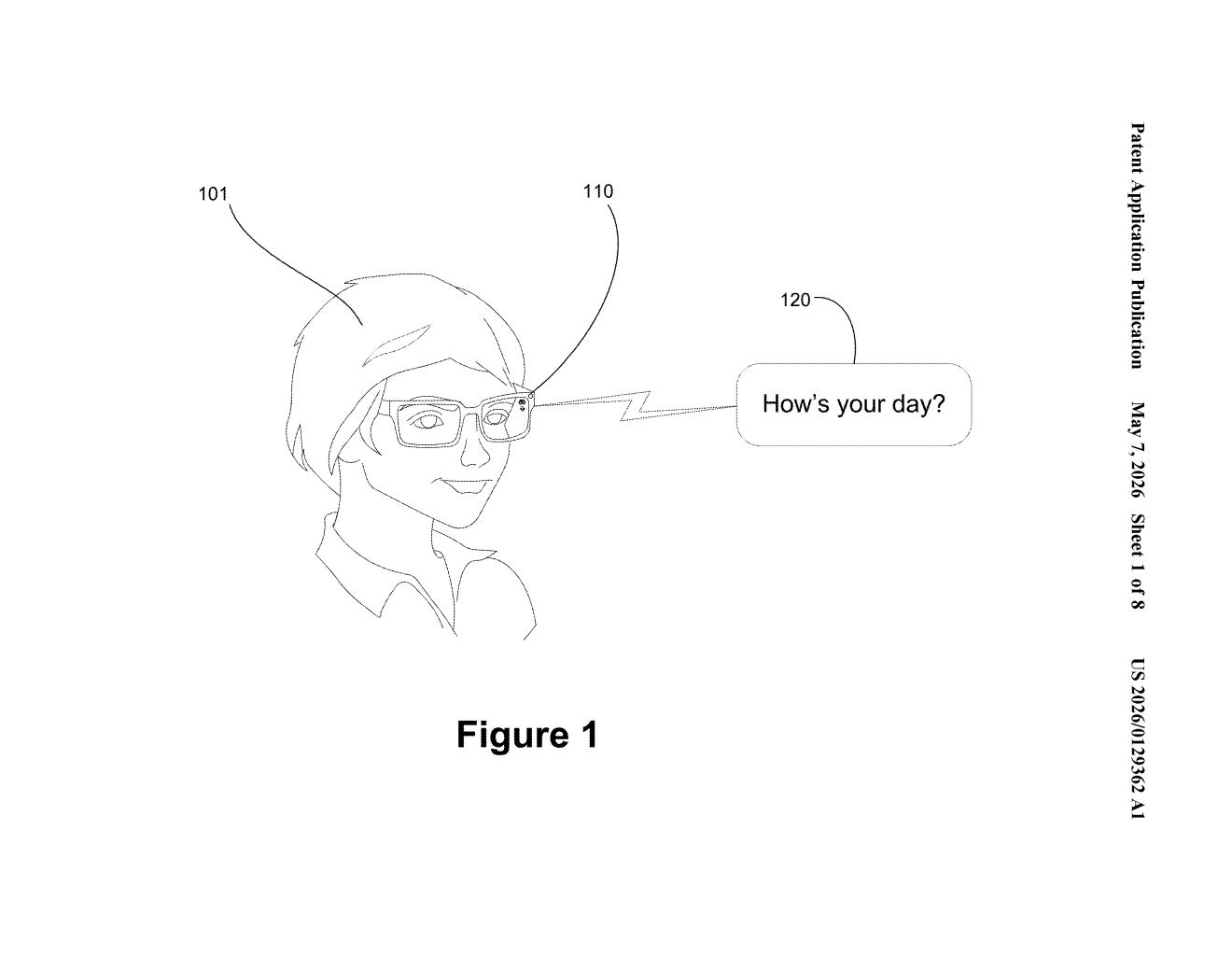
What Meta's per-frequency volume adjustment actually does
Imagine you're wearing smart glasses at a coffee shop. The espresso machine roars in the mid-range frequencies, but there's no particular noise in the high frequencies where vocals sit. A standard volume boost would make everything louder — including stuff that didn't need help. That's the problem Meta wants to solve.
This patent describes a system where your head-wearable device constantly listens to the environment through its microphones and breaks that ambient noise into frequency bands — think of them like slices of the sound spectrum (bass, mid, treble, and more). It then adjusts each matching band in your audio output separately, so only the parts of the sound that are actually getting masked get a boost.
The result is that you'd get a more natural listening experience: a conversation partner's voice cuts through the espresso machine noise without the whole audio mix getting cranked up to uncomfortable levels. It's essentially automatic, real-time EQ tuned to wherever you happen to be.
How the system maps ambient noise bands to output bands
The patent describes a spectrum-based volume control pipeline that runs continuously on a head-wearable device — things like AR glasses or smart audio headsets — while it's being worn.
Here's the core loop the system runs:
- The device's microphones capture ambient environmental audio from around the user.
- That audio is split into a plurality of frequency bands (multiple discrete slices of the sound spectrum, e.g., separate bass, mid, and treble ranges).
- The system measures the input audio level — essentially how loud it is — for each individual frequency band.
- The audio output being sent to the speakers is also divided into the same corresponding frequency bands.
- Each output band is then independently adjusted based on how loud the matching ambient band is, creating an "adjusted audio output" that compensates only where needed.
This is meaningfully different from a standard auto-volume or noise-compensation system (which applies a single uniform gain adjustment to the whole signal). By operating per-band, the device can, for example, boost a voice's mid-range frequencies in a loud café without also over-amplifying the already-clear high-frequency components. The claim is written broadly enough to cover any head-wearable hardware — it's filed as a software/firmware method on a storage medium, not tied to specific sensor hardware.
What this means for AR glasses and smart audio wearables
For Meta, this is directly relevant to the Ray-Ban Meta smart glasses line and any future AR headset. Audio quality is one of the biggest pain points for open-ear wearables — they sit near (not in) your ears, making them inherently vulnerable to ambient noise masking. A smarter, per-frequency compensation system could make hands-free calls and media playback genuinely usable in noisy environments without the listener having to manually fiddle with volume.
More broadly, this kind of perceptual audio intelligence is becoming a competitive battleground for wearables. Apple's AirPods already do adaptive EQ and transparency mode processing. If Meta can bake similar smarts directly into lighter, glasses-form-factor hardware, it closes a meaningful gap — and you get audio that feels tuned to your environment rather than fighting it.
This is a solid, practical patent rather than a moonshot — it's solving a real and annoying problem with open-ear wearables in a technically sensible way. The per-band approach is more sophisticated than what most consumer devices do today, and it maps directly onto Meta's existing hardware roadmap. Worth keeping an eye on as Ray-Ban Meta glasses get future audio upgrades.
There are more where this came from
We read every patent application Big Tech publishes and send you the ones worth knowing. Plain English, free, every week.
Want this weekly breakdown for a company we don't cover? Patentlyze Pro →