
Qualcomm Patents a Display System That Prevents Screen Discoloration Based on Room Lighting
Burn-in, the ghost image that slowly gets baked into OLED screens, has been a persistent problem for phones and TVs alike. Qualcomm thinks the fix should be smarter about one obvious variable: how bright the room is.
What Qualcomm's ambient burn-in fix actually does
Imagine you leave your phone on a bright desk in direct sunlight all day, then set it on your nightstand in a dark room. In both cases, your screen is fighting to prevent burn-in, the faint permanent ghost of a status bar or navigation button that can appear on OLED displays over time. But the way screens typically fight burn-in is often the same regardless of your environment, which can waste battery or overcorrect unnecessarily.
Qualcomm's patent describes a system where a processor watches how bright the ambient light around your device is, then adjusts the screen's anti-aging behavior accordingly. If the room is very bright, your eyes are already compensating, so the screen may not need to dim certain pixels as aggressively. If the room is dark, more careful management might be needed.
The result is a more context-aware approach to protecting your screen's long-term health, one that adapts to your actual environment rather than applying a one-size-fits-all fix.
How the processor calculates per-pixel aging adjustments
The patent describes a processor-based system that handles what Qualcomm calls ambient light adaptive pixel anti-aging frame-layer conditional compensation, which is a long way of saying the screen's burn-in protection changes based on how much light is in the room.
Here's the core loop the system runs:
- A sensor monitors the ambient light intensity around the display (the same kind of reading your phone already uses to auto-adjust brightness).
- The processor compares that reading against a preset ambient light threshold to decide which environmental bracket you're in.
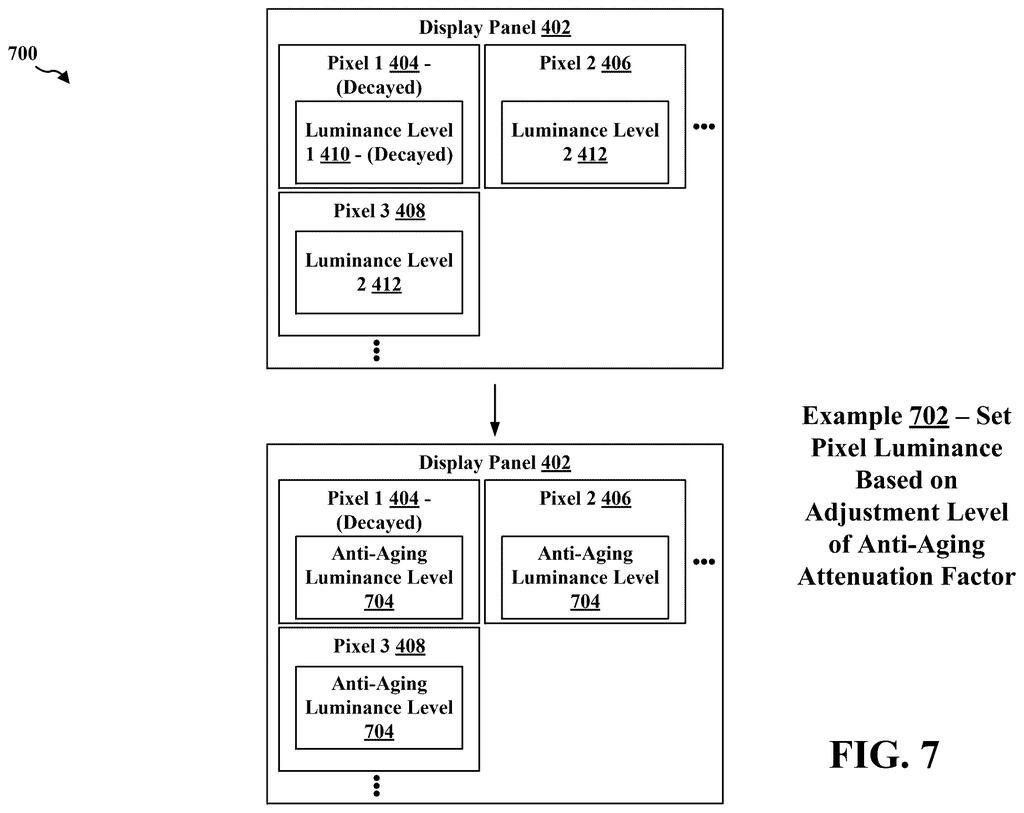
- It then combines that bracket with the current luminance level (how bright each pixel is actually running) to calculate an anti-aging attenuation factor, basically a per-pixel dimming or compensation value designed to slow down pixel wear.
- That adjustment is output to the display pipeline, where it influences how individual pixels are driven.
The "frame-layer conditional" part of the name suggests the compensation can be applied at different layers of the image rendering stack, meaning it can be tuned without simply dimming the whole screen uniformly. Each pixel in the set can receive its own adjustment level rather than a blanket correction.
What this means for OLED phones and always-on screens
OLED screens are everywhere now, from flagship phones to tablets to high-end TVs, and burn-in remains one of their most visible long-term weaknesses. Most current anti-aging systems run on fixed schedules or react only to how long pixels have been lit, not to the viewing context. Tying the correction to ambient light is a sensible extension because the conditions under which burn-in becomes noticeable to a user are heavily dependent on the room they're in.
For Qualcomm specifically, this kind of display processing logic lives in the chips it sells to phone makers like Samsung and Xiaomi. If this approach makes it into a Snapdragon display processor, it could improve screen longevity on a wide range of Android devices without any visible change to the user experience.
This is a solid, practical improvement to a real and well-documented problem with OLED screens. It's not flashy, but the logic is sound: using ambient light data your device already collects to make burn-in protection smarter costs almost nothing and could meaningfully extend screen life. Worth watching if you care about display hardware.
There are more where this came from
We read every patent application Big Tech publishes and send you the ones worth knowing. Plain English, free, every week.
The drawings
11 drawing sheets from US 2026/0212813 A1 · click any drawing to enlarge


Want this weekly breakdown for a company we don't cover? Patentlyze Pro →
Be the first to weigh in