
IBM Patents a System That Turns Plain-Language Requests Into Ready-to-Run Code
Writing automation scripts usually means knowing a programming language. IBM is patenting a way to skip that step by letting a machine learning system turn a plain-language description of a task into a working script, complete with blanks where user-specific values need to go.
What IBM's script-writing AI actually does
Imagine telling your computer, in normal sentences, 'Back up all files in this folder every night at midnight,' and having it hand you a finished automation script a moment later. That's the general idea behind this IBM patent.
The system takes your text description of a task, figures out what you're trying to do, and assembles a script by pulling together the right pre-built code pieces. It's also smart enough to notice which parts of the script will change depending on who's using it, like a specific folder path or a server name, and turns those into fill-in-the-blank fields instead of hardcoding a single answer.
The result is a script you can hand off to anyone on your team. Each person fills in their own details without having to touch the underlying code. It's aimed squarely at business IT teams who want to automate repetitive work without hiring a developer for every new task.
How the ML engine spots variables and builds the script
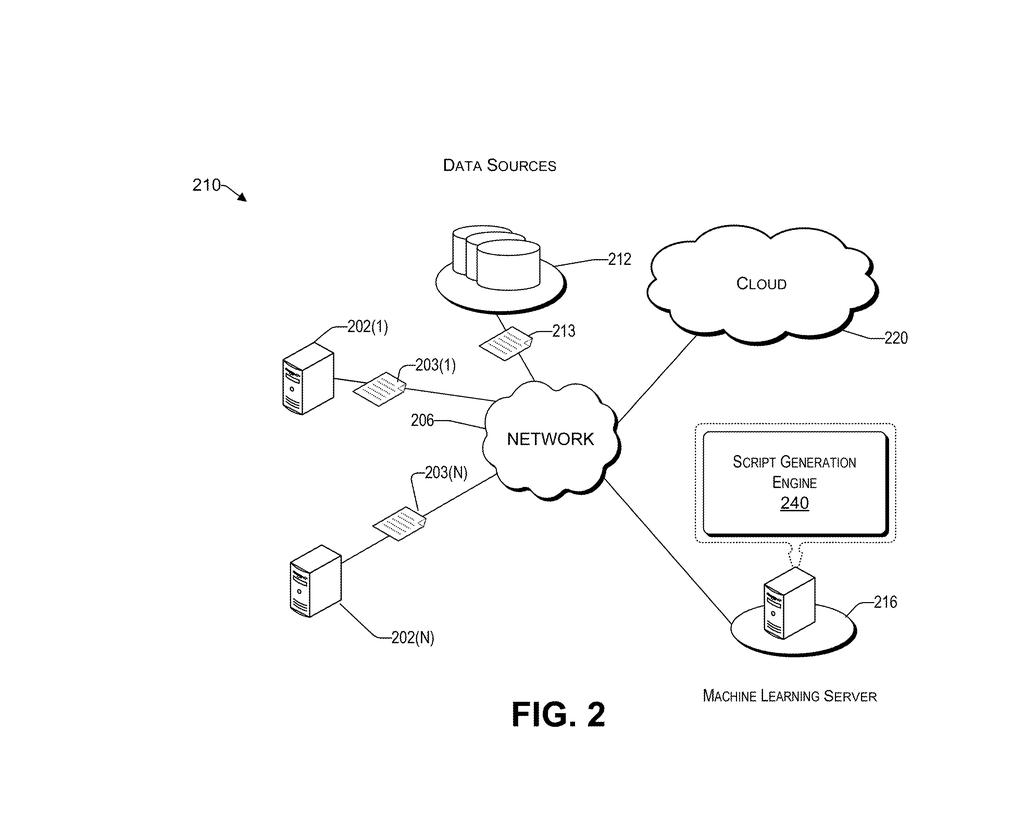
The patent describes a script generation engine paired with a machine learning engine. Together they take a user's typed prompt, a description of a task, plus any software packages the task involves, and produce an executable script.
The ML engine's first job is parsing. It breaks the prompt into individual words, then builds context from those words to understand what kind of task is being described. That context is matched against a library of stored code packages, each covering a known type of operation.
The clever part is variable identification. The ML engine scans the assembled packages for values that are likely to differ from one user or run to the next, things like file paths, usernames, server addresses, or time intervals. Those values are flagged as dynamic and replaced with placeholder variables in the final script, rather than being baked in.
The output is a script that:
- Performs the requested task end-to-end
- Contains named placeholders wherever user-specific input is needed
- Can be reused by different people without any code editing
The approach leans on retrieval-augmented generation (fetching relevant pre-written code chunks from a database rather than writing everything from scratch), which helps keep the output accurate and consistent.
What this means for IT teams and enterprise automation
For large organizations, the bottleneck in IT automation is rarely knowing what to automate. It's having enough developer time to write, test, and maintain the scripts. A system that converts a plain description into a deployable script, and automatically handles the variable parts, could let non-programmers create and share reusable automation without depending on a software team.
This fits IBM's broader push to sell AI-assisted enterprise tooling. If this capability landed inside something like IBM watsonx or an existing IBM automation platform, it could lower the barrier for mid-size companies that want to automate IT operations but don't have large engineering departments. That said, the patent covers a fairly general method, and similar ideas are being explored across the industry.
This is solid, practical enterprise tooling with a clear audience, IT teams who know what they want to automate but not necessarily how to write the code. It's not a flashy AI moment, but the variable-detection piece is genuinely useful and not obvious. The real question is whether IBM can differentiate this from the LLM-to-code features already shipping in competing platforms.
There are more where this came from
We read every patent application Big Tech publishes and send you the ones worth knowing. Plain English, free, every week.
The drawings
4 drawing sheets from US 2026/0211637 A1 · click any drawing to enlarge


Want this weekly breakdown for a company we don't cover? Patentlyze Pro →
Be the first to weigh in