
Nvidia Patents a System That Turns Plain-English Questions Into Cloud Service Commands
Nvidia has filed a patent for a system that lets you ask a question in plain English and automatically figures out which cloud service to call, formats the technical request correctly, and translates the answer back into plain language. No code required.
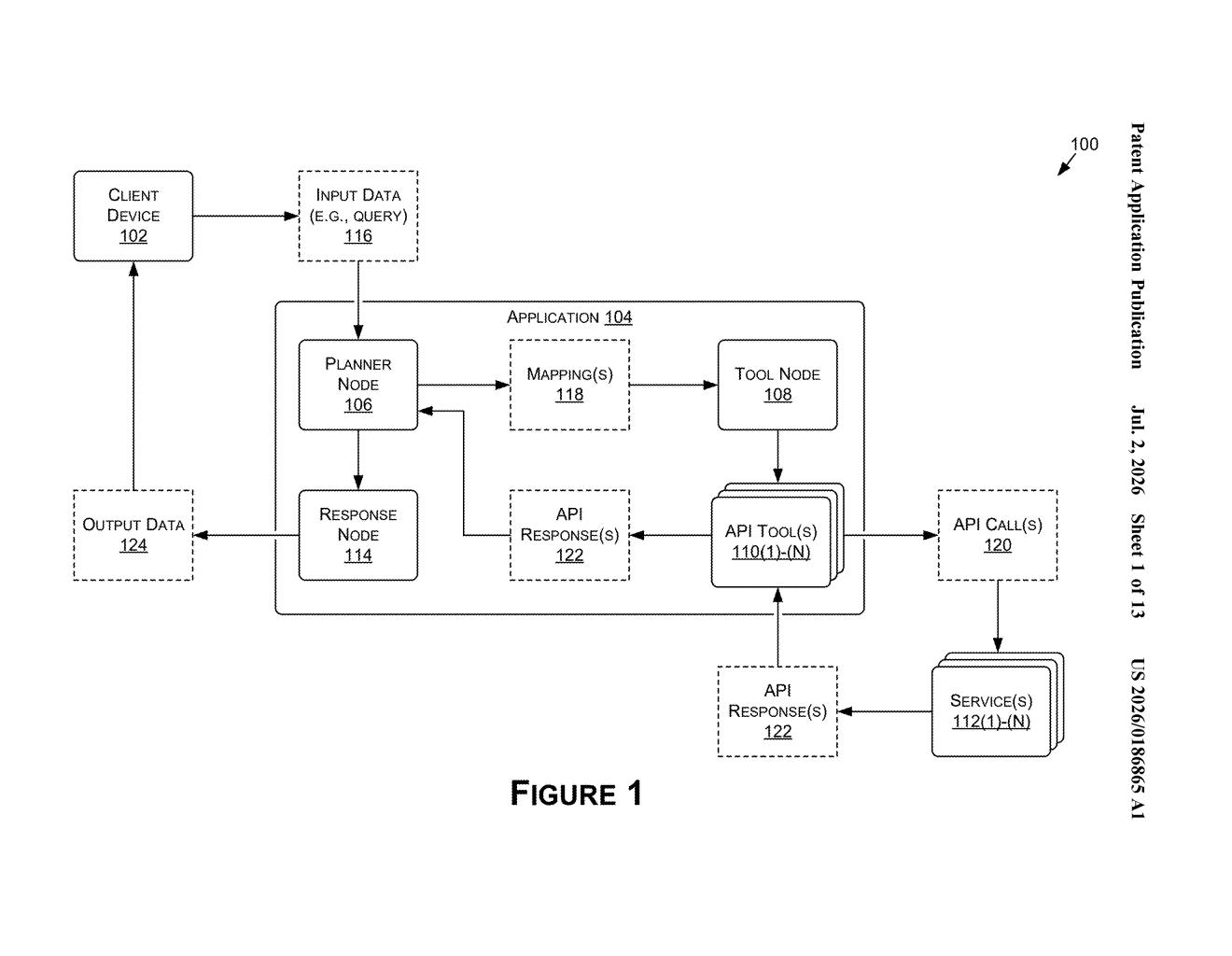
What Nvidia's AI-to-API translator actually does
Imagine you want to pull up sales data from one service, check your calendar availability from another, and get a shipping update from a third. Right now, doing that usually means writing code or clicking through each app separately. Nvidia's patented system would let you just ask, in plain English, and have the software figure out the rest.
The system works in layers. One AI model reads your question and decides which services need to be involved. Another model then figures out the exact technical format each service expects, places the request, and collects the answers. A third model reads those technical responses and turns them back into plain English for you.
The result is a kind of universal translator between human language and the behind-the-scenes plumbing that cloud apps run on. You ask one question; the system handles all the back-and-forth with whichever services it needs to answer you.
How the planner and tool nodes divide the work
The patent describes a multi-node architecture where three distinct AI roles handle a single user query end to end.
- Planner node: A language model reads the incoming query and maps it to one or more "tool nodes," each of which is pre-associated with specific cloud services. This is the routing step.
- Tool nodes: Each tool node uses its own language model to read the API specification (a technical document that describes exactly how a service accepts requests) and generates a correctly formatted API call. This is where the technical translation happens.
- Response generation node: After the services respond (typically in formats like JSON or XML, which are machine-readable data structures), a third language model reads those responses alongside the original API specs and produces a plain-language answer to send back to the user.
The claim specifies that the system can handle multiple services in parallel, meaning a single question can fan out to several APIs simultaneously. The planner node also has access to metadata about all available services, so it can pick the right ones without being explicitly told which to use.
This is essentially an AI-powered middleware layer: it sits between a user and a collection of software services, handling both the outbound translation (English to API call) and the inbound translation (API response to English).
What this means for talking to software without code
For enterprises running dozens of cloud tools, the friction of connecting them is real. Developers currently write custom integration code for each service, and non-technical employees often can't access data without help. A system like this could let anyone query across internal tools, data platforms, or external APIs by typing a question into a chat interface.
For Nvidia, this fits into a broader push to make its AI infrastructure software more accessible to enterprise customers. The patent covers the general orchestration approach rather than a specific service, which means it could apply to Nvidia's existing cloud and AI platform offerings or power a future product aimed at enterprise IT teams who want to connect their existing software stack without rebuilding it.
This is solid, practical AI infrastructure work. The idea of using chained language models to route, call, and interpret APIs is not entirely new, but Nvidia's specific multi-node architecture with separate models for planning, calling, and responding is a concrete and credible engineering approach. If this ships in a product, it would matter most to enterprise customers managing complex software stacks.
Get our take in your Top Stories
Liked this breakdown? Add Patentlyze as a preferred source on Google, and our plain-English take shows up more often in your Top Stories the next time Nvidia patent news breaks.
There are more where this came from
We read every patent application Big Tech publishes and send you the ones worth knowing. Plain English, free, every week.
Want this weekly breakdown for a company we don't cover? Patentlyze Pro →