
Qualcomm Patents a System That Reports When Vehicles Stray From Their Planned Routes
Every navigation system knows where a vehicle is supposed to go. Qualcomm's new patent is about what happens when it doesn't get there that way, and making sure the network knows about it.
What Qualcomm's route-deviation reporting actually does
Imagine you're following turn-by-turn directions, but road construction forces you to take a detour. Your phone knows you went off-route, but the system managing traffic or fleet operations might not get a clean picture of exactly how far you deviated or what your actual path looked like.
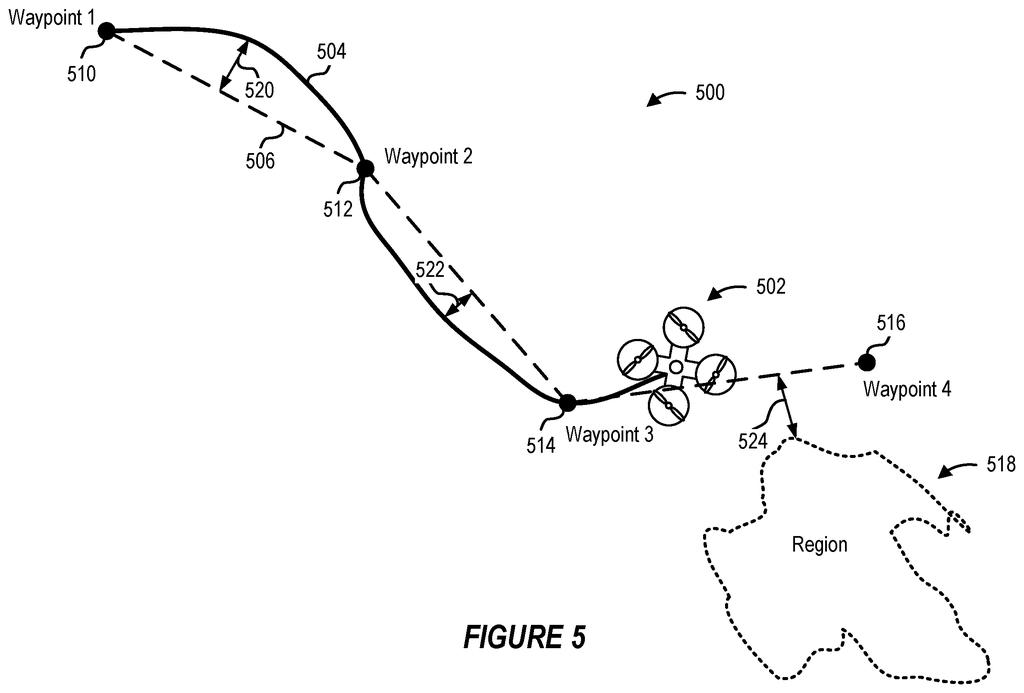
Qualcomm's patent describes a method where a vehicle continuously compares its real, driven path against a pre-planned set of checkpoints (called waypoints). It then packages up statistical information about how much the actual route differed from the planned one and sends that data to a network server.
This is less about individual navigation and more about giving the broader network, think fleet operators, city traffic systems, or autonomous vehicle management platforms, a reliable, compact way to understand where vehicles actually went versus where they were supposed to go.
How the vehicle compares its actual path to waypoints
The patent covers two sides of a communication loop: the vehicle side and the network side.
On the vehicle side, as the car drives from point A to point B, it collects movement data describing its actual path. Separately, it holds path information containing a series of waypoints, essentially a list of GPS-style checkpoints that define the intended route. The vehicle then generates statistical information comparing the two: how far did it deviate, how often, and by how much?
On the network side, a server (called a "network entity" in the patent) receives both the original waypoint plan and the statistical summary from the vehicle. The key design choice here is that the vehicle doesn't stream raw GPS coordinates continuously; it compresses the deviation data into statistics, which is far more efficient over a wireless connection.
The patent also references an interpolated path, which means the expected smooth curve connecting the waypoints (what the vehicle was assumed to drive) versus the messier reality of actual driving. That gap between interpolated and actual is what gets measured and reported.
What this means for connected and autonomous vehicle networks
For fleet operators, logistics companies, or cities running connected-vehicle programs, knowing that a vehicle deviated from its planned route is useful. Knowing how much and in what statistical pattern is more useful still. It lets planners update route models, flag roads that consistently push vehicles off course, and improve future path planning.
For autonomous vehicle systems in particular, this kind of feedback loop is important. If a self-driving car routinely takes a slightly different path than instructed, the network needs a lightweight way to learn that, without requiring the vehicle to upload gigabytes of sensor data. Qualcomm's wireless communication expertise makes the compression and reporting angle the interesting part here.
This is fairly unglamorous infrastructure work, the kind of data-plumbing patent that enables smarter fleet and autonomous vehicle management without being visible to any end user. It's not a flashy AI bet, but it reflects Qualcomm's consistent play in vehicle-to-network communication, and that's a real market worth watching.
There are more where this came from
We read every patent application Big Tech publishes and send you the ones worth knowing. Plain English, free, every week.
The drawings
7 drawing sheets from US 2026/0212763 A1 · click any drawing to enlarge


Want this weekly breakdown for a company we don't cover? Patentlyze Pro →
Be the first to weigh in