
Samsung Patent Covers Robots That Switch Drive Modes Without Losing Speed
Most wheeled robots have to slow down or stop when they switch how their wheels are powered. Samsung is patenting a way to make that switch invisible, letting a robot change its drive configuration mid-trip without dropping its speed.
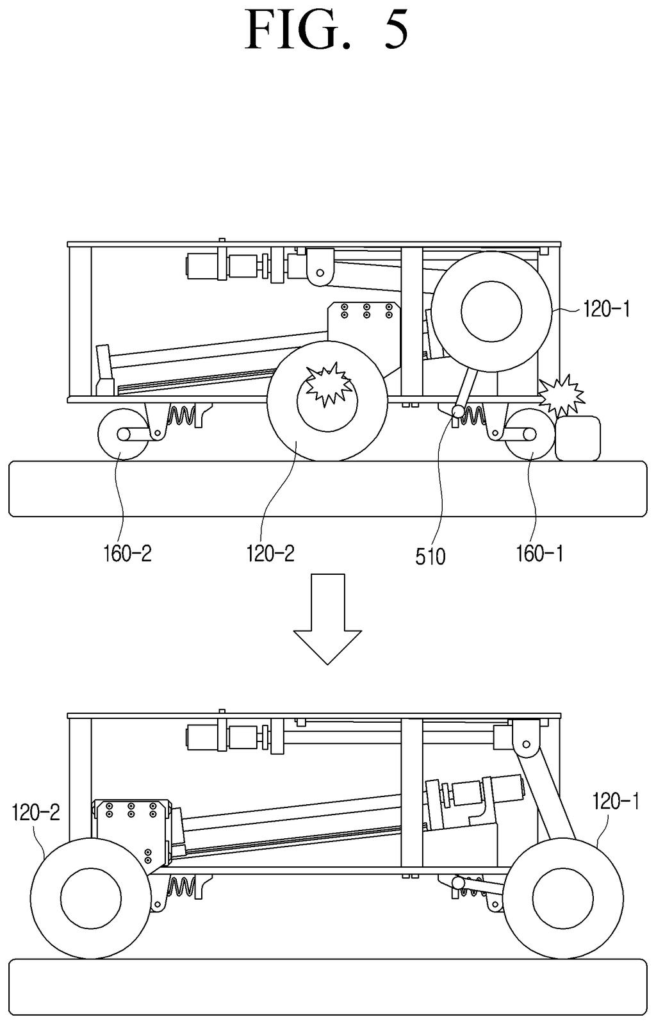
What Samsung's map-aware wheel-switching actually does
Imagine a warehouse robot cruising down a smooth concrete aisle, then hitting a rougher section of flooring near a loading dock. Right now, a robot that needs to switch how many of its wheels are doing the work would typically need to slow down to make that change safely.
Samsung's patent describes a robot that carries a map of its environment, and that map includes notes on which drive mode each area requires. Some zones only need a few wheels powered; others need all wheels working together for traction or control. The robot checks its current position against that map and switches modes automatically.
The key detail is that it does this without slowing down. The motor keeps the overall speed constant while the number of active wheels changes under the hood. It's a bit like a car's all-wheel-drive system kicking in on ice, except the robot is doing it proactively based on where it knows it's going, not reactively after it starts slipping.
How the robot picks a drive mode based on its position
The patent describes a wheeled electronic device, most likely a robot, with several core components working together:
- Map memory: The robot stores a map that tags different areas with a designated operation mode, not just navigation waypoints.
- First operation mode: Only some of the wheels are driven by the motor. This is useful on flat, low-resistance surfaces where running all wheels would waste energy.
- Second operation mode: All wheels are driven. This gives more traction and control on difficult surfaces or when carrying heavier loads.
- Position-aware switching: A processor continuously checks the robot's location, matches it to the map, and selects the correct mode for that zone.
The critical constraint baked into the patent is speed maintenance. The motor is told to switch drive configurations while keeping the robot's velocity constant. That means the transition is not a stop-and-restart, but a live adjustment. The processor controls the motor to compensate for the change in how many wheels are pulling load, so the robot doesn't lurch, decelerate, or jolt cargo it might be carrying.
What this means for warehouse and delivery robots
In warehouse automation and last-mile delivery robots, consistent travel speed directly affects throughput. A robot that has to brake every time it enters a new floor zone is a bottleneck. Samsung's approach offloads the decision-making to a pre-planned map, which means the switch happens predictably rather than in response to a problem.
This also has implications for battery efficiency. Running fewer wheels in easy zones and only engaging all wheels where needed is a straightforward way to extend operating time per charge. For a fleet of hundreds of warehouse robots running 16-hour shifts, that efficiency compounds fast. Samsung already makes industrial robotics hardware, so this feels less like a speculative idea and more like a practical engineering improvement aimed at a product line that exists.
This is focused, practical engineering, not a headline-grabbing concept. The specific insight, that a robot can use a pre-tagged map to switch drive modes without speed disruption, is a real operational improvement for warehouse or logistics robots. It won't get anyone excited at a consumer tech event, but it's the kind of patent that ends up in deployed hardware.
There are more where this came from
We read every patent application Big Tech publishes and send you the ones worth knowing. Plain English, free, every week.
The drawings
9 drawing sheets from US 2026/0211425 A1 · click any drawing to enlarge


Want this weekly breakdown for a company we don't cover? Patentlyze Pro →