
Samsung Patents a Projector That Drives Itself to Your Location and Sets Up Automatically
Imagine calling your projector the way you'd call an elevator, and having it roll over, aim itself, and start playing the right content before you even sit down. That's the core idea behind Samsung's latest filing.
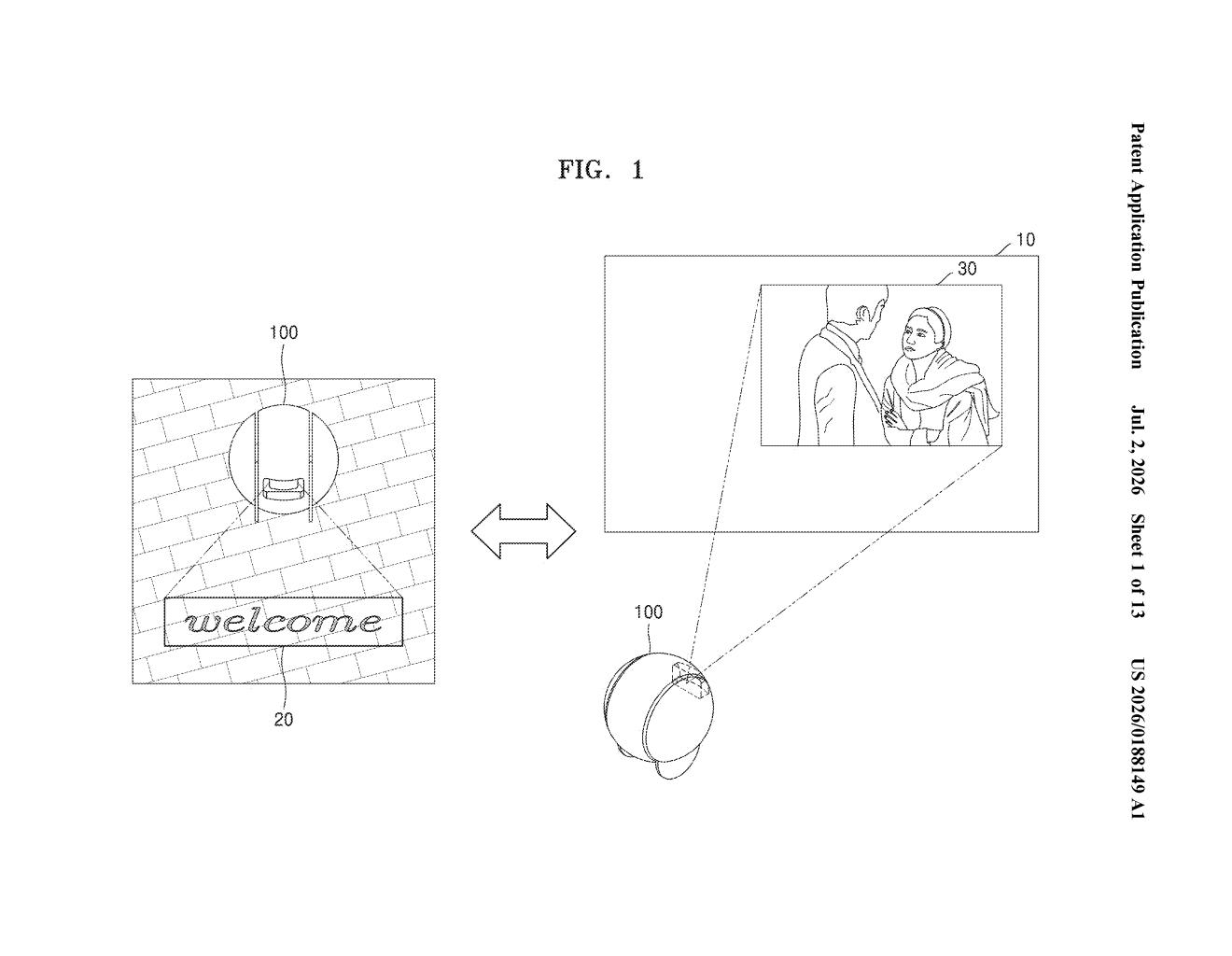
What Samsung's self-moving projector actually does
Picture a small projector sitting in the corner of your home. Instead of you walking over to it, aiming it at a wall, and fiddling with settings, you just call it, maybe with a voice command or a tap on your phone. The projector figures out where you are, drives itself over, and gets ready to show you something.
The clever part is that it doesn't just move and then start configuring itself. According to the patent, the device does its setup work while it's still moving, so by the time it arrives, it's already ready to project. It even figures out which piece of content is appropriate for that specific spot in your home.
This is essentially a projector designed to behave like a small robot assistant rather than a piece of furniture you have to arrange.
How the projector navigates, configures, and starts projecting
The patent describes a mobile projection device that responds to a call command, which triggers a sequence of automated steps. When called, the device:
- Identifies a target location based on the command (for example, your living room wall or a specific room)
- Looks up which piece of content is associated with that location
- Retrieves setting information for that content (things like projection angle, brightness, focus distance, and keystone correction, which is the process of squaring up an image that's being projected at an angle)
- Begins physically moving toward the target while simultaneously running through those settings, so configuration happens in parallel with travel
- Only starts projecting once the presetting operation is fully complete, ensuring the image looks correct from the moment it appears
The key engineering idea here is the parallel execution of movement and calibration. Traditional projectors require you to position them first and then configure them. This device treats those as concurrent tasks, reducing the time between arrival and a usable, properly calibrated image.
What this means for Samsung's smart home ambitions
For Samsung, this fits squarely into a broader push to make home entertainment devices behave more like autonomous appliances. A projector that positions itself on demand is a natural complement to smart TVs and voice-controlled home hubs, and it removes one of the biggest friction points with projectors: the setup ritual.
For you, it means a projector that could theoretically follow your household routine without manual intervention. The patent doesn't describe a specific product, but it signals that Samsung is thinking seriously about mobility as a core feature of projection hardware, not just image quality.
This is a genuinely interesting direction for home projector technology. The parallel move-and-configure approach is the kind of small engineering insight that makes the difference between a gimmick robot and something actually useful. Whether Samsung ships this or not, it's a sensible answer to why projectors remain niche despite being cheaper than ever.
There are more where this came from
We read every patent application Big Tech publishes and send you the ones worth knowing. Plain English, free, every week.
Want this weekly breakdown for a company we don't cover? Patentlyze Pro →