
Samsung Patents a Camera That Predicts Lighting Before the Shutter Fires
Every time your phone's camera gets the exposure wrong on a fast-moving scene, it's because the camera is reacting instead of anticipating. Samsung's new patent describes a system that looks ahead, using a second camera to predict what lighting will look like in the very next frame.
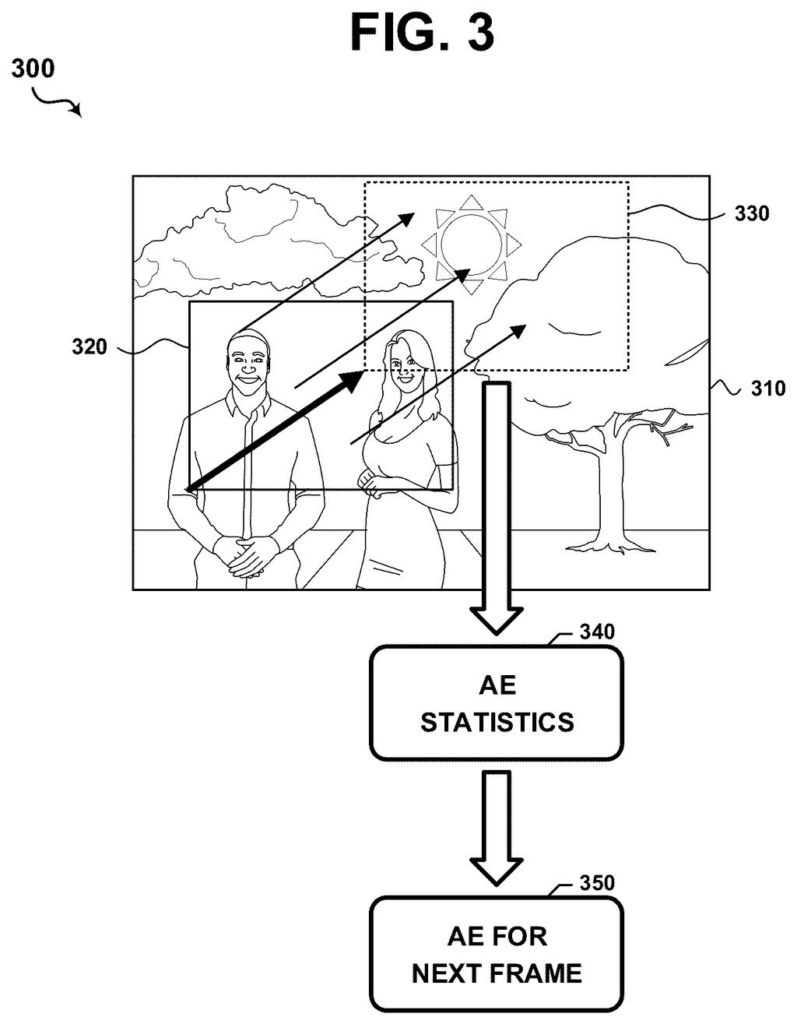
How Samsung's predictive exposure system works in practice
Imagine you're filming someone walking from a shaded alley into bright sunlight. Your phone's camera sees the dark alley, sets its exposure for low light, and then the next frame arrives flooded with brightness and completely washed out. That lag is the camera reacting too slowly to a change it couldn't see coming.
Samsung's patent describes a fix: use a second camera with a wider view to peek at what's ahead. While the main camera captures the current frame, the secondary camera is already looking at the scene the main lens is about to point at. An onboard system analyzes that preview and calculates the right exposure settings before the main camera takes the shot.
The result is that by the time your main camera captures the next frame, it already knows how bright or dark the scene will be, and it's already adjusted. You get a correctly exposed photo instead of a blown-out or muddy one.
How the dual-camera setup predicts the next frame's exposure
The patent describes a two-camera architecture where the cameras have different fields of view (FoV), meaning one sees a wider or different portion of the scene than the other.
Here's the flow the patent outlines:
- The main camera captures the current frame normally.
- A secondary camera with a different (typically wider) field of view simultaneously captures an image of the broader scene, including what the main camera is about to see.
- An auto-exposure precognition component (the system's prediction engine) uses that secondary image to forecast what the next main-camera frame will look like.
- It extracts exposure information from that predicted frame, calculating the ideal shutter speed, ISO, and aperture settings.
- The main camera then captures the next frame using those pre-calculated settings, rather than measuring the scene after the fact.
The core insight is that a wider-FoV camera sees context the main lens doesn't, and that context can be used as a look-ahead signal. This shifts auto-exposure from a reactive correction loop to a predictive one, eliminating the one-frame delay that causes blown highlights or crushed shadows in rapidly changing light.
What this means for phone cameras and fast-action shots
Auto-exposure failures are one of the most visible quality gaps between a phone camera and a dedicated camera body. In challenging lighting transitions, even flagship phones produce at least one badly exposed frame. This patent targets exactly that gap by turning a second camera into a lighting scout for the primary lens.
For consumers, the practical benefit would appear most in scenarios like sports, concerts, and outdoor video where light changes fast. For Samsung, it's a differentiator that fits naturally into devices that already carry multiple camera sensors, like the Galaxy S and Z series, where the extra hardware cost is already paid.
This is a genuinely useful idea, and unlike many computational photography patents, it's grounded in hardware Samsung already ships. Multi-camera phones have had redundant sensors for years; using one as a predictive input for another is a clever repurposing of existing silicon rather than a request for exotic new components. Whether it makes it into production depends on whether the prediction latency is low enough to actually beat the scene change, but the concept is sound.
There are more where this came from
We read every patent application Big Tech publishes and send you the ones worth knowing. Plain English, free, every week.
The drawings
7 drawing sheets from US 2026/0214345 A1 · click any drawing to enlarge


Want this weekly breakdown for a company we don't cover? Patentlyze Pro →
Be the first to weigh in