
Samsung Patents an Image Sensor That Calibrates Once for Multiple Exposure Levels
Modern smartphone cameras often stitch together several exposures to nail a tricky scene, but each exposure usually demands its own calibration step, slowing things down. Samsung's new patent describes a way to do all four exposures with just one calibration pass.
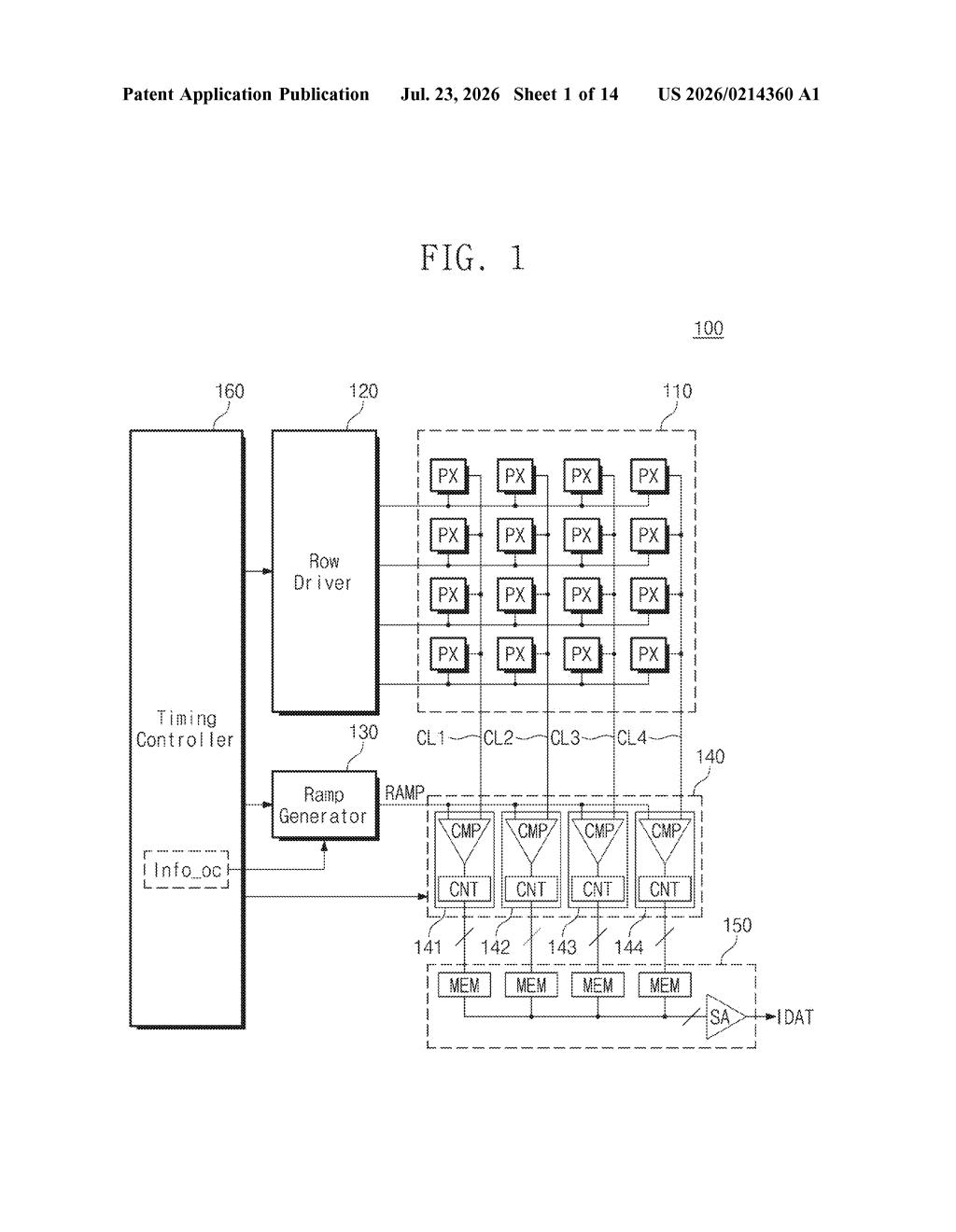
How Samsung's multi-exposure sensor skips extra calibration
Imagine taking a photo of a bright window with a dark room in front of it. Your phone's camera secretly captures the scene at multiple brightness settings and combines them so nothing is blown out or pitch black. The catch is that the camera's sensor normally has to "zero itself out" before each of those captures, which takes time and can introduce tiny errors.
Samsung's patent describes an image sensor that reads a pixel four times at two different sensitivity settings but only runs that zeroing-out step once across all four reads. The sensor pairs each read with a matching reference signal (called a ramp signal) at the right sensitivity level, so the math still works out correctly without the extra calibration overhead.
The practical upside is a faster, more consistent readout. Fewer calibration passes means less time between frames and potentially less electrical noise sneaking into the final image, which matters most in low-light or high-contrast situations.
How the auto-zero and ramp signals handle four pixel reads
The patent describes an image sensor built around a pixel that outputs four sequential signals: two at a "high conversion gain" (higher sensitivity, better for dark areas) and two at a "low conversion gain" (lower sensitivity, better for bright areas). Each pair consists of a reset-level read and a signal-level read, which together let the sensor subtract out any baseline noise from the actual light data.
A ramp signal generator produces four matching reference waveforms, one per pixel read, each tuned to the correct analog gain (an amplification factor applied before the signal is digitized). The ramp signals rise at rates that correspond to either the first or second gain setting, mirroring the pixel's own sensitivity at each moment.
The key invention is the auto-zero operation. In a conventional design, the analog-to-digital converter (ADC) (the circuit that turns the analog light reading into a digital number) zeroes its internal capacitors before every comparison to cancel out offset errors. Here, the ADC performs that step only once, using whichever reset level arrives first, then carries that reference through all four comparisons:
- First reset level vs. First ramp signal
- Second reset level vs. Second ramp signal
- Second signal level vs. Third ramp signal
- First signal level vs. Fourth ramp signal
Doing it once instead of four times cuts readout time and reduces the chance of mismatch errors accumulating across the four conversion steps.
What this means for low-light and high-contrast mobile photography
For photographers, fewer calibration cycles per frame can translate to faster readout speeds and cleaner images, particularly in scenes with a very wide range of light and shadow. Camera sensors already perform high dynamic range (HDR) capture by combining multiple exposures, and any technique that tightens up the timing or reduces noise in that pipeline is worth watching.
For Samsung specifically, this is squarely in the territory of the image sensors the company sells both inside its own Galaxy phones and to other device makers. A more efficient ADC calibration scheme could appear in future generations of its ISOCELL sensors, potentially improving video frame rates or burst-shot performance without requiring larger or more power-hungry silicon.
This is a focused, incremental engineering improvement to a very specific part of the image sensor pipeline. It won't make headlines the way a new camera form factor would, but shaving calibration overhead off every single pixel readout is exactly the kind of unglamorous work that separates good sensors from great ones. If Samsung ships this in a future ISOCELL part, you probably won't read a press release about it, but you might notice cleaner HDR shots.
Get our take in your Top Stories
Liked this breakdown? Add Patentlyze as a preferred source on Google, and our plain-English take shows up more often in your Top Stories the next time Samsung patent news breaks.
There are more where this came from
We read every patent application Big Tech publishes and send you the ones worth knowing. Plain English, free, every week.
The drawings
14 drawing sheets from US 2026/0214360 A1 · click any drawing to enlarge


Show the other 6 sheets


Want this weekly breakdown for a company we don't cover? Patentlyze Pro →