
Tesla Patents a Simplified Electrode Material Process That Skips Costly Milling
Tesla is patenting a way to make the active materials inside EV battery electrodes without a grinding step that currently adds cost and complexity to the manufacturing line.
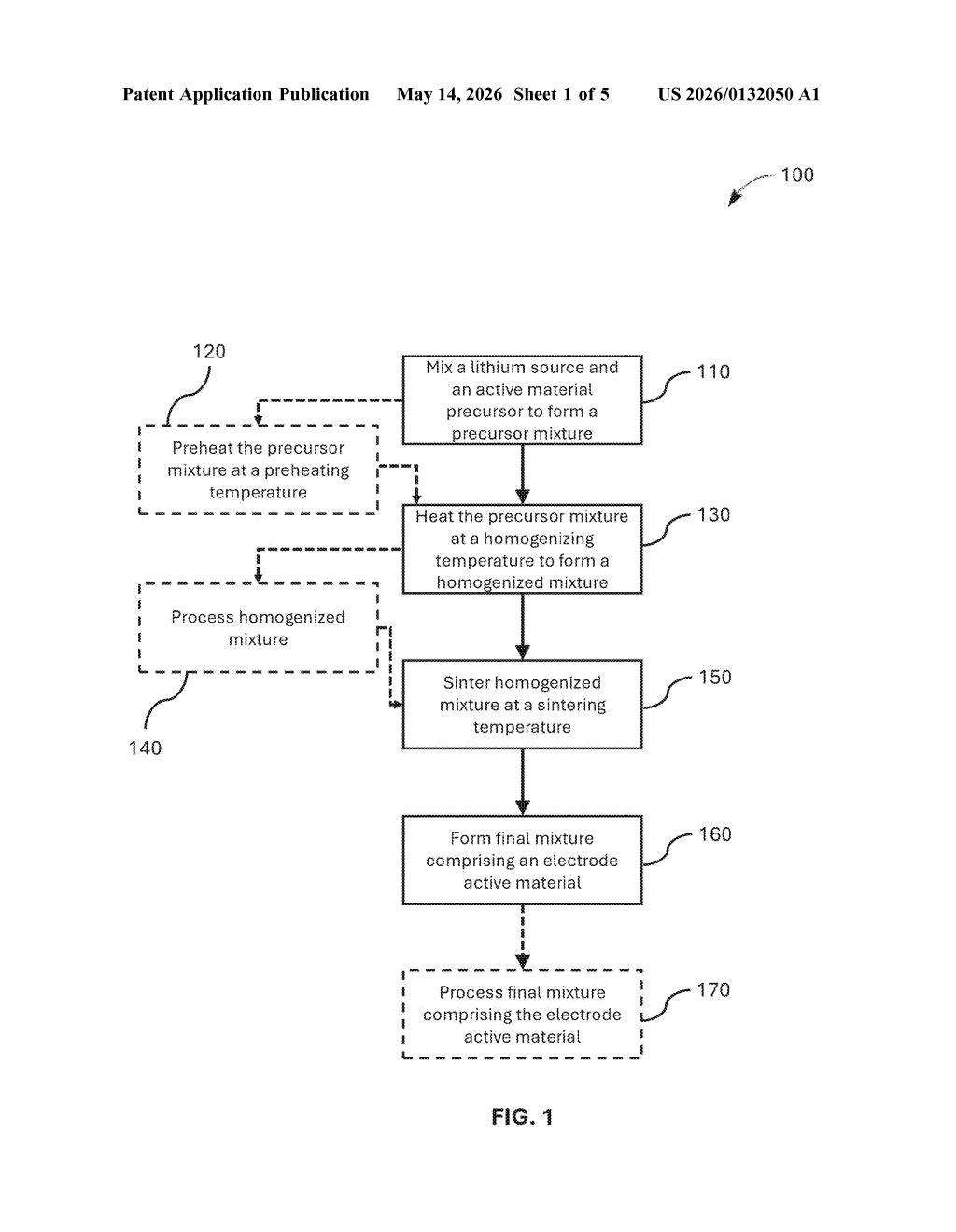
How Tesla wants to make battery materials cheaper
Imagine baking bread, but you normally have to finely grind your flour before mixing it with everything else. Tesla's patent describes skipping that grinding step entirely — saving time, equipment, and money.
In battery manufacturing, lithium hydroxide is a key ingredient mixed with other materials to create the active layer inside an electrode. Normally, you'd mill (grind down) the lithium hydroxide into tiny particles to get a good mix. Tesla's approach uses larger lithium hydroxide particles and instead relies on a lower-temperature heating step called homogenization to get everything blended uniformly before a final high-temperature sintering step fuses it into the finished material.
The practical upside: fewer machines, fewer steps, and potentially lower costs per battery cell. That's the kind of incremental manufacturing gain that quietly matters a lot when you're building millions of cars.
Inside Tesla's two-stage homogenization and sintering method
The patent describes a two-stage thermal process for making electrode active material — the stuff inside a battery electrode that actually stores and releases lithium ions during charging and discharging.
Here's the sequence:
- Mixing: Lithium hydroxide (LiOH) with a D50 particle size of at least 150 micrometers (that's relatively coarse — about the width of a human hair) is combined with an active material precursor, typically a nickel-manganese-cobalt or similar compound.
- Homogenizing: The mixture is heated to a moderate temperature. This step softens the lithium hydroxide enough that it can coat and blend with the precursor particles without fully reacting yet. Think of it like tempering chocolate before molding.
- Sintering: The homogenized mixture is then fired at a higher temperature, causing the lithium to fully react with the precursor and form the crystalline electrode active material.
The key innovation is tolerating large lithium hydroxide particles at the input stage. Conventional processes require milling LiOH down to fine powders first — which means extra equipment, energy, and time. By using homogenization as an intermediate step, Tesla claims you can skip milling entirely and still get a well-mixed, high-quality final product.
What this means for EV battery manufacturing costs
Battery manufacturing is a game of margins. Removing even one processing step from a production line that runs 24/7 across gigafactories translates into real cost savings at scale. Milling equipment is expensive to buy, maintain, and operate — and fine lithium hydroxide powder also presents handling and safety challenges.
This patent is less about inventing a new chemistry and more about industrializing an existing chemistry more efficiently. That's actually the harder problem in EV manufacturing right now. If Tesla can validate this process across its cell lines, it's the kind of quiet process improvement that chips away at the cost-per-kWh targets the company has been chasing publicly for years.
This isn't a flashy chemistry breakthrough — it's a manufacturing process patent aimed squarely at cutting production costs. That's exactly the kind of patent worth paying attention to from Tesla, because their stated strategy is winning on manufacturing efficiency, not just on materials science. The simplification is real and the motivation is obvious.
Get our take in your Top Stories
Liked this breakdown? Add Patentlyze as a preferred source on Google, and our plain-English take shows up more often in your Top Stories the next time Tesla patent news breaks.
There are more where this came from
We read every patent application Big Tech publishes and send you the ones worth knowing. Plain English, free, every week.
Want this weekly breakdown for a company we don't cover? Patentlyze Pro →