
Tesla Patents a Fleet-Powered Road Roughness Map for Predictive Suspension
Tesla wants your car to know a pothole is coming before your wheels ever touch it — and the data to make that happen comes from every other Tesla on the road.
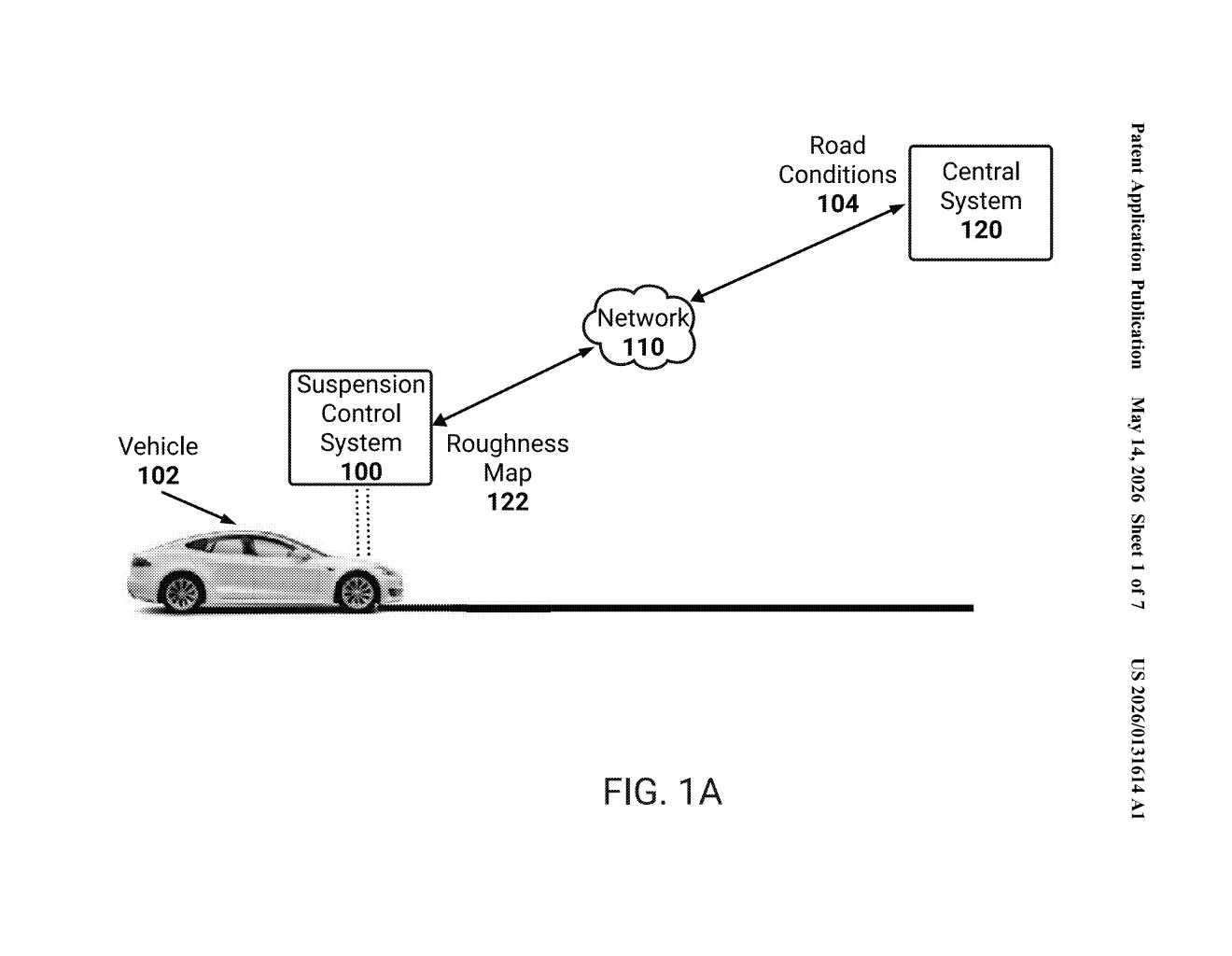
How Tesla's suspension system sees bumps before you hit them
Imagine driving toward a stretch of road you've never been on, but your car already knows it's rough and quietly stiffens the suspension before you get there. That's essentially what this patent describes.
Tesla's approach uses data collected from its whole fleet. Every time a Tesla drives over a bumpy road, it logs the acceleration jolts and the GPS location. That data gets sent to a central system, which builds a road roughness map — a kind of crowdsourced pothole atlas that covers roads everywhere the fleet has driven.
When your Tesla is navigating a route, the car checks that map. If enough of the upcoming road segments are rated rough, the suspension adjusts proactively — before you feel a thing. It's the same idea as Waze for potholes, except instead of a warning on a screen, your car just quietly handles it.
How the fleet builds and transmits the road roughness map
The system has two main parts: a central data pipeline that builds the map, and an on-vehicle prediction layer that acts on it.
On the data side, vehicles in the fleet continuously record acceleration changes (essentially vibration readings from the car's sensors) along with GPS location data. The central system then applies a frequency filter — it only keeps acceleration data in the frequency range specifically associated with road roughness, discarding noise from things like hard braking or cornering. This filtered data from multiple vehicles on the same road segment is aggregated into a single road condition metric per segment, making the map more reliable than any single vehicle's reading.
The resulting road roughness map is transmitted back to vehicles. On the vehicle side, the system checks the map against the planned navigation route. If a threshold percentage of road segments within an upcoming stretch exceed a roughness threshold, the suspension is pre-adjusted to absorb impacts more effectively.
- Fleet vehicles collect vibration + GPS data continuously
- Central system filters, aggregates, and scores each road segment
- Map is pushed to vehicles ahead of travel
- Suspension adjusts proactively based on route preview
What this means for Tesla's ride quality and fleet data strategy
For Tesla drivers, the practical payoff is a smoother ride on roads the car has never personally traveled — because thousands of other Teslas already have. The more vehicles in the fleet, the more accurate and frequently updated the map becomes, which gives Tesla a compounding advantage over any standalone system.
This also reinforces Tesla's broader fleet data flywheel strategy. Every Tesla on the road becomes a sensor, feeding a central intelligence that improves the experience for every other Tesla. That kind of networked improvement loop is hard for competitors with smaller fleets to replicate, and it extends well beyond suspension — the same infrastructure could support road hazard warnings, tire pressure recommendations, or navigation routing decisions.
This is a genuinely well-constructed patent — the frequency-filtering step that isolates road roughness from other acceleration events is a smart and specific technical contribution, not just a vague 'use data to improve suspension' hand-wave. The fleet data angle also makes Tesla particularly well-positioned to actually deploy this, since the system's value scales directly with the number of vehicles contributing data.
Get our take in your Top Stories
Liked this breakdown? Add Patentlyze as a preferred source on Google, and our plain-English take shows up more often in your Top Stories the next time Tesla patent news breaks.
There are more where this came from
We read every patent application Big Tech publishes and send you the ones worth knowing. Plain English, free, every week.
Want this weekly breakdown for a company we don't cover? Patentlyze Pro →