
Tesla Patents a Single-Wire System for Lit Buttons That Also Sense Touch
Tesla is trying to make illuminated buttons smarter and simpler — combining the LED power wire and the input-detection wire into a single conductor.
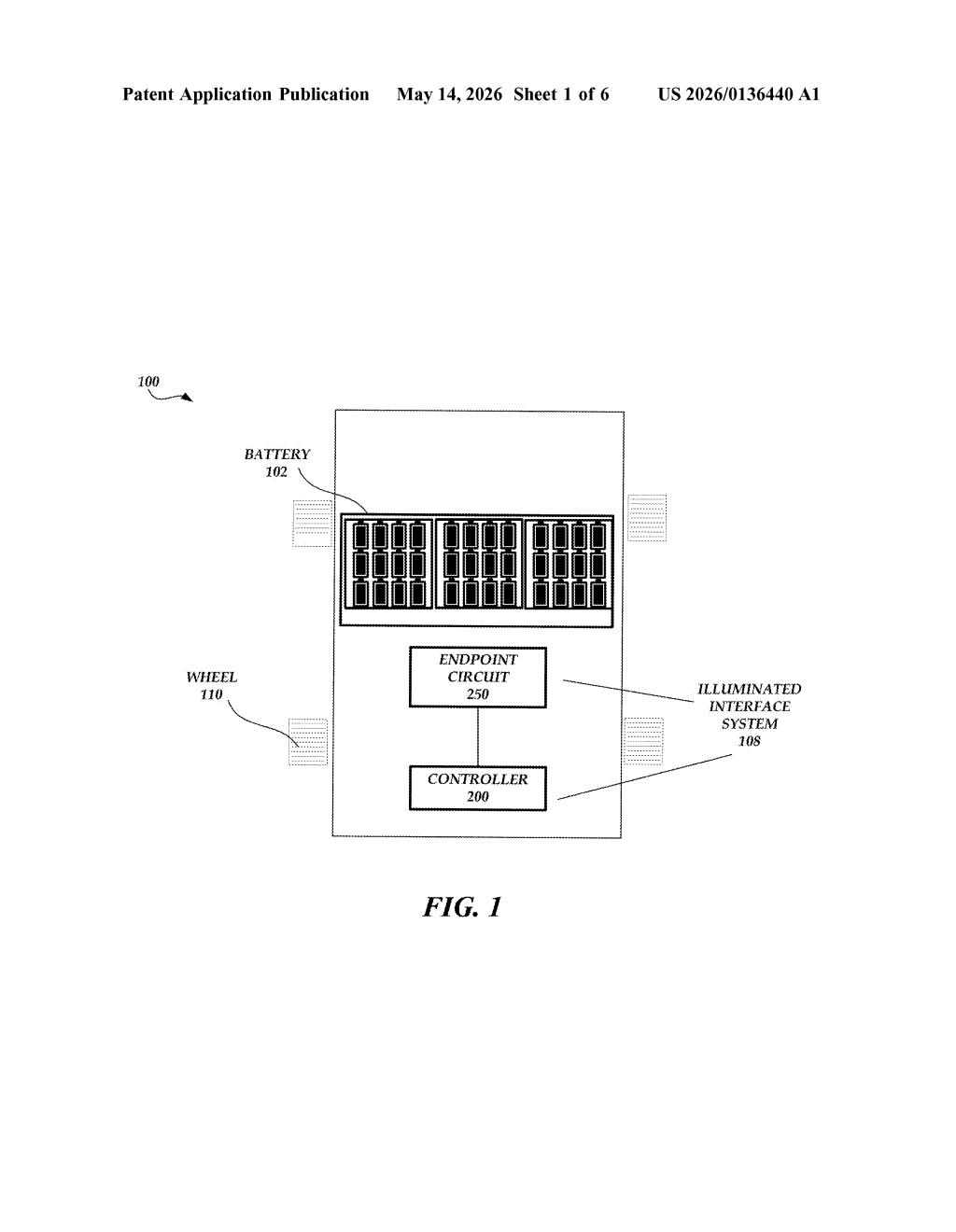
How Tesla's one-wire button trick saves wiring in your car
Imagine every glowing button in your car needs two separate wires: one to light it up, and another to tell the car you pressed it. That's how most systems work today, and in a vehicle with dozens of controls, those wires add up fast.
Tesla's patent describes a way to do both jobs over a single wire. The trick is timing: the controller sends power to the LED, then briefly switches that power off and uses that same wire to "listen" for whether the button was pressed. It's like a two-way conversation on a one-way street — it just takes turns.
This kind of wiring simplification is exactly what automakers pursue to cut weight, reduce cost, and make assembly easier. For Tesla, which already obsesses over reducing vehicle complexity, shaving wires out of button assemblies fits right into their manufacturing philosophy.
How Tesla alternates power and sensing on the same wire
The system has three main parts: an illumination circuit (drives the LED), a switch circuit (detects user input), and a controller that coordinates both — all connected through a single signal wire.
The clever part is in the controller's timing. It contains a load switch — essentially a transistor that can be toggled open or closed. When the load switch is closed, current flows and the LED lights up. When the load switch is opened, the drive signal stops, and the same wire is handed off to the sensing circuit, which checks whether the physical button is pressed.
- Drive phase: Load switch closes → current flows → LED illuminates
- Sense phase: Load switch opens → sensing circuit reads switch state on the same wire
- Result: Both functions share one conductor without interfering with each other
This time-multiplexed approach (sharing one channel by taking turns) is well-established in digital communications but applying it to something as low-level as a button-and-LED combo is an elegant bit of hardware design. The patent also notes the switch circuit can represent multiple states — meaning it could distinguish between, say, a short press and a long press.
What this means for Tesla's minimalist interior wiring
Tesla's vehicles are already built around radical simplification — fewer physical controls, more software-defined interfaces. When physical buttons do exist, making each one cheaper and lighter to wire is meaningful at scale. Fewer wires per button means less wiring harness weight, faster assembly, and fewer potential failure points.
This also hints at how Tesla might approach future interior redesigns. If illuminated controls can be daisy-chained or wired more simply, you could add more tactile, lit feedback points without the traditional wiring penalty. For consumers, the payoff would be subtler — maybe slightly snappier button response, or more reliable backlighting — but the real win is on the factory floor.
This is unglamorous but genuinely smart manufacturing-level engineering. It won't show up in a keynote, but patents like this are exactly how Tesla chips away at production cost and complexity one subsystem at a time. Worth keeping an eye on as a signal of their continued push toward simplified vehicle architecture.
Get our take in your Top Stories
Liked this breakdown? Add Patentlyze as a preferred source on Google, and our plain-English take shows up more often in your Top Stories the next time Tesla patent news breaks.
There are more where this came from
We read every patent application Big Tech publishes and send you the ones worth knowing. Plain English, free, every week.
Want this weekly breakdown for a company we don't cover? Patentlyze Pro →