
Sony Patents a Camera That Tilts Itself to Keep You Located
Sony is patenting a system that physically adjusts a camera's angle on the fly to improve how well a device knows where it is in space. It sounds simple, but the idea of letting the camera move to help with positioning rather than relying purely on software is an interesting hardware approach.
What Sony's auto-tilting camera system actually does
Imagine you're using an AR headset or a robot that needs to know exactly where it is in a room. It figures that out largely by looking at the world through a camera, but if the camera is pointed at a featureless ceiling or a blank wall, the device can get confused and lose track of its position.
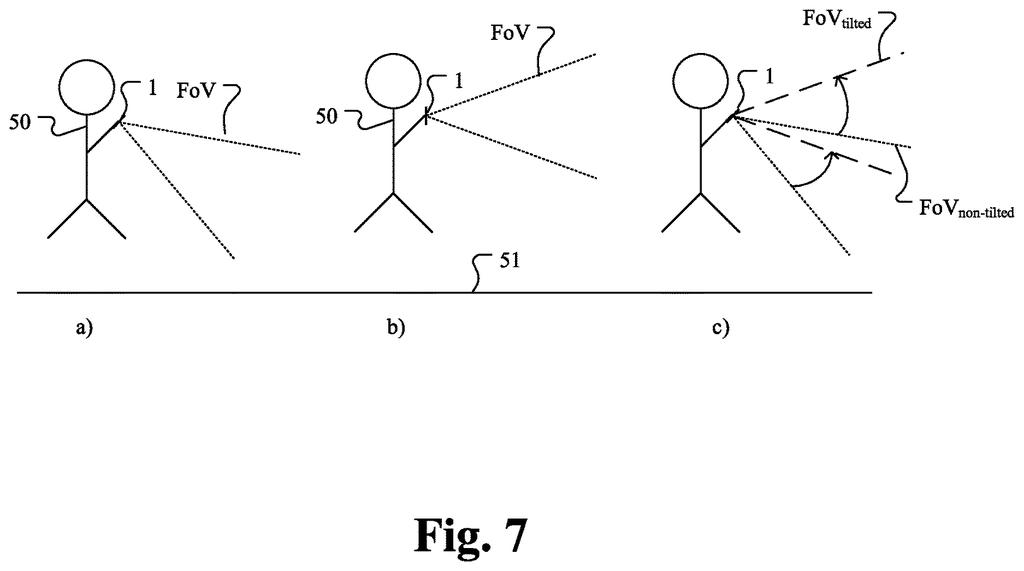
Sony's patent describes a system that solves this by automatically adjusting the camera's angle, its field of view, so it's always pointed somewhere useful for figuring out position. Instead of a fixed camera hoping the scene is helpful, the device steers the camera toward the best possible view.
Think of it like a driver who tilts their head to see a street sign more clearly, rather than just squinting at whatever happens to be straight ahead. The camera becomes an active participant in navigation, not just a passive sensor.
How the circuitry adjusts field of view for positioning
The patent describes an electronic device with onboard circuitry that actively controls the angle or field of view of a camera specifically to improve visual positioning and tracking. Visual positioning (sometimes called visual localization) is how devices like AR glasses, drones, and robots figure out where they are by analyzing camera images rather than relying on GPS.
The core idea is that a camera locked in one fixed position may be looking at areas of a scene that provide little useful information for figuring out location. By tilting or otherwise adjusting the camera, the device can orient the lens toward richer, more feature-dense parts of the environment, making the positioning calculations more accurate.
- Field of view adjustment: The system changes where and how wide the camera is looking.
- Tracking support: Continuous adjustment keeps the camera focused on trackable reference points as the device or scene changes.
- Visual positioning enhancement: Better-oriented images feed into the localization algorithms, reducing drift and errors.
The claim is broad. It covers essentially any electronic device that uses circuitry to adjust camera field of view for these purposes, which could apply across robots, headsets, smartphones, or cameras.
What this means for AR headsets and robot navigation
Visual positioning is the backbone of augmented reality and autonomous robotics. When a device loses track of its location in space, AR overlays jump around, robots bump into things, and navigation fails. Hardware that actively steers the camera toward useful visual landmarks could reduce those failures without requiring more powerful processors or better software algorithms alone.
For Sony specifically, this sits at the intersection of several product lines: PlayStation VR, professional cameras, and robotics work through Sony's subsidiary divisions. A system that keeps a camera actively oriented for the best positional accuracy could improve tracking in any of those contexts.
The underlying concept here is genuinely sensible: if your camera can move, use that movement to help the device stay oriented rather than wasting it. But the patent claim as filed is strikingly thin, covering the broad concept of adjusting a camera's field of view for tracking with almost no technical specificity. That makes this feel more like a placeholder claim than a detailed invention. Worth a note, but don't expect this specific filing to define how Sony products actually implement the idea.
There are more where this came from
We read every patent application Big Tech publishes and send you the ones worth knowing. Plain English, free, every week.
The drawings
15 drawing sheets from US 2026/0222689 A1 · click any drawing to enlarge


Want this weekly breakdown for a company we don't cover? Patentlyze Pro →