
Google Patent Uses Distance Data and Subject Isolation to Sharpen Photo Edits
Google is patenting a photo editing system that knows not just what's in a picture, but exactly how far away each object is, and uses both pieces of information together to make edits that look more realistic.
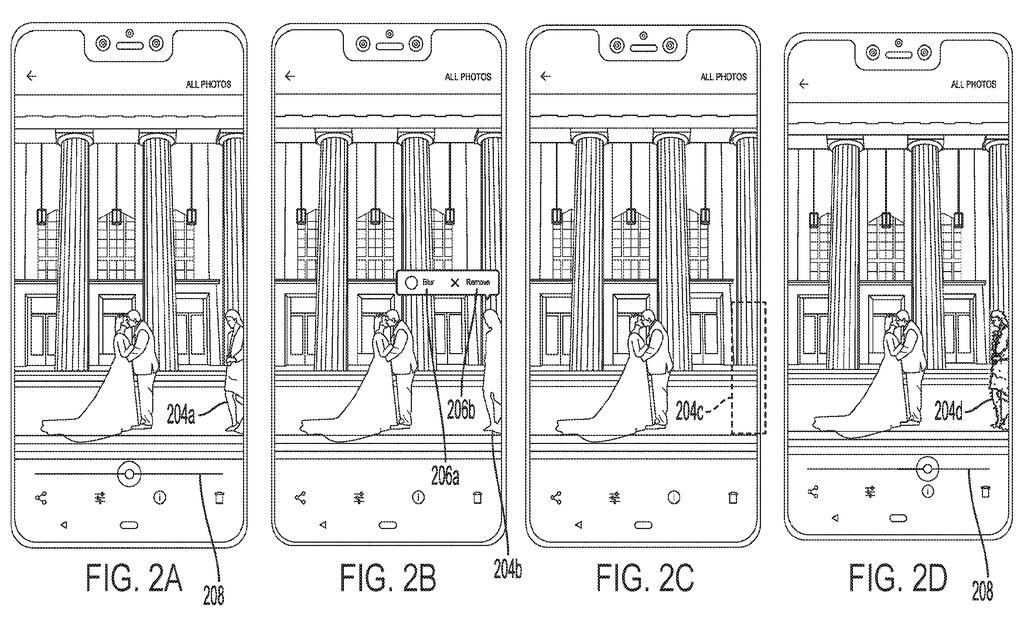
What Google's depth-aware photo editing actually does
When you edit a photo on your phone today, the app mostly treats the image as a flat grid of pixels. It doesn't really know that the person in the shot is three feet from the camera while the background is thirty feet away. That distance information changes a lot about what a realistic edit should look like.
Google's patent describes a system that combines two sources of information: a depth map (which records how far each part of the scene is from the camera) and segmentation data (which identifies and outlines individual objects, like a person or a dog). By pairing those two layers, the editing software can make decisions that respect both what something is and where it sits in three-dimensional space.
In practice, that could mean things like blur effects that match real lens physics, object removals that account for how lighting changes with distance, or interactive tools that let you select and adjust parts of a scene based on their actual depth.
How depth maps and segmentation work together
The patent describes a computer application that processes images using two parallel data streams alongside the raw photo itself.
Depth maps assign a distance value to every pixel in an image. Modern smartphone cameras, including Google's Pixel line, already capture this data using dual cameras or time-of-flight sensors. A depth map essentially turns a flat photo into something closer to a 3D scene description.
Segmentation data identifies and outlines distinct objects within the frame, labeling regions as "person," "sky," "car," and so on. This is a well-established computer vision technique that Google has used in products like Google Photos and the Pixel camera's Magic Eraser.
The novel part here is the combination: the system uses both the depth layer and the segmentation layer together when deciding how to apply or render edits. That pairing lets the software make editing decisions that are geometrically consistent with the original scene. For example, a lighting adjustment could fall off correctly with distance, or a blur effect could match the actual depth-of-field physics of a real lens rather than just blurring by edge detection alone.
What this means for Google Photos and Pixel cameras
For anyone who uses Google Photos or a Pixel phone, this kind of depth-plus-segmentation editing is the logical next step after features like Portrait Mode and Magic Eraser. Those tools already do partial versions of this, but they tend to handle depth and object identity as separate problems. Combining them in a single pipeline could make AI edits look significantly more natural, especially when removing objects or adjusting lighting.
From a competitive standpoint, Apple has been pushing similar depth-aware editing features through its iPhone camera system and Photos app. A patent like this signals that Google is actively working on a more unified technical approach, not just bolting features together one at a time.
This is a useful incremental patent, not a dramatic leap. Depth maps and segmentation are both mature technologies at Google, and the interesting question is whether combining them in an editing pipeline produces results that are visibly better than what Pixel phones already do. The patent's claims were partially canceled, which is a minor flag worth noting.
There are more where this came from
We read every patent application Big Tech publishes and send you the ones worth knowing. Plain English, free, every week.
The drawings
10 drawing sheets from US 2026/0220803 A1 · click any drawing to enlarge


Want this weekly breakdown for a company we don't cover? Patentlyze Pro →
Be the first to weigh in