
Intel Patent Fixes Washed-Out Faces in Photos Taken Against Bright Light
Taking a photo of someone standing in front of a bright window almost always ends in disappointment: either their face is too dark or the background is blown out. Intel's new patent describes a way to get both right from a single exposure.
What Intel's single-shot exposure fix actually does
Imagine you're on a video call and you sit in front of a sunny window. Your camera has to make a hard choice: expose for your face (which goes bright and washed out behind you) or expose for the window (which leaves your face looking like a silhouette). Most cameras try to split the difference, and most cameras lose.
The usual fix is to take several photos at different brightness levels and merge them together, a process called HDR. That works, but it's slow, power-hungry, and tricky to do in real time. Intel's patent describes a smarter way to handle this with just one shot. The system figures out the right brightness target for the subject, like a face, by looking at how the camera will later process and display the image, then works backward to set the exposure before the photo is even taken.
The result is that dark faces in bright scenes get lifted to a visible brightness, while the highlight details in the background are preserved, all without the overhead of blending multiple exposures.
How the tone-map and noise data set the exposure target
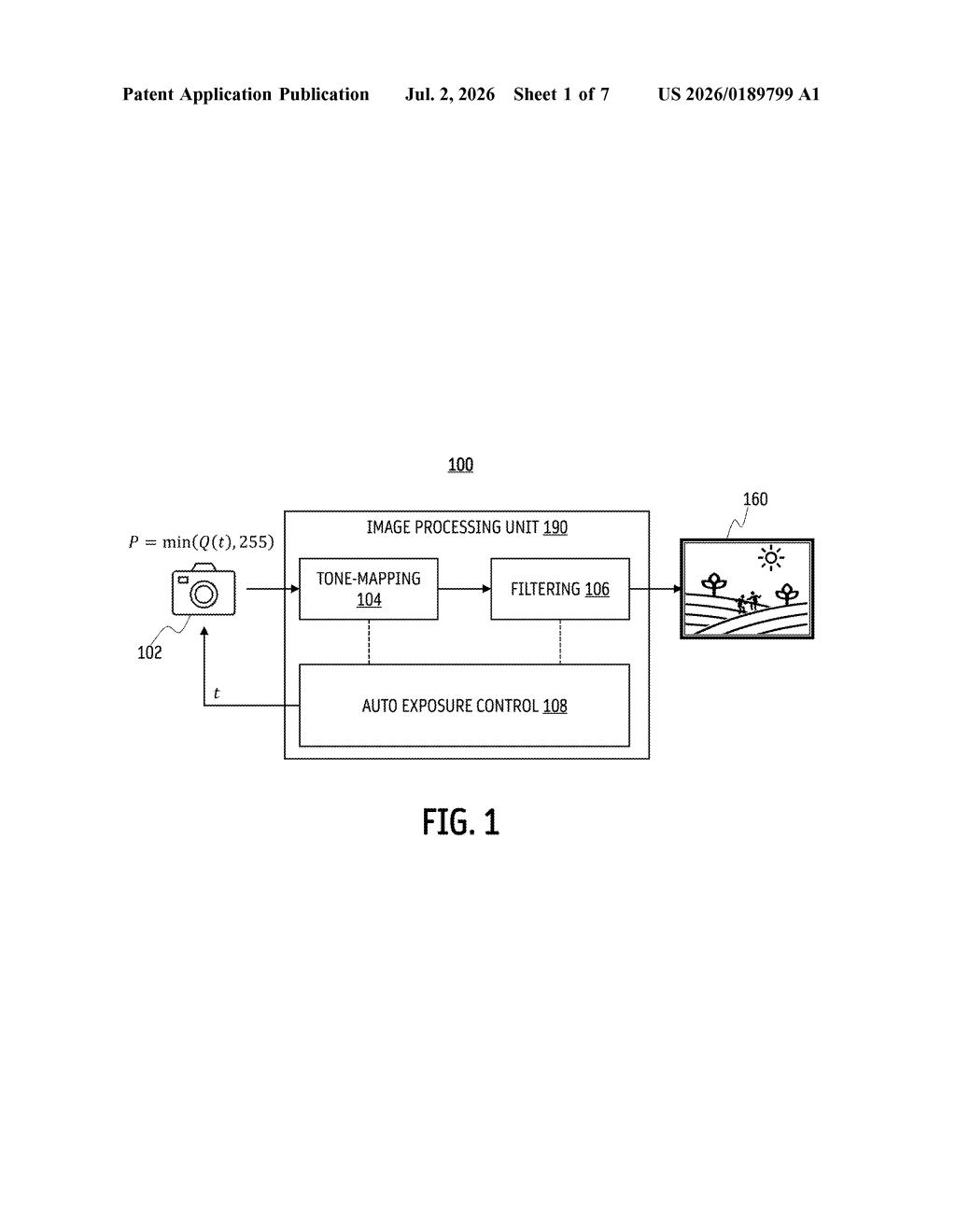
The patent describes an image processing unit with three connected pieces of logic working together.
- Tone-mapping logic: Tone mapping is the step where a camera compresses the wide range of light in a real scene into something a screen can actually display. Intel's system uses the specific tone-mapping function being applied as an input to the exposure decision, not just as an afterthought.
- Filtering logic: After tone mapping, a filter is applied to the output image, partly to reduce noise (the grainy speckles that appear in dark areas of a photo). The characteristics of this filter, including how much it smooths the image, are also fed into the exposure calculation.
- Exposure control logic: This is the core of the patent. Rather than using a simple average brightness measurement to set exposure, the system determines a brightness target for the subject by taking into account both the tone-mapping curve and the filter's behavior. It then translates that target into a concrete exposure setting for the image sensor.
By making the exposure decision aware of how the image will be processed downstream, the system can predict how a given exposure will actually look on screen and correct for it before capture, on a single sensor and in real time.
What this means for cameras in laptops and devices
This kind of exposure intelligence matters most in the cameras built into laptops, tablets, and other thin devices that power Intel chips. Those cameras typically have smaller sensors and less optical flexibility than a smartphone camera, which makes backlit scenes a persistent weak point. A software-driven fix at the exposure-control level could meaningfully improve video call quality without adding new hardware.
For end users, the practical payoff is fewer washed-out faces on video calls and better-looking photos in tricky lighting, all without draining extra processing power on multi-exposure merging. For Intel, it's a way to make devices with its chips look better in a category, front-facing cameras, where they have historically lagged behind dedicated mobile silicon.
This is a solid, focused engineering patent solving a real and annoying problem. It won't make headlines at a product launch, but if it ends up in Intel's image signal processor stack, you'll notice the difference every time you take a video call in front of a window. The approach of making exposure control aware of downstream processing is genuinely clever, not just a marginal tweak.
Get our take in your Top Stories
Liked this breakdown? Add Patentlyze as a preferred source on Google, and our plain-English take shows up more often in your Top Stories the next time Intel patent news breaks.
There are more where this came from
We read every patent application Big Tech publishes and send you the ones worth knowing. Plain English, free, every week.
Want this weekly breakdown for a company we don't cover? Patentlyze Pro →