
Samsung Patents a Navigation System That Stops Robots From Getting Stuck in Dead Ends
Every robot vacuum owner has watched their device bump helplessly in a corner for minutes on end. Samsung's new patent describes a system that detects exactly that kind of trap and automatically switches the robot into a smarter escape strategy.
What Samsung's robot 'escape mode' actually does
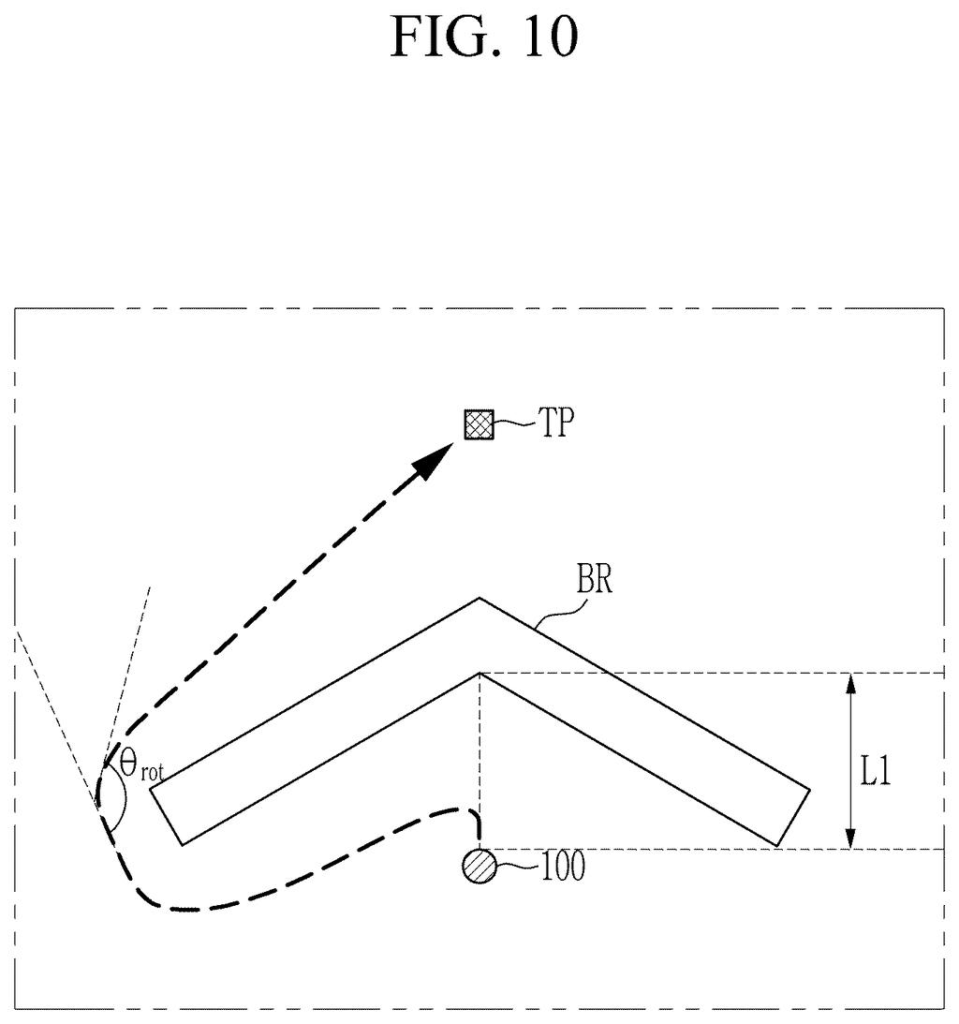
Imagine your robot vacuum gets wedged between a chair leg and the wall. It keeps trying to move forward, reversing slightly, then trying again, going nowhere. This is what engineers call a 'local minimum': a spot where the robot's normal obstacle-avoidance logic keeps looping without making progress.
Samsung's patent describes a system where the robot runs in two distinct modes. Mode one is its standard navigation: it detects obstacles with sensors and steers around them. Mode two kicks in specifically when the robot figures out it's trapped in one of those dead-end loops.
The switch between modes isn't random or AI-driven guesswork. It follows a fixed set of rules based on sensor readings, so the robot can reliably recognize the trap and take deliberate action to break out of it. Think of it like a GPS that doesn't just recalculate, it recognizes you've been circling the same block and picks a completely different kind of route.
How the rule-based mode switch detects and exits a local minimum
The patent covers a robot that carries a storage unit (to log what it's experienced while moving), at least one sensing unit (measuring distances to nearby objects in real time), and a central processor that decides which navigation mode to use based on all that data.
In Mode 1 (standard obstacle-avoidance), the robot moves normally and steers around anything it detects. This is the default state most of the time. In Mode 2 (escape mode), the robot switches to a different movement strategy after determining it has landed near a local minimum (a navigation dead end where normal steering keeps bringing the robot back to the same stuck position).
The key design choice here is the switching method. Rather than using a learned or probabilistic approach, Samsung's system uses a rule-based switching method: explicit, pre-written conditions derived from sensor readings that trigger the transition between modes. If the sensor data matches the pattern of a local minimum, the switch happens automatically and predictably.
This kind of deterministic control is often preferred in safety-critical or consumer robotics because its behavior is easier to test, certify, and debug than a neural-network-based decision system.
What this means for Samsung's home robot ambitions
Samsung has been openly investing in home robotics, including the Ballie companion robot. Getting stuck in corners is one of the most basic real-world failure modes for any autonomous mobile robot, and solving it reliably (rather than just making the avoidance logic more complex) is exactly the kind of foundational engineering a shipping product needs. A robot that can confidently escape dead ends without human intervention is a much more useful household device.
The rule-based approach also signals a deliberate engineering philosophy: keep the escape logic transparent and testable rather than offloading it to a black-box AI model. For a consumer product that operates around people and pets, that predictability has real practical value.
This is unglamorous but genuinely useful robotics work. The 'robot stuck in a corner' problem is so common it's become a meme, and a patent specifically targeting that failure mode with a clean, deterministic solution is a sign Samsung is working on the practical details of shipping a real home robot rather than just demoing impressive hardware.
There are more where this came from
We read every patent application Big Tech publishes and send you the ones worth knowing. Plain English, free, every week.
The drawings
28 drawing sheets from US 2026/0219679 A1 · click any drawing to enlarge


Want this weekly breakdown for a company we don't cover? Patentlyze Pro →