
Samsung Patents a System That Shrinks AI Models to Your Exact Specs
Large AI models are too big to run well on phones and other devices, so Samsung is patenting a way to shrink them down on request, letting whoever deploys the model dial in exactly how small or how accurate it needs to be.
What Samsung's on-demand AI compression actually does
Imagine you want to run a capable AI assistant on a phone instead of a data center server. The problem is that modern AI models are enormous, often taking up gigabytes of storage and requiring serious computing power. Squeezing them down (compressing them) makes them more manageable, but the tighter you squeeze, the more the quality of the AI's answers tends to suffer.
Samsung's patent describes a system where you tell the software what you actually need. You specify either how small you want the model to be, how accurate you want it to stay, or both. The system then automatically picks the best compression technique for those goals and applies it.
The practical upshot is that the same underlying AI model could be compressed differently depending on where it's going: a tighter, less accurate version for a low-end device, or a gentler compression that preserves more quality for a flagship phone. One system handles all of those scenarios without you having to be an AI engineer.
How the system picks and applies a compression algorithm
The patent covers a hybrid LLM compression framework, meaning it can draw from multiple compression strategies rather than being locked into one. The core loop works like this:
- The full model is stored in memory.
- A user (or an application acting on their behalf) submits a Quality of Service (QoS) requirement, essentially a target: hit this accuracy level, or shrink the model to this size, or find a balance between the two.
- The system evaluates the available compression algorithms and selects the one best suited to hit that target.
- The model is then compressed and delivered.
The compression algorithms themselves are not limited to one type. Common techniques include quantization (reducing the numerical precision of the model's internal numbers, like rounding to fewer decimal places), pruning (removing parts of the model that contribute least to its answers), and knowledge distillation (training a smaller model to mimic a larger one). By treating these as a menu to choose from based on user goals, the system avoids the one-size-fits-all problem.
The patent is written broadly enough to cover both the method (the steps) and the hardware apparatus (a device running those steps), which is standard practice for protecting the IP from multiple angles.
What this means for running AI on Samsung devices
Samsung makes everything from budget Android phones to high-end Galaxy flagships to data center chips. A compression system that can tune itself to different hardware tiers would let Samsung ship AI features more consistently across its entire product line, rather than reserving them for top-of-the-range devices. For you as a consumer, that could mean your mid-range Galaxy phone gets a capable on-device AI assistant instead of a watered-down one.
The broader context is that every major semiconductor and device company is racing to run AI inference (the part where the model actually answers your questions) locally on hardware rather than sending everything to the cloud. Compression is a key part of making that work. Samsung filing in this space signals it wants to control that compression layer in its own ecosystem rather than relying on third-party tools.
This is solid infrastructure work, not a flashy consumer feature. The concept of user-specified compression targets is genuinely useful and Samsung has the device breadth to make real use of it. That said, the claim is written very broadly, and compression techniques like quantization and pruning are already well-established fields, so expect this one to face scrutiny from patent examiners.
There are more where this came from
We read every patent application Big Tech publishes and send you the ones worth knowing. Plain English, free, every week.
The drawings
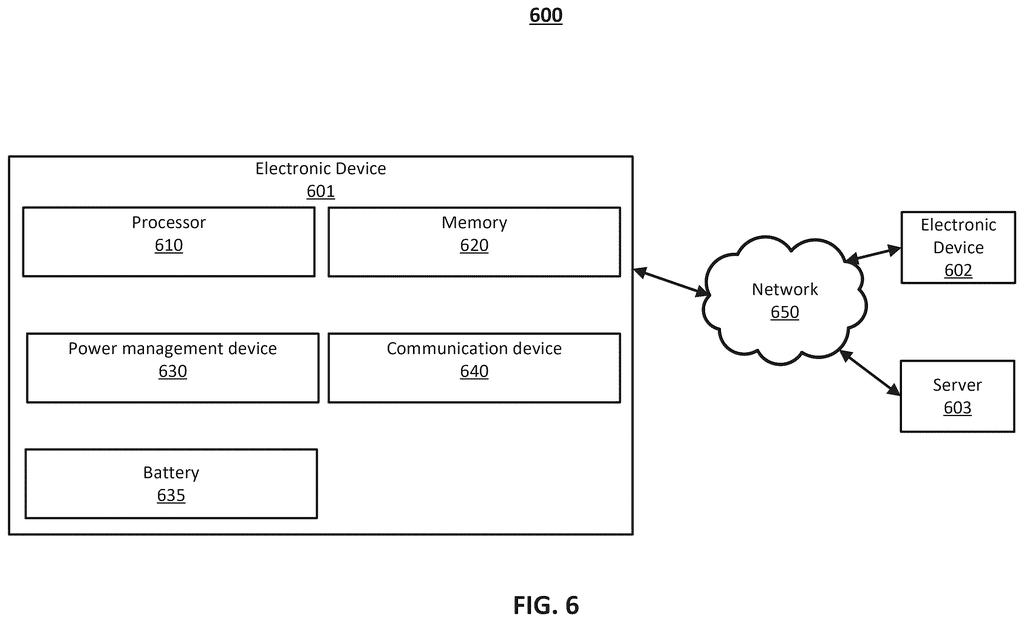
6 drawing sheets from US 2026/0220463 A1 · click any drawing to enlarge


Want this weekly breakdown for a company we don't cover? Patentlyze Pro →
Be the first to weigh in