
New Patent Reads Phone Logs to Infer User Interests
Samsung is patenting a way for your phone to build a picture of your interests just by watching how you use it, no surveys, no manual preferences, no asking.
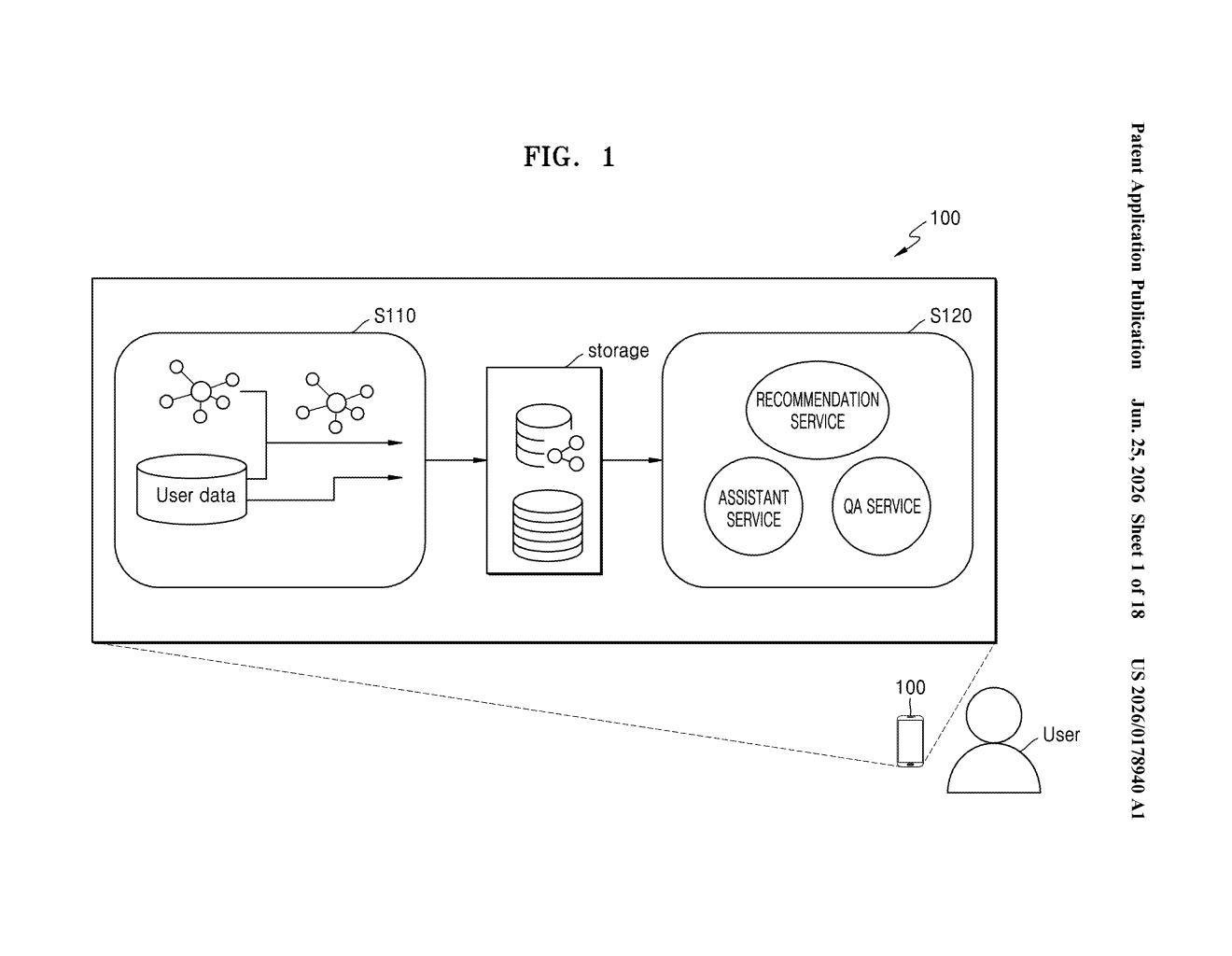
How Samsung's interest-inference system works for you
Imagine your phone notices that over the past two weeks you've been opening a travel app, searching for flights, and watching hiking videos. You never told your phone you were planning a trip, but it figured it out anyway. That's roughly the idea behind this Samsung patent.
The system works by combing through logs your device already keeps, things like which apps you opened, what you searched for, and what you tapped on. It organizes all of that into a kind of map of connected ideas, then looks for patterns that point to a clear interest or topic you've been focused on.
The key wrinkle is that it can focus on a specific window of time. Ask it what you were into last month versus this week, and it should give you different answers. Samsung appears to be building this for an AI assistant that can give you genuinely personalized suggestions based on what your recent behavior actually says about you.
How the knowledge graph traces your activity to interests
The patent describes a two-layer system built around knowledge graphs (think of a knowledge graph as a web of connected facts, where each "node" is a thing, like an app or a topic, and the lines between nodes show how they relate).
The first layer is a system log knowledge graph, which pulls from low-level device data like which processes ran and when. This layer produces what the patent calls "user interaction-based semantic index information", essentially a compact signal that says "here is what the user was actively doing."
The second layer is a user log knowledge graph, a richer map built from higher-level activity data: apps opened, content viewed, searches made. The system uses the signal from the first layer to find a "contact node" inside this second graph, a starting point that anchors the search.
From that anchor, the system fans out through connected nodes and picks the ones that meet a threshold condition, those become the inferred interests. Crucially, both graphs are tied to a time span extracted from the original query, so the system can answer questions like "what was I into three weeks ago" versus "what am I into right now" with separate, time-appropriate answers.
What this means for on-device AI personalization
On-device AI assistants are only as useful as their understanding of what you actually care about. Right now, most personalization either requires you to tell the system your preferences explicitly, or it relies on cloud-side data collection. Samsung's approach is notable because it appears designed to work entirely on the device, using logs that never need to leave your phone.
For Samsung's Galaxy AI ambitions, this kind of inference engine could power a more context-aware Bixby or future AI agent that anticipates your needs without you having to set up a profile. For users, the trade-off is familiar: more useful suggestions in exchange for your device paying close attention to everything you do.
This is real infrastructure work for on-device AI personalization, and it's more thoughtful than the usual "we'll just feed everything to a model" approach. The time-span anchoring is a genuinely clever detail that most interest-inference systems skip entirely. Whether Samsung ships this in a recognizable form is another question, but the core idea is solid and practically useful.
There are more where this came from
We read every patent application Big Tech publishes and send you the ones worth knowing. Plain English, free, every week.
Want this weekly breakdown for a company we don't cover? Patentlyze Pro →