
Samsung Patents a Pressure Sensor That Knows When It's Broken
Most sensors can tell you when they detect something. Samsung's new patent describes one that can also tell you when it's stopped working correctly.
What Samsung's self-checking pressure sensor actually does
Imagine a button on your phone that stops responding. Is it because nobody pressed it, or because the sensor itself is broken? Right now, most devices can't tell the difference from the inside.
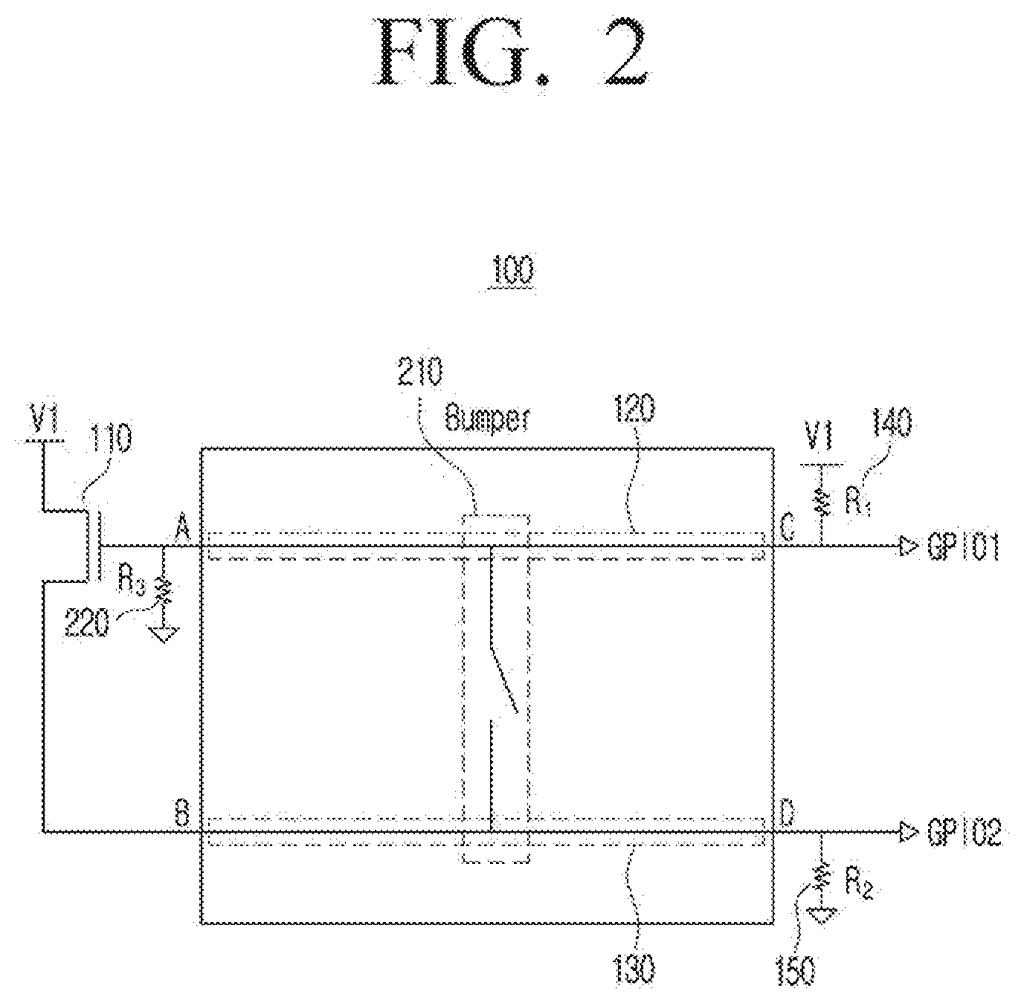
Samsung's patent describes a small circuit built around two conductive strips that touch when you press on a surface. A processor watches the voltage levels at two specific points in the circuit. Based on what those readings look like together, it can figure out whether a real press happened, whether nothing happened, or whether something in the circuit has gone wrong.
This means a device using this system could automatically flag hardware errors instead of silently misbehaving. Think of it like a smoke detector that also has a low-battery warning: it doesn't just detect the event you care about, it also tells you when it can't do its job.
How the transistor circuit separates a press from a fault
The patent describes a circuit built around a single transistor (a tiny electronic switch) with two conductive strips placed so that physical pressure brings them into contact with each other.
- One conductor connects to the gate terminal of the transistor, which controls whether the switch is open or closed.
- The other conductor connects to the source terminal, where current flows out.
- Each conductor is also tied to a reference voltage through a resistor, so the processor always has a readable voltage level to inspect, whether or not a press occurs.
The key innovation is that the processor monitors both voltage points at the same time. When the conductors touch (a press), the voltages shift in a predictable, paired way. If only one voltage shifts unexpectedly, or if the readings don't make sense together, the processor flags it as an error rather than a button press. This is called fault discrimination: using the relationship between two signals, not just one, to tell normal operation from a broken state.
What this means for foldables and wearable pressure sensing
For consumer electronics, silent sensor failures are a real problem. A foldable phone's crease sensor, a wearable's grip detector, or an industrial stylus tip could all stop working without any obvious sign. This circuit gives a device a way to catch those failures automatically and surface them to software.
For Samsung specifically, the timing is interesting given the company's heavy investment in foldable phones and Galaxy Watches, where physical pressure sensing plays a bigger role than in standard flat-screen devices. A sensor that can self-report errors could reduce warranty returns and make diagnostics faster for repair technicians.
This is a modest but genuinely practical patent. The idea of using two-point voltage monitoring to separate a real press from a circuit fault is the kind of unglamorous engineering that makes devices more reliable over time. It's not a headline feature, but it's the sort of thing that improves hardware quality scores.
There are more where this came from
We read every patent application Big Tech publishes and send you the ones worth knowing. Plain English, free, every week.
The drawings
10 drawing sheets from US 2026/0219123 A1 · click any drawing to enlarge


Want this weekly breakdown for a company we don't cover? Patentlyze Pro →