
Apple Patents Phone Activation Without Visiting a Carrier Store in Person
Buying a new phone and needing to visit a carrier store just to get service activated is one of those small but genuinely annoying friction points. Apple's latest patent describes a system to handle the whole thing on your device, no store visit required.
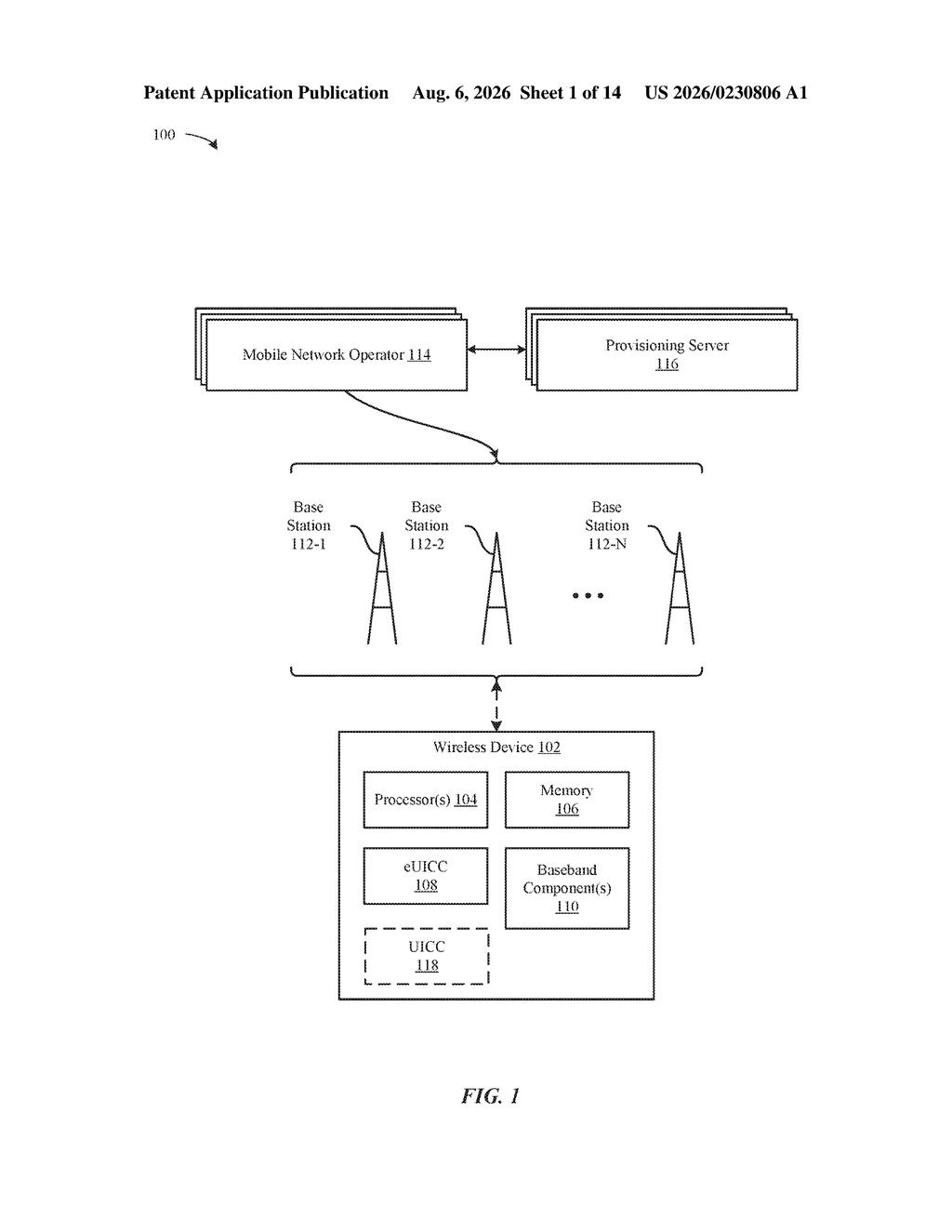
What Apple's on-device SIM activation actually does
Imagine you buy a new iPhone online and want to get it connected to your carrier. Right now, depending on the carrier and country, that might mean a trip to a store, a call to customer service, or wrestling with a finicky app. Apple's patent describes a cleaner path: your phone talks directly to a server run by Apple, which acts as a go-between with your carrier's systems to verify who you are and switch on your SIM card.
The process works a bit like two-factor login. You enter your carrier account credentials on the device, and the system sends back a one-time code you confirm. If everything checks out, your SIM is activated right there on the phone, no retail counter involved.
This applies to the kind of digital SIM (eSIM) already built into most modern iPhones, meaning there's no physical card to swap either. The whole setup and verification happens in software, handled between your phone and servers behind the scenes.
providing, to a mobile network operator (MNO) back-end system of an MNO, a first user authentication request message that includes a user credential obtained from the wireless device; obtaining, from the MNO back-end system, a first user authentication response message that includes a unique token identifier (ID) …
Translation: The server asks the carrier network to verify the user and hands back a secure token.
How the two-step token handshake activates the SIM
The patent describes a device services (DS) server, run by Apple, that sits between your iPhone and a mobile network operator's (MNO) back-end systems. Instead of your phone talking to the carrier directly, or you needing to visit a store, Apple's server acts as a proxy (a trusted middleman) handling the credential exchange on your behalf.
The authentication flow works in two rounds:
- Your phone sends your carrier login credentials to Apple's server, which passes them to the carrier. The carrier responds with a unique token, a temporary identifier tied to your account.
- The phone then receives that token, generates a one-time code, and sends both back through Apple's server to the carrier. The carrier confirms the match and signals that authentication is complete.
Once that two-step handshake succeeds, the SIM profile (the digital file that tells the network who you are) is downloaded and installed on the device. The patent notes that this can happen immediately when you first set up a new device, or be deferred until a later time, giving carriers some flexibility in how they structure their activation workflows.
The system is designed to work with eSIM (embedded SIM) technology, which is already standard in recent iPhone models, though the patent's language is broad enough to cover other SIM form factors as well.
Activation of the SIM occurs directly on the wireless device without requiring in-person interaction at a retail sales location.
Translation: You can activate your phone service entirely on the device without visiting a store.
What this means for buying and setting up a new phone
For regular users, this is about cutting out one of the more tedious steps in getting a new phone running. If Apple can get carriers to hook into this system, activating service on a new iPhone could become as quick as logging into an account, rather than requiring a trip to a store or a lengthy hold with customer support. That matters most for people buying phones online or in markets where carrier stores are sparse.
For Apple, centralizing this flow through its own servers also means it can offer a consistent activation experience across carriers and regions, rather than relying on each carrier to build and maintain its own app or portal. It fits a long-running pattern of Apple wanting to own as much of the device setup process as possible.
This is infrastructure work, not a consumer feature announcement, but it's the kind of patent that shapes how millions of people experience buying a phone. The two-step token system is well-established security practice, so the novelty here is more about Apple positioning itself as the activation layer between carriers and devices than about any cryptographic breakthrough. Worth tracking if you follow eSIM adoption or Apple's carrier relationships.
There are more where this came from
We read every patent application Big Tech publishes and send you the ones worth knowing. Plain English, free, every week.
The drawings
14 drawing sheets from US 2026/0230806 A1 · click any drawing to enlarge


Want this weekly breakdown for a company we don't cover? Patentlyze Pro →
Be the first to weigh in