
Apple Patent Brings Centimeter-Level GPS Accuracy to Future Smartphones
Your phone's GPS is good enough to get you to the right block, but it often can't tell which side of the street you're on. Apple is patenting a technique that could shrink that error from meters down to centimeters.
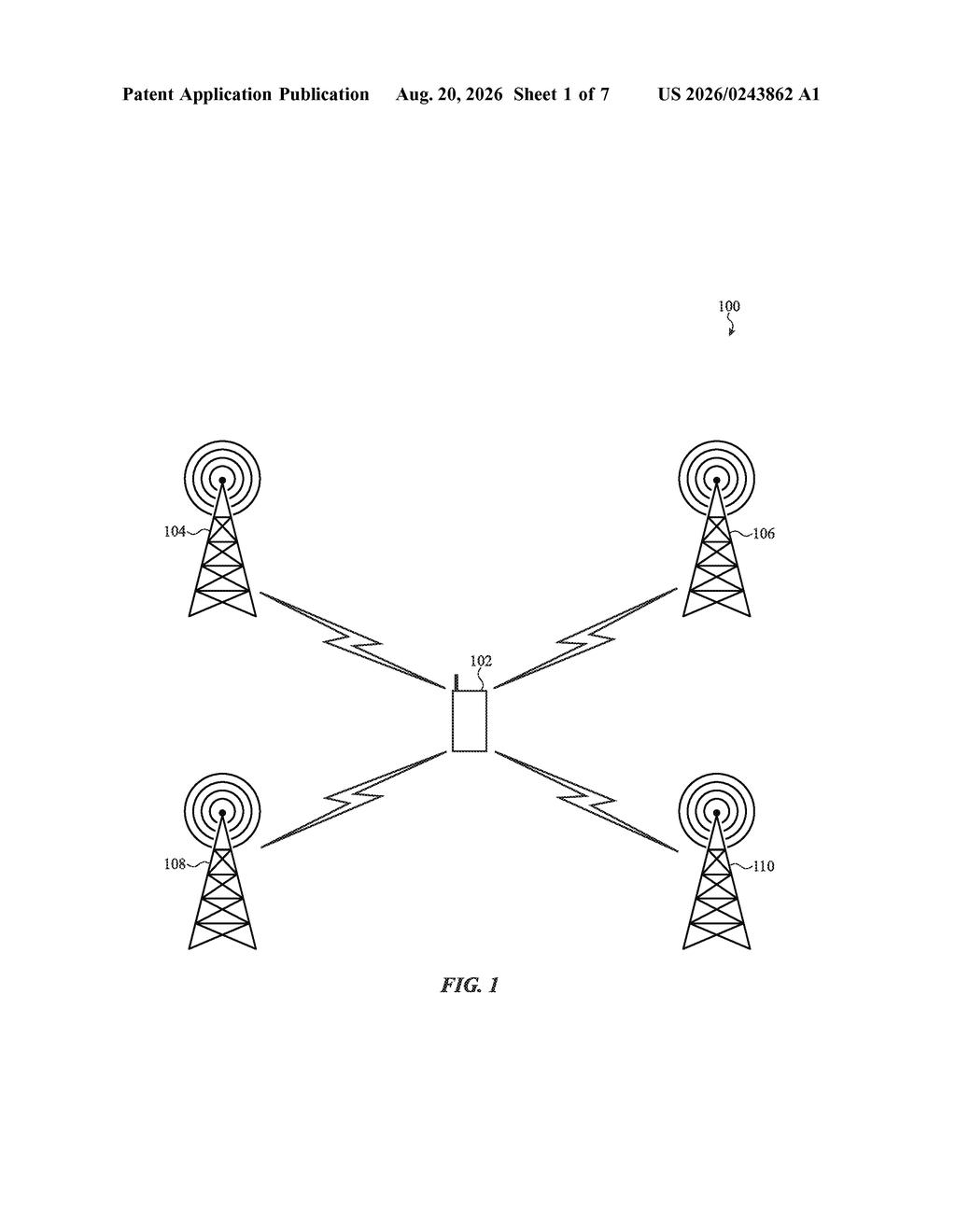
What Apple's carrier phase positioning actually does for you
You're walking through a busy city, following turn-by-turn directions, and your blue dot keeps jumping between buildings. Standard GPS works by measuring how long a radio signal takes to travel from a satellite (or cell tower) to your phone. The problem is that timing-based measurement has a built-in sloppiness of a few meters at best.
Apple's patent describes a different approach called carrier phase positioning. Instead of measuring how long a signal takes to arrive, the phone measures the exact shape of the radio wave itself when it lands. Think of it like the difference between counting how many seconds a wave takes to reach the shore versus measuring exactly where on the wave's crest it is when it touches your foot. The second method is far more precise.
To do this, your phone first tells the network what it's capable of, and the network then sends specially configured signals tuned to those capabilities. The phone can either listen to those signals from the network or send its own reference signals back. Either way, the result is a location fix that could be accurate to within centimeters rather than meters.
perform the CPP measurements on the plurality of DL PRS symbols, the CPP measurements comprising carrier phase of the signal on arrival (CPoA) measurements and carrier phase difference of the signal of arrival (CPDoA) measurements …
Translation: The phone calculates its exact location by measuring the precise phase of radio waves arriving from cellular towers.
How the phone negotiates its own positioning setup
The patent describes a system where the phone (called a UE, or user equipment, in cellular engineering language) starts a negotiation with the network by broadcasting its carrier phase positioning (CPP) capabilities. This tells the base station what kind of precision measurements the phone can handle, so the network doesn't send signals the phone can't use.
Based on that exchange, the phone receives one of two types of specially tuned signal configurations:
- Downlink PRS (Positioning Reference Signals): signals the network broadcasts specifically for the phone to measure. The phone analyzes the carrier phase of these signals on arrival (called CPoA) and the difference in phase between signals arriving from different towers (CPDoA). Together, these measurements triangulate position with much higher precision than timing alone.
- Uplink SRS (Sounding Reference Signals): signals the phone transmits back toward the network. The base station then does the phase measurement on its end, which can work even if the phone's own measurement hardware is limited.
Carrier phase positioning works because a radio wave oscillates at a known, regular frequency. By comparing the exact phase of the wave at arrival against a reference, the receiver can calculate distance far more precisely than timing-based methods allow. The catch is that the phone and network have to be configured together to make it work, which is exactly what this patent's capability-exchange mechanism handles.
The patent covers both the uplink and downlink paths, giving the system flexibility depending on whether the network or the phone is doing the heavy measurement work.
The processor is configured to transmit, via the transceiver, UE capability information indicating at least one capability of the UE regarding carrier phase positioning (CPP) measurements.
Translation: The device tells the network whether it is capable of using advanced signal tracking to determine its location.
What this means for location accuracy on future iPhones
Carrier phase positioning has been used in professional surveying equipment for decades, but it has never made it into mass-market phones in a standardized way. If Apple implements this in a future iPhone, the practical payoff would show up in situations where you need to know exactly where you are: navigating a parking garage, finding your seat in a stadium, or telling an autonomous delivery robot which door you're standing in front of.
Apple filing this as a phone-level capability (rather than a chip or infrastructure patent) suggests the company sees it as a device feature, not just a network upgrade. The latest Big Tech patents in the cellular positioning space show a clear industry push toward sub-meter accuracy as AR, autonomous vehicles, and indoor navigation all demand far tighter location data than today's GPS provides.
Apple's 335th filing among the patents we've tracked in our Apple coverage since May joins a run that includes a smarter tap detector and an optical zoom for thin phones.
The real-world payoff is concrete: a phone that knows you are on the north sidewalk, not the south sidewalk, and guides you to the correct building entrance. That is a failure people notice today, every time a navigation app sends them to the wrong side of the block.
Apple's patent covers more than just how to take a precise measurement. It covers the full back-and-forth between your phone and the network that makes precise measurement work for millions of people at once. That coordination problem is the one that has kept this kind of accuracy out of everyday phones until now.
Get our take in your Top Stories
Liked this breakdown? Add Patentlyze as a preferred source on Google, and our plain-English take shows up more often in your Top Stories the next time Apple patent news breaks.
There are more where this came from
We read every patent application Big Tech publishes and send you the ones worth knowing. Plain English, free, every week.
The drawings
7 drawing sheets from US 2026/0243862 A1 · click any drawing to enlarge


Want this weekly breakdown for a company we don't cover? Patentlyze Pro →
Be the first to weigh in