
Qualcomm Patents an AI That Copies Motion Style From One Video and Applies It to Another
Qualcomm has filed a patent for a system that can lift the way something moves in one video and apply that motion to a completely different subject. Think of it like copying a dancer's choreography onto a cartoon character, automatically.
How Qualcomm's motion-transfer AI actually works
Imagine you have a short clip of a person dancing, and you want your own photo to move the same way, without hiring an animator or using a complicated editing suite. That's the core idea behind this Qualcomm patent.
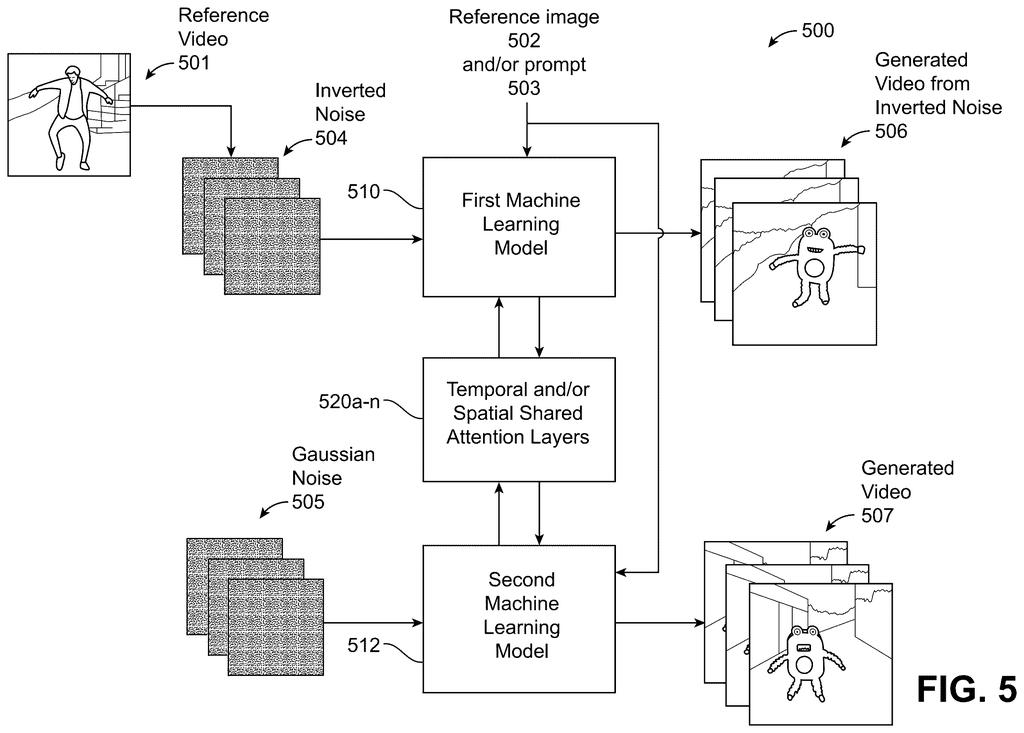
The system takes two inputs: a reference video that shows the motion you want to copy, and a reference image of the subject you want to animate. Two AI models work in parallel, one studying the motion in the video, the other focusing on the appearance of your chosen image. A third shared layer merges what both models learned.
The result is an output video where your subject moves the way the reference video does, but looks like the original image. The whole process is designed to run on a single device, which fits squarely into Qualcomm's push to put AI directly on phones and chips rather than in the cloud.
process, using a first machine learning model, a reference image and a reference video including inverted noise to generate first features …
Translation: An AI model analyzes a source image and video containing special noise patterns to extract motion data.
How two AI models share attention to blend motion and appearance
The patent describes a two-model pipeline for what researchers call motion-customized video generation.
- Model one (the motion reader) takes a reference video that has been processed through a technique called noise inversion (a way of encoding a real video back into the compressed mathematical form that AI video models understand). It also takes a reference image. Together, they produce a set of features capturing how things move in the clip.
- Model two (the appearance model) takes the same reference image, but instead of the real video, it starts from pure random noise, known as Gaussian noise. This is the standard starting point for AI image and video generators. It produces a parallel set of features focused on what the subject looks like.
- Shared attention layers sit between the two models. Attention, in AI terms, is a mechanism that lets a model decide which parts of its input to pay most attention to (similar to how your eyes focus on a moving object and blur the background). By sharing these layers, motion information from model one can influence what model two generates.
The output is a video where the subject from the reference image moves according to the motion pattern extracted from the reference video. The patent positions this as a general framework that could apply to faces, bodies, objects, or other content types.
… process, using one or more shared attention layers, the first features from the first machine learning model and the second features from the second machine learning model to generate shared attention features …
Translation: Shared neural layers combine the extracted motion style with the target character to build the final video.
What this means for on-device AI video generation
Qualcomm's core business is making chips for phones and other mobile devices, and the company has been investing heavily in running AI models locally on those chips rather than sending data to remote servers. A patent like this fits that strategy: if video generation can be made efficient enough to run on a Snapdragon processor, it becomes a feature differentiator for Android handsets.
For you as a user, on-device motion transfer would mean being able to animate a photo of yourself or a character without uploading anything to a third-party server. That has real privacy implications. It also suggests Qualcomm is positioning its silicon as a platform for creative AI tools, competing on more than just raw processing speed.
This is a real technical approach to a problem that AI video tools have struggled with: keeping a subject looking like themselves while faithfully copying motion from another source. The shared-attention architecture is the kind of engineering detail that separates polished output from the wobbly, identity-shifting results you see in many current tools. Whether Qualcomm ships this as a chip-level feature or licenses the technique, it signals the company is serious about generative video as a hardware differentiator, not just a cloud-side party trick.
There are more where this came from
We read every patent application Big Tech publishes and send you the ones worth knowing. Plain English, free, every week.
The drawings
11 drawing sheets from US 2026/0230685 A1 · click any drawing to enlarge


Want this weekly breakdown for a company we don't cover? Patentlyze Pro →
Be the first to weigh in