
Salesforce Patents a Way to Keep Business AI Chatbots On-Topic
AI chatbots deployed for business use have a persistent problem: they wander. A customer-service bot trained to handle billing questions will, if you push it, start opining on topics it was never meant to touch. Salesforce's new patent tries to catch that drift before the response ever reaches the user.
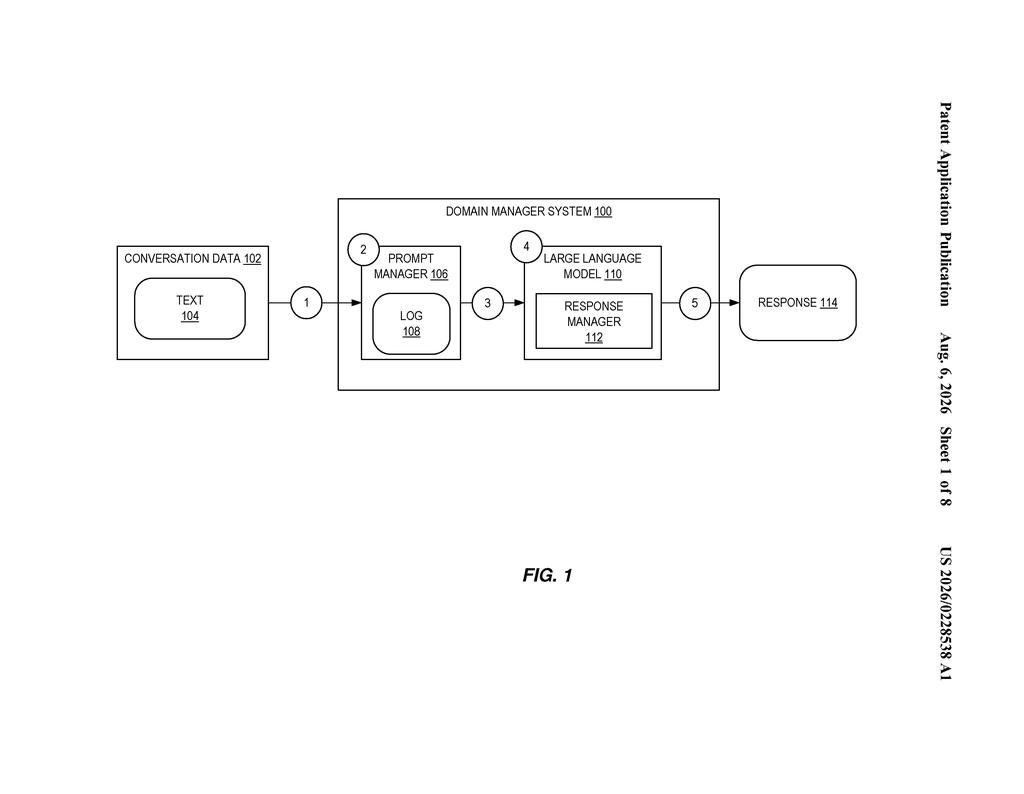
How Salesforce stops AI from going off-script
Imagine you hire a customer-service rep and tell them to only answer questions about your software product. A good manager would pull them aside the moment they started offering unsolicited legal advice. Salesforce's patent is essentially that manager, but built directly into an AI system.
The idea is to watch the AI's internal thinking while it is still forming a response, not after the fact. The system checks whether what the AI is about to say fits within a pre-approved topic area, and if it doesn't, it steps in and steers the response back on course.
For businesses that deploy AI assistants, this matters a lot. Right now, keeping an AI "in its lane" usually requires expensive fine-tuning or constant prompt engineering. Salesforce's approach would bake the guardrail directly into how the model processes language, making the constraint harder to accidentally bypass.
… determining, based at least on the output and a previously detected sub-space representing outputs of the transformer block that have a characteristic, whether the response being generated is not within the previously detected sub-space, wherein the characteristic represents one or more portions of a specific domain or alignment with a policy; …
Translation: The system checks if the bot is straying outside approved topics or rules while generating text.
How the transformer sub-space check actually works
Large language models generate text one token (roughly one word or word-fragment) at a time. Internally, they pass information through a series of processing layers called transformer blocks. Each block produces a numerical representation of the text being processed.
Salesforce's patent describes a governance layer that monitors these internal representations at one of those intermediate blocks. Before the patent was filed, the system would have been shown examples of "in-domain" content, and it uses those examples to define a sub-space (think of it as a mathematical neighborhood that in-domain responses tend to cluster inside).
During a live conversation, the system checks whether the current representation falls inside that neighborhood:
- If it does, generation continues normally.
- If it doesn't, the system flags the response as out-of-domain and applies a constraint, such as blocking the response, modifying it, or triggering a fallback.
The claim also covers policy alignment, not just topic relevance. That means the same mechanism could theoretically be used to enforce content policies (no harmful output, no confidential data) in addition to keeping the AI focused on a specific business domain.
Techniques are described herein for decreasing the likelihood of out-of-domain LLM responses. In operation, it is determined whether a representation of an input token, generated during an intermediate step of the LLM operations, is in-domain or out-of-domain based on a previously detected sub-space.
Translation: Methods are used to catch off-topic chatbot answers mid-generation by analyzing its internal math.
What this means for enterprise AI guardrails
Most enterprise AI deployments today rely on external filters that check a finished response after the model has already generated it. That approach can be slow and is easy to circumvent with clever prompting. Salesforce's method works inside the model's own processing loop, which makes it structurally harder to bypass and potentially faster since you're not waiting for a separate safety pass.
For Salesforce customers using products like Einstein AI or Agentforce, this kind of built-in guardrail could be a meaningful selling point. Regulated industries, such as financial services and healthcare, need AI that stays strictly within approved boundaries. A system that enforces those boundaries at the model layer, rather than tacking on external filters, is a more credible answer to compliance questions.
This is a genuinely practical patent, not a moonshot. The problem it addresses, AI systems that drift outside their intended scope, is one of the top real-world complaints from enterprise buyers right now. Whether the sub-space detection approach is better than alternatives like classifier-based filtering is a fair technical question, but the direction Salesforce is pointing is exactly where the market needs to go.
There are more where this came from
We read every patent application Big Tech publishes and send you the ones worth knowing. Plain English, free, every week.
The drawings
8 drawing sheets from US 2026/0228538 A1 · click any drawing to enlarge


Want this weekly breakdown for a company we don't cover? Patentlyze Pro →