
New Patent Trains AI Locally Without Sharing Your Data
Samsung is patenting a way to let AI models learn from your personal data on your phone, then improve a shared global model, all without your raw data ever leaving the device.
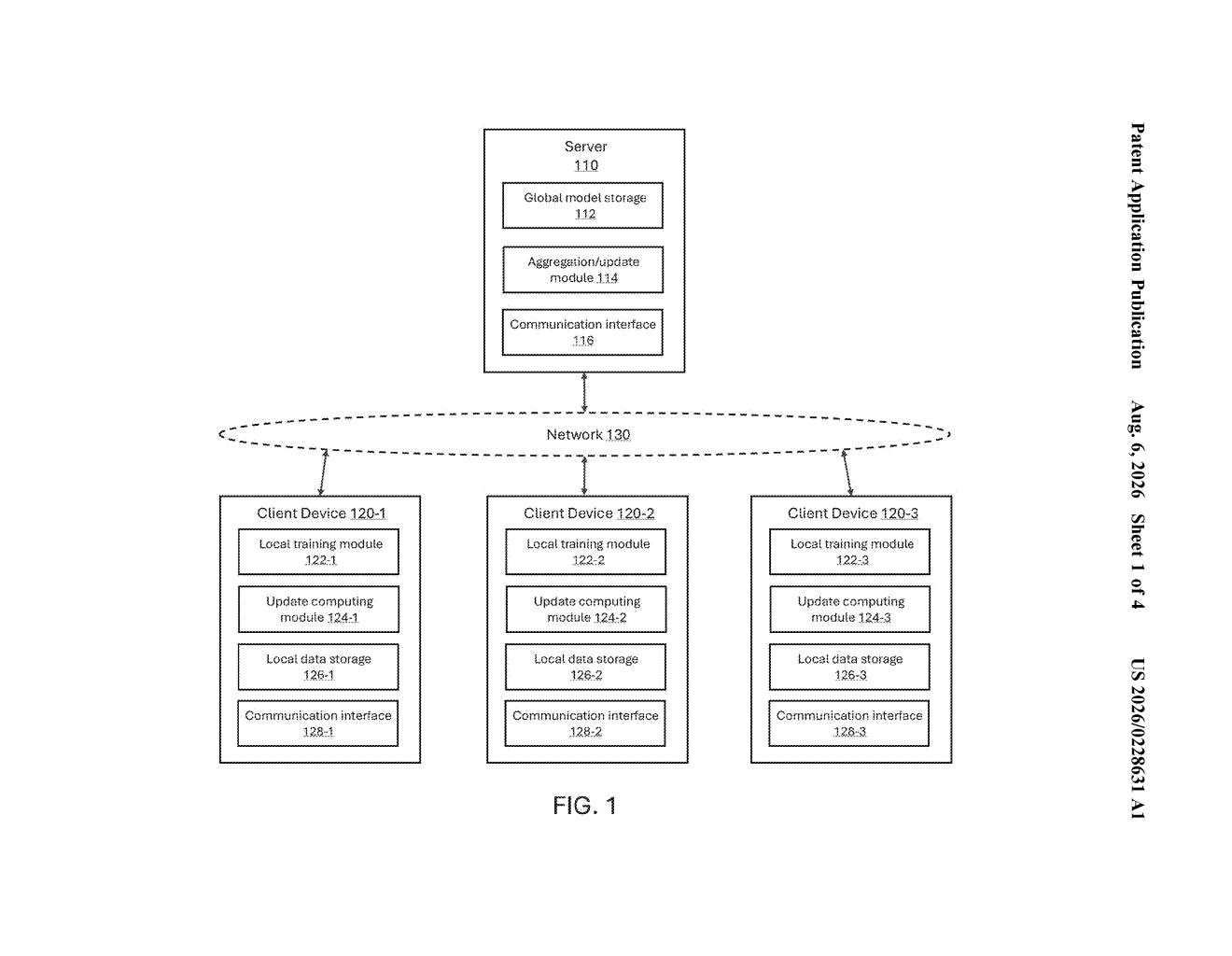
How Samsung's on-device AI personalization actually works
Imagine your phone's AI assistant gets better at predicting what you need, but to do that, the company's servers normally need to see everything you type, say, or do. That's a privacy tradeoff most people accept without realizing it.
Samsung's patent describes a different approach. Each device keeps its own private copy of an AI model and trains it locally using only your data. The device then sends back a small summary of what it learned, not the data itself, to a central server. The server uses those summaries from thousands of devices to improve a shared "global" model, which everyone then gets back.
The clever twist here is that the shared model is specifically designed to be a good starting point for personalization. Rather than optimizing for average performance across all users, it's built to adapt quickly to any individual. Think of it like a recipe that's written to be easy to modify, rather than one that only tastes good if you follow it exactly.
… performing, at each client device, a plurality of local fine-tuning steps on the global model using local training data of the client device to generate a personalized model for the client device …
Translation: Your device trains the AI locally using your private data to create a custom version just for you.
How the global model updates without seeing your private data
This patent describes a system called federated meta-learning, which combines two ideas: federated learning (training AI across many devices without centralizing data) and meta-learning (training a model to be easy to fine-tune, not just accurate on its own).
Here's the flow:
- Each device receives a global model from the server, a shared AI starting point.
- The device runs several local fine-tuning steps, adjusting the model using only the data stored on that device.
- After fine-tuning, the device computes update information, essentially a description of how the model changed, and sends only that to the server.
- The server aggregates updates from all participating devices and revises the global model accordingly.
The key technical detail is what the server optimizes for. Normally, federated learning tries to minimize how wrong the global model is before fine-tuning. This patent optimizes for how wrong the personalized models are after fine-tuning. That's a meaningful difference: the server is essentially asking, "what starting point makes each device's local training most effective?" rather than "what single model works okay for everyone?"
This approach is closely related to a well-known meta-learning algorithm called MAML (Model-Agnostic Meta-Learning), adapted here for the distributed, privacy-constrained setting of federated networks.
… updating, at the server, the global model based on the update information received from the client devices, wherein the updating is based at least in part on a loss of the personalized models evaluated after the plurality of local fine-tuning steps …
Translation: The server improves the main AI using only the privacy-safe updates sent back from everyone's devices.
What this means for private AI on Samsung devices
For Samsung, which makes hundreds of millions of phones and increasingly builds on-device AI into its Galaxy lineup, this kind of system could allow personalized AI features (keyboard predictions, photo categorization, health insights) to improve over time without requiring users to upload their private information. That's a real selling point as privacy regulations tighten globally and users grow warier of data collection.
The broader implication is competitive. Apple has been vocal about on-device AI as a privacy differentiator. A federated meta-learning system like this gives Samsung a technical foundation to make similar claims with more substance behind them. Whether the approach works well at the scale of real-world device fleets is a separate question the patent doesn't address, but the architecture itself is sound and grounded in published research.
This is a solid, research-grounded patent rather than a speculative moonshot. The federated meta-learning concept is well-established in academic literature, so Samsung isn't inventing something from scratch here, but translating it into a deployed-system patent is a meaningful step. If Samsung ships this in a real product, it would be a genuine privacy-friendly AI improvement worth paying attention to.
There are more where this came from
We read every patent application Big Tech publishes and send you the ones worth knowing. Plain English, free, every week.
The drawings
4 drawing sheets from US 2026/0228631 A1 · click any drawing to enlarge


Want this weekly breakdown for a company we don't cover? Patentlyze Pro →
Be the first to weigh in