
Google Patent Reveals Robotaxi Sensors That Self-Diagnose Vision Loss in Bad Weather
A self-driving car that can't see well is dangerous, but one that doesn't know it can't see well is catastrophic. Waymo's latest patent tackles that second problem directly.
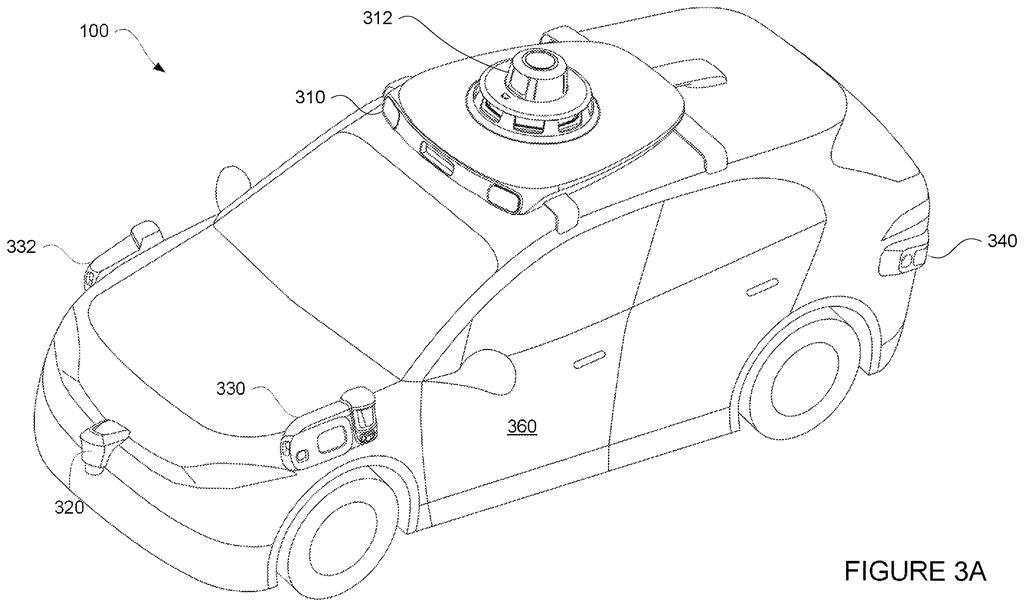
How Waymo's cars judge their own sensor vision in real time
Imagine driving through a rainstorm and your windshield gradually fogs up, but you don't notice because it happened slowly. That's a real risk for self-driving cars: the sensors that "see" the road can degrade without any obvious warning signal.
Waymo's patent describes a system that constantly checks how well its cars' laser sensors are actually seeing. It does this by comparing what the sensor detects right now to a stored record of what that same spot in the environment should look like on a clear day. If the sensor is getting weaker return signals than expected, the system calculates a shorter "effective range" for how far the car can reliably detect objects.
Once the car knows its vision is limited, it can act accordingly, such as slowing down, increasing following distance, or flagging the situation for the fleet operator. It's the equivalent of a driver recognizing they need to squint and easing off the gas.
dynamically determine an effective detection range of a LIDAR sensor of an autonomous vehicle based on intensity information, from the LIDAR sensor, for a point in an environment of the autonomous vehicle relative to an expected intensity at a location of the point …
Translation: The car calculates how far its lasers can actually see by comparing current sensor readings against what it expects to see.
How the LiDAR range check actually works under the hood
The system centers on Waymo's LiDAR sensors, which work by firing invisible laser pulses and measuring how long they take to bounce back from objects. Each return pulse also carries an intensity value, essentially how bright or strong the reflected signal is.
Waymo pre-stores a "fair weather reference map" that records expected intensity readings at thousands of locations along its routes under good conditions. In real time, the car compares live sensor intensity against those baseline values for the same geographic point.
If the live reading is significantly weaker than expected, the system computes a reduced effective detection range. That range is defined carefully: it's the distance at which the sensor can still reliably detect an object and identify at least one characteristic of it (like shape or size), measured against a standardized reflective test target. This is not just a raw signal-strength number but a practical estimate of how far the car can "see" well enough to make decisions.
- Receive live LiDAR distance and intensity data for a point in the scene
- Look up the expected intensity for that location from the reference map
- Calculate the gap between expected and actual intensity
- Derive a real-time effective detection range from that gap
- Adjust vehicle behavior, such as speed or following distance, accordingly
An expected intensity value from a pre-stored fair weather reference map may be identified based on a location of the point.
Translation: The system checks current visibility against a stored map of how things look on a clear day.
What this means for robotaxi safety in bad weather
Fog, heavy rain, dust, and even a dirty sensor lens can all degrade LiDAR performance without triggering any hard failure alarm. Right now, many automated driving systems use fixed, pre-programmed safety buffers that don't adapt to real sensor conditions. A system that dynamically recalculates how far it can actually see, and then drives within those limits, is a more honest approach to safety.
For Waymo's commercial robotaxi service, this matters practically: a car that knows its sensors are impaired can slow down or pull over rather than operating at full speed with degraded perception. It also gives Waymo's operations team a real-time signal about sensor health across the fleet, which helps with maintenance and route planning in challenging weather.
This is unglamorous but genuinely important safety engineering. The hard part of autonomous vehicles has never been making them work in perfect conditions, it's making them fail gracefully when conditions aren't perfect. A system that actively measures its own perceptual limits and drives accordingly is the kind of defensive design that actually builds trust in self-driving technology.
There are more where this came from
We read every patent application Big Tech publishes and send you the ones worth knowing. Plain English, free, every week.
The drawings
12 drawing sheets from US 2026/0227521 A1 · click any drawing to enlarge


Want this weekly breakdown for a company we don't cover? Patentlyze Pro →
Be the first to weigh in