
Google Patent Uses Spinning Lidar to Shield Cameras From Blinding Light
A self-driving car that stares into the sun for even a fraction of a second is flying blind. Waymo's new patent describes a system where the car's LiDAR sensor essentially tells the camera 'look away, and dim your exposure, right now.'
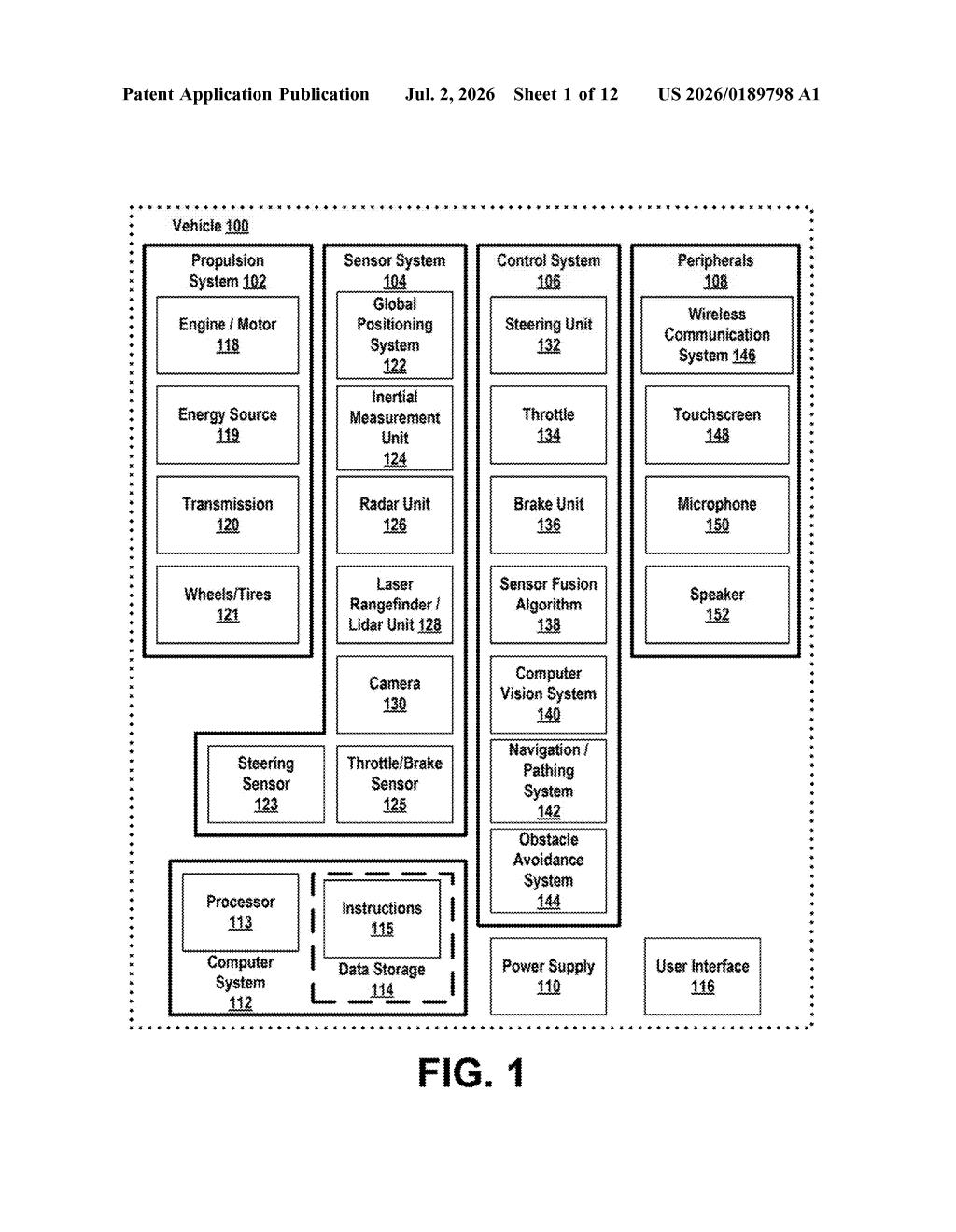
How Waymo's robocar stops the sun from ruining its vision
Imagine driving west at sunset, squinting hard every time you glance toward the windshield. Your eyes adjust, but it takes a moment, and in a car moving at highway speed, a moment is plenty of time for something to go wrong. Self-driving cars face the same problem, except their cameras can't squint on instinct.
Waymo's patent describes a way to coordinate two sensors that already sit on the same roof: the spinning LiDAR laser scanner and the regular cameras. The LiDAR sweeps around in a circle hundreds of times per second and picks up brightness information as it goes. The system uses that brightness data to figure out exactly when the cameras will be pointing toward a blinding light source, like a low sun or a truck's headlights.
Armed with that timing, it tells each camera two things: shoot at this precise moment, and use this shorter exposure so the image doesn't wash out. The result is a full set of photos that are consistently well-exposed, even when part of the scene is much brighter than the rest.
How LiDAR rotation times translate into camera shutter cues
The patent describes a closed-loop system that ties Waymo's rotating LiDAR unit directly to its camera shutter timing and exposure settings.
Step by step, the system works like this:
- The LiDAR spins continuously and logs the brightness level it detects at every angle around the vehicle, not just the distance data it normally provides.
- The system identifies which angles fall within a threshold range of light exposure (meaning: bright enough to potentially blow out a camera image).
- It then calculates the exact rotation timestamps when the LiDAR, and by extension the co-mounted camera, will point through each of those problematic angles.
- Those timestamps become target image times. For each one, the background brightness reading is converted into a recommended exposure time (shorter exposure = less light let in = less washout).
- The camera fires at the calculated moments, each shot using its matched exposure value.
The key insight is that LiDAR data, which the car already collects at high speed and high angular resolution, doubles as a brightness map that arrives slightly ahead of when the camera needs to act. That gives the system enough lead time to dial in the correct exposure before the shutter opens, rather than trying to correct after the fact.
Why blinding glare is a real safety problem for self-driving cars
Camera saturation from direct sunlight or oncoming headlights is one of the harder edge cases in autonomous driving perception. A washed-out image can make a white vehicle, a pedestrian in bright clothing, or a traffic signal invisible to the car's vision system for one or more frames, and at 60 mph those frames add up to real distance traveled without reliable data.
What's notable here is that Waymo isn't adding new hardware to solve this. The LiDAR is already spinning, already measuring the environment, and this patent repurposes that existing data stream as a brightness pre-warning system for the cameras. If it works as described, your ride in a Waymo vehicle would benefit from sharper, more consistent imagery in exactly the conditions (dawn, dusk, tunnels, oncoming lights) where cameras historically struggle most.
This is a genuinely practical patent, not a moonshot. It tackles a well-documented weakness in camera-based perception by doing something elegant: borrowing information the car already has to solve a problem the camera can't fully solve on its own. The coordination between sensor modalities is exactly the kind of systems-level thinking that separates mature autonomous driving programs from hobbyist builds.
Get our take in your Top Stories
Liked this breakdown? Add Patentlyze as a preferred source on Google, and our plain-English take shows up more often in your Top Stories the next time Google patent news breaks.
There are more where this came from
We read every patent application Big Tech publishes and send you the ones worth knowing. Plain English, free, every week.
Want this weekly breakdown for a company we don't cover? Patentlyze Pro →