
Samsung Patents a Display That Moves Your Cursor With Body Movements
Samsung is patenting a way to move a cursor on a screen not with a mouse or touchpad, but by moving your body, with a separate wearable or sensor device doing the motion-tracking.
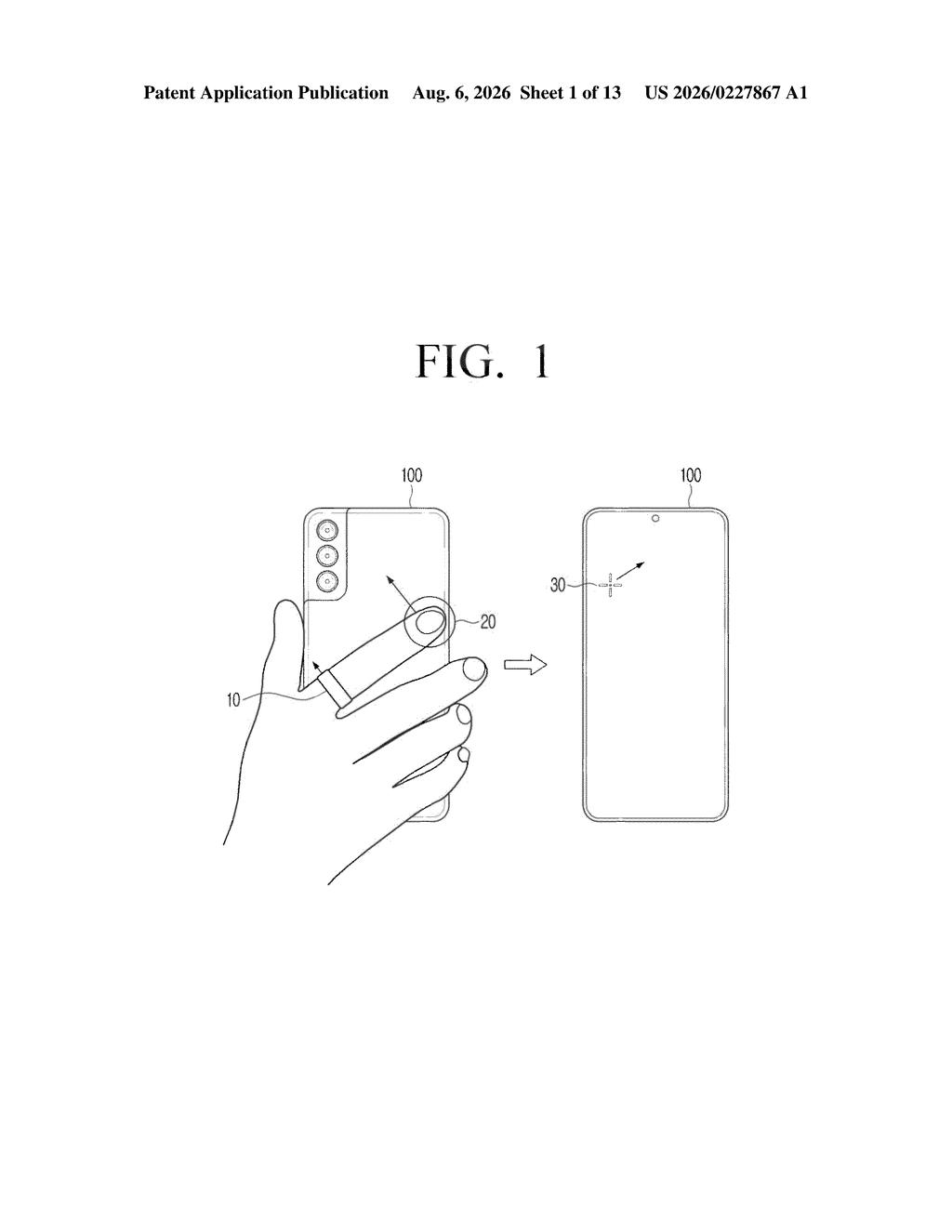
How Samsung's body-motion cursor control actually works
Imagine moving the pointer on your TV or monitor the same way you'd control a game character with motion controls, just by shifting your hand, arm, or another part of your body. That's the core idea in this Samsung patent.
A separate device, think a wearable sensor or a phone, detects how your body is moving. It sends that movement data wirelessly to the display, which then figures out where your cursor should go and moves it on screen accordingly. No mouse, no remote trackpad, just your body.
This could matter most in situations where reaching for a physical controller is awkward, like when you're lying on a couch, standing across a room from a large screen, or in an accessibility context where traditional input devices are hard to use.
receive, from an external apparatus, through the communication circuitry, and according to a first motion of a body, first sensing data generated by a second motion of the external apparatus …
Translation: The screen collects motion data from an external device that tracks how your body moves.
How the display translates body data into cursor position
The patent describes a display apparatus (a TV, monitor, or similar screen) that works with an external device carrying motion sensors. The chain of events goes like this:
- Your body makes a movement (what the patent calls the first motion).
- The external device detects that movement through its own sensors and generates sensing data based on how the device itself moved in response (the second motion).
- That sensing data is sent wirelessly to the display.
- The display processes the data to understand the original biological motion, meaning what your body actually did.
- It then converts that into cursor movement information and moves the on-screen cursor from one position to another.
The key distinction is the two-step motion translation: the system doesn't just read raw sensor data and call it cursor movement. It first reconstructs what the body was doing, then maps that biological motion to cursor coordinates. That extra inference step is meant to produce more natural, predictable cursor behavior even if the external device wasn't held perfectly still.
… obtains biological motion information corresponding to the first motion based on the first sensing data, obtains cursor movement information corresponding to the biological motion information …
Translation: The system translates your physical movements into instructions for moving the cursor.
What this means for hands-free display interaction
For Samsung, which sells both large-format displays and a range of wearable devices, this patent points toward tighter integration between its screen products and body-worn gadgets. A Galaxy Watch or phone could effectively become a cursor controller for a Samsung TV or monitor, without any additional hardware.
For you as a user, the practical payoff is hands-free or reduced-contact display control, which has real value in accessibility, in living-room setups where a mouse is impractical, and in professional environments like digital signage or presentation screens. Whether Samsung actually ships this as a product feature depends on a lot of execution details the patent doesn't spell out.
This is a tidy, focused patent covering a specific input method rather than a broad platform claim. The two-step motion inference (body motion to device motion to cursor) is the genuinely interesting engineering piece. That said, motion-controlled cursors have a long history of disappointing consumer reception, so the real question is whether Samsung can make the translation feel natural enough that people actually use it.
There are more where this came from
We read every patent application Big Tech publishes and send you the ones worth knowing. Plain English, free, every week.
The drawings
13 drawing sheets from US 2026/0227867 A1 · click any drawing to enlarge


Want this weekly breakdown for a company we don't cover? Patentlyze Pro →
Be the first to weigh in