
Samsung Patents a Self-Correcting Brightness System for Modular LED Displays
Anyone who has stood in front of a large LED video wall and noticed faint stripes or uneven brightness patches knows the problem Samsung is trying to solve here. This patent describes a system that automatically measures and corrects those inconsistencies, line by line, across every panel in the display.
What Samsung's modular display correction actually does
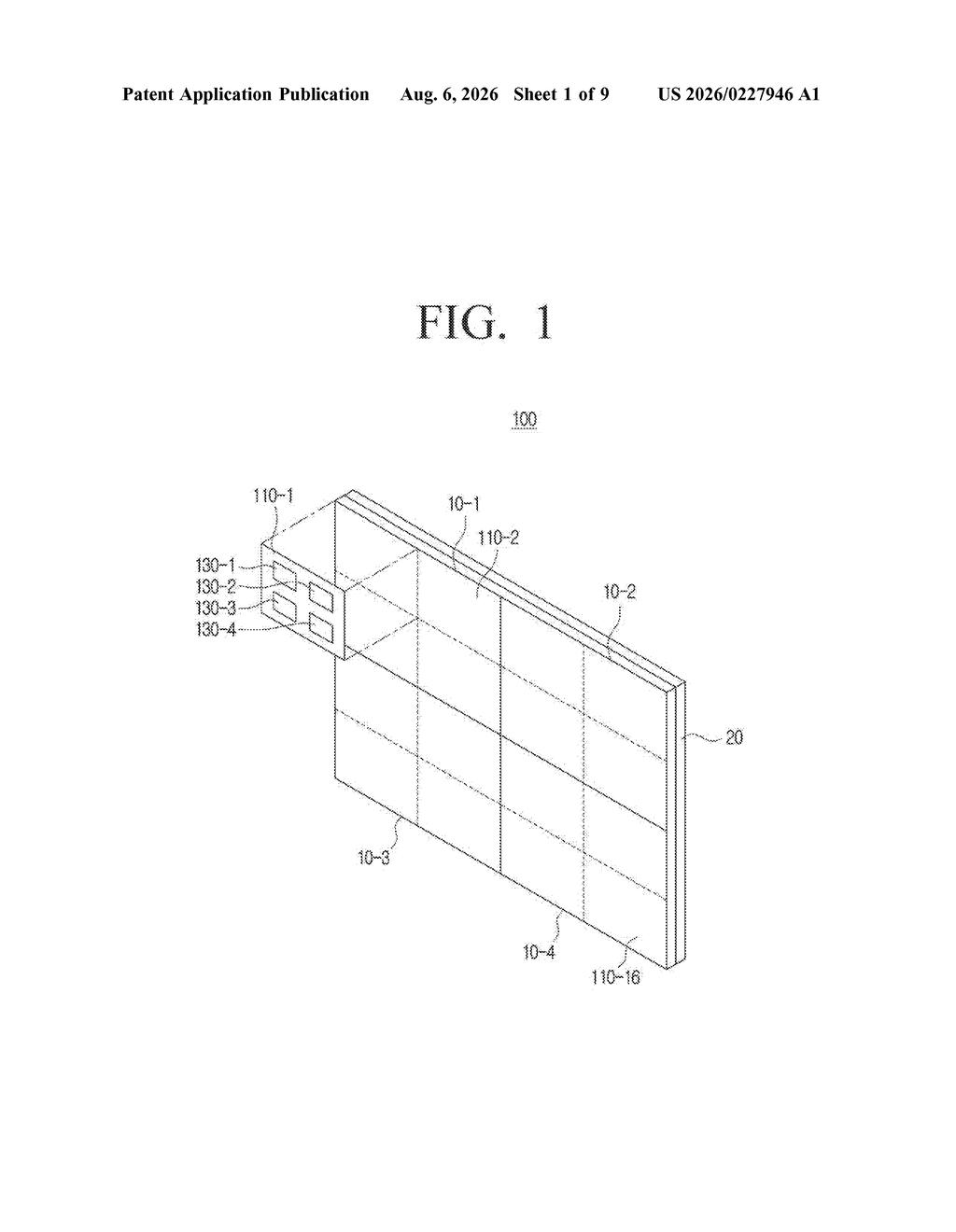
Imagine a giant LED screen made up of dozens of individual panels tiled together, like a mosaic. Each panel has its own electronics, and those electronics are never quite identical from one to the next. The result: some rows or columns of LEDs shine a little brighter or dimmer than their neighbors, creating subtle but distracting banding across what should look like one continuous image.
Samsung's patent describes a processor that measures the output of each individual LED line across all the panels, then automatically calculates a correction value for each one. Think of it like a graphic equalizer for a stereo, but instead of adjusting frequencies in audio, it's adjusting brightness levels in a display.
The system normalizes all those readings into a common reference scale, figures out exactly how much to boost or reduce the signal going to each line, and applies those adjustments in real time. The goal is a display wall that looks perfectly uniform even though it's built from many separate, imperfect parts.
… normalize the characteristic values for each of the lines of the at least one driver IC in a predetermined range, obtain gains for each of the lines of the at least one driver IC based on the normalized data …
Translation: It scales the performance numbers of every line so they all fall into a standard target range.
How the gain-per-line calibration process works
The patent covers a modular display device made of multiple LED panels, each driven by its own driver IC (an integrated circuit chip that controls how much electrical current reaches each row or column of LEDs).
Here is the correction pipeline the patent describes:
- Characteristic data (measured brightness or current values) for each LED line on each driver IC is fed into the system through an interface.
- The processor normalizes those values, meaning it maps all the raw measurements onto a consistent scale so they can be compared fairly across panels.
- From the normalized data, the system calculates a gain for every line. A gain is simply a multiplier: if a line is running slightly dim, its gain is set above 1 to push its signal up; if it is too bright, the gain is set below 1 to pull it down.
- The adjusted electrical signals are then sent to the driver ICs, which apply them to the actual LED lines on each display module.
The approach is designed to work across the full array of panels simultaneously, so corrections account for the differences between modules as a whole, not just within a single panel.
… adjust the sizes of electric signals for each of the lines of the at least one driver IC.
Translation: It fine tunes the power sent to each individual row to keep the picture looking even.
What this means for large LED video walls
Large modular LED displays, the kind used for stadium scoreboards, concert stages, broadcast studios, and high-end retail installations, are expensive precisely because uniformity is hard to achieve. Even tiny variations in manufacturing mean individual driver chips behave slightly differently, and those differences become obvious at scale. A system that automatically calibrates each line could reduce the time and cost of manual tuning after installation.
For Samsung, which competes aggressively in the professional display market with its The Wall and similar large-format LED products, a patented calibration method like this could become a meaningful differentiator. It also suggests Samsung is investing in making modular display setup less dependent on specialized technicians.
This is a solid, practical engineering patent aimed squarely at a real and persistent problem in large-format display installations. It is not flashy consumer tech, but the professional display market is large and margins are high, so getting calibration right genuinely matters. The patent's line-by-line gain correction approach is logical and well-scoped.
There are more where this came from
We read every patent application Big Tech publishes and send you the ones worth knowing. Plain English, free, every week.
The drawings
9 drawing sheets from US 2026/0227946 A1 · click any drawing to enlarge


Want this weekly breakdown for a company we don't cover? Patentlyze Pro →
Be the first to weigh in