
Apple Patent Reveals Plans to Adjust iPhone Performance Based on User Behavior
Your phone already knows you're about to plug it in, hop on a call, or set it down for the night. Apple wants to use that awareness to automatically tune performance, heat, and charging speed before you even think to ask.
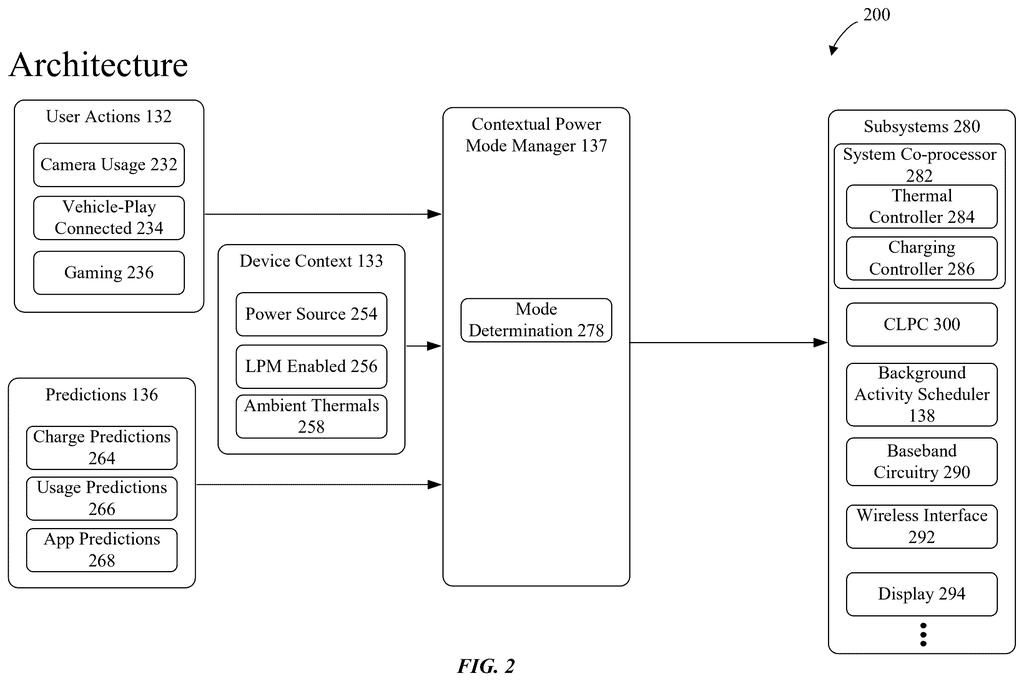
What Apple's behavior-based power system actually does
Imagine your iPhone notices you've been gaming hard for 20 minutes, the device is getting warm, and you just plugged in a charger. Right now, your phone mostly treats those things as separate events. Apple's new patent describes a system that reads all of them together and decides on its own to, say, slow things down to cool off, or charge faster because it predicts you'll unplug soon.
The idea is that your phone already has a lot of information about what you're doing and what you usually do. This system would use that context to shift gears automatically, no digging into Settings required. It could slow the processor to reduce heat during a long video call, or ramp up charging when it predicts you're about to leave the house.
Think of it as your phone learning your routines and adjusting itself the way a thoughtful assistant would, based on patterns, not just the moment-to-moment situation.
determine a goal based at least on user actions, a device context, and predictions of the computing device; based at least on the goal, determine one or more policies that affects one or more corresponding subsystems; and transmit a signal to enable a policy of the one or more policies.
Translation: Your phone will figure out what you want by watching your habits and change how it works behind the scenes.
How the device reads context and picks a policy
The patent describes a contextual power management system built into a computing device (most likely an iPhone or iPad). At its core, the device's processor watches three inputs simultaneously: what you're actively doing right now, the current state of the hardware (battery level, temperature, connected accessories), and predictions drawn from your past usage patterns.
From those inputs, the system determines a goal. A goal might be something like "keep the device cool" or "charge as fast as possible" or even "run a bit slower because the user is probably done for the night." The patent explicitly names all three of those as examples. The goal isn't something you pick from a menu; the system infers it from context.
Once a goal is identified, the system picks a policy (a specific ruleset for how different hardware subsystems should behave) and sends a signal to activate it. Subsystems that could be affected include:
- The processor and GPU (speed and power draw)
- The charging circuit (rate of charge)
- Thermal controls (fan behavior or throttling on Macs)
The key distinction from Apple's existing Low Power Mode or Optimized Charging is that nothing is manual here. The system is designed to anticipate what you need and act without a prompt, then presumably return to normal behavior when the context changes.
Based on the determination, various subsystem operation policies are adjusted accordingly to satisfy the user's goal or strong implicit expectation such as having a cooler device, charging faster, or performing slower.
Translation: The device automatically tweaks its settings so it runs cooler, charges quicker, or slows down without you asking.
What this means for everyday iPhone battery life
Battery life and heat are the two things iPhone users complain about most, and today's solutions mostly require you to take action (turn on Low Power Mode, remember to enable Optimized Charging). A system that handles this automatically, and does it before the problem gets bad rather than after, is genuinely useful. If Apple ships something like this, you'd get a cooler phone during gaming sessions and faster charging before a commute without ever changing a setting.
From Apple's strategy angle, this fits neatly into the company's broader push to make its devices feel proactive rather than reactive. It also builds on the usage-learning infrastructure already in place for features like Optimized Battery Charging and Focus modes. The patent extends that logic deeper into the hardware layer, where the real efficiency gains live.
This is one of those patents that sounds mundane on paper but could meaningfully change day-to-day iPhone feel. Automatic, context-aware performance tuning done well is exactly the kind of invisible improvement Apple is historically good at shipping. The challenge is execution: getting the predictions right often enough that users trust the system rather than fighting it.
There are more where this came from
We read every patent application Big Tech publishes and send you the ones worth knowing. Plain English, free, every week.
The drawings
12 drawing sheets from US 2026/0227841 A1 · click any drawing to enlarge


Want this weekly breakdown for a company we don't cover? Patentlyze Pro →
Be the first to weigh in