
Apple Patent Reveals Smarter Location Tracking Designed to Preserve Battery Life
Your phone burns battery every time it has to fully wake up just to report its location to the network. Apple's latest patent describes a way to keep location tracking running while the phone stays in a low-power doze.
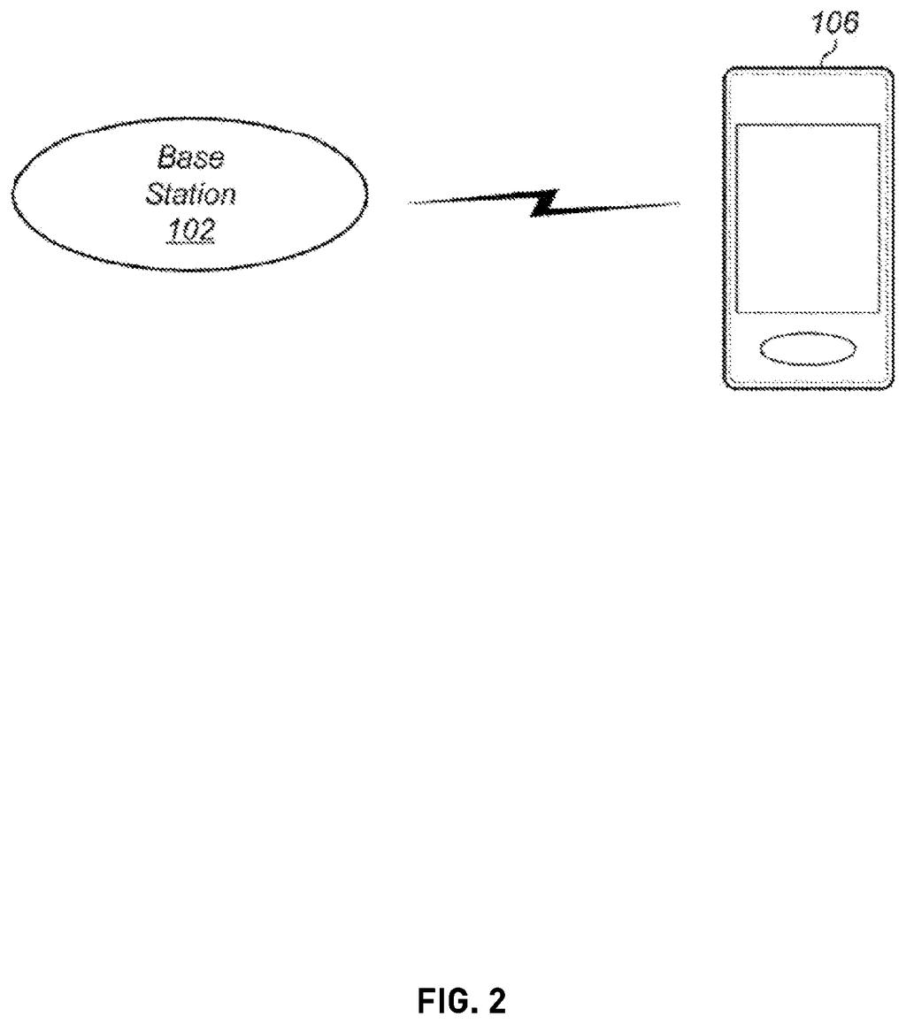
How Apple wants to track location without draining your battery
Imagine your phone is sitting in your bag, screen off, barely doing anything. The moment an app or the network needs to know where you are, your phone has to fully wake up, connect to a cell tower, do its location math, and then go back to sleep. That wake-up cycle burns battery, and it happens constantly in the background.
Apple's patent describes a way to skip most of that wake-up process. The idea is to pre-share location settings across a group of nearby cell towers, so when your phone moves from one tower's range to another, it already has everything it needs to figure out its position. No full wake-up required.
The practical payoff is more accurate, more frequent location fixes at a lower battery cost. That matters most for things like navigation, emergency services, and location-based features that need to work even when your phone is doing as little as possible.
… utilizing, in the inactive or idle state, at least a portion of the positioning configuration obtained in the first network cell for positioning in the second network cell based on inclusion of the first and second network cells in the positioning configuration group.
Translation: Using saved location settings across different cells while asleep to save power.
How positioning configuration groups span multiple cell towers
The patent targets a specific problem in 5G location tracking: phones normally have to enter a fully "connected" state to get positioning data. That's expensive in battery terms. Apple's approach introduces the concept of positioning configuration groups, which are clusters of cell towers that share the same location-tracking setup.
Here's the basic flow the patent describes:
- Your phone picks up a positioning configuration (the instructions for how to measure location signals) while it's connected to a first tower.
- It then drops into an inactive or idle state, which is a low-power standby mode where it's not actively exchanging data.
- As you move and your phone transitions to a second tower, it checks whether that tower belongs to the same configuration group as the first.
- If it does, the phone reuses the configuration it already has, skipping the step of fetching new instructions from the network.
The patent also covers how the network decides which towers belong in the same group. One method uses a power metric (essentially signal strength measurements) to cluster towers whose signals overlap enough that a shared configuration makes sense. The filing also describes ways to validate or refresh those configurations without forcing the phone into a full connected state.
… positioning configuration groups may be utilized to enable a common positioning configuration, or portions thereof, to be utilized in multiple network cells.
Translation: Grouping cells lets devices reuse location data everywhere instead of waking up.
What this means for always-on location and battery life
Location tracking in the background is one of the sneakier battery drains on a modern phone. If Apple ships something based on this approach, you could see better location accuracy in low-signal or transitional areas (think: moving through a city, or waiting in a building lobby) without your phone's battery taking a visible hit. For emergency location services, which need to work even when a phone is nearly dead, this kind of always-on-but-low-power positioning is genuinely useful.
On the industry side, this fits into a broader 5G standard called LPHAP (Low Power High Accuracy Positioning), which is an active area of work in cellular standards bodies. Apple filing in this space signals it wants influence over how that standard shapes up, and potentially that future iPhones will support it natively at the hardware and software level.
This is a real engineering problem worth solving, and Apple clearly has engineers who know the 5G positioning standards well enough to propose something concrete. That said, this is cellular standards work, meaning it only matters if network carriers and equipment vendors also adopt the same group-configuration approach. A patent alone doesn't move that needle.
There are more where this came from
We read every patent application Big Tech publishes and send you the ones worth knowing. Plain English, free, every week.
The drawings
17 drawing sheets from US 2026/0230775 A1 · click any drawing to enlarge


Want this weekly breakdown for a company we don't cover? Patentlyze Pro →
Be the first to weigh in