
Samsung Patents a System That Picks the Best Mic Across Your Devices Automatically
When you're wearing a smartwatch and holding a phone, which microphone should handle your voice call? Samsung's new patent answers that question automatically, in real time, by comparing audio quality across both devices.
How Samsung's mic-switching actually works for you
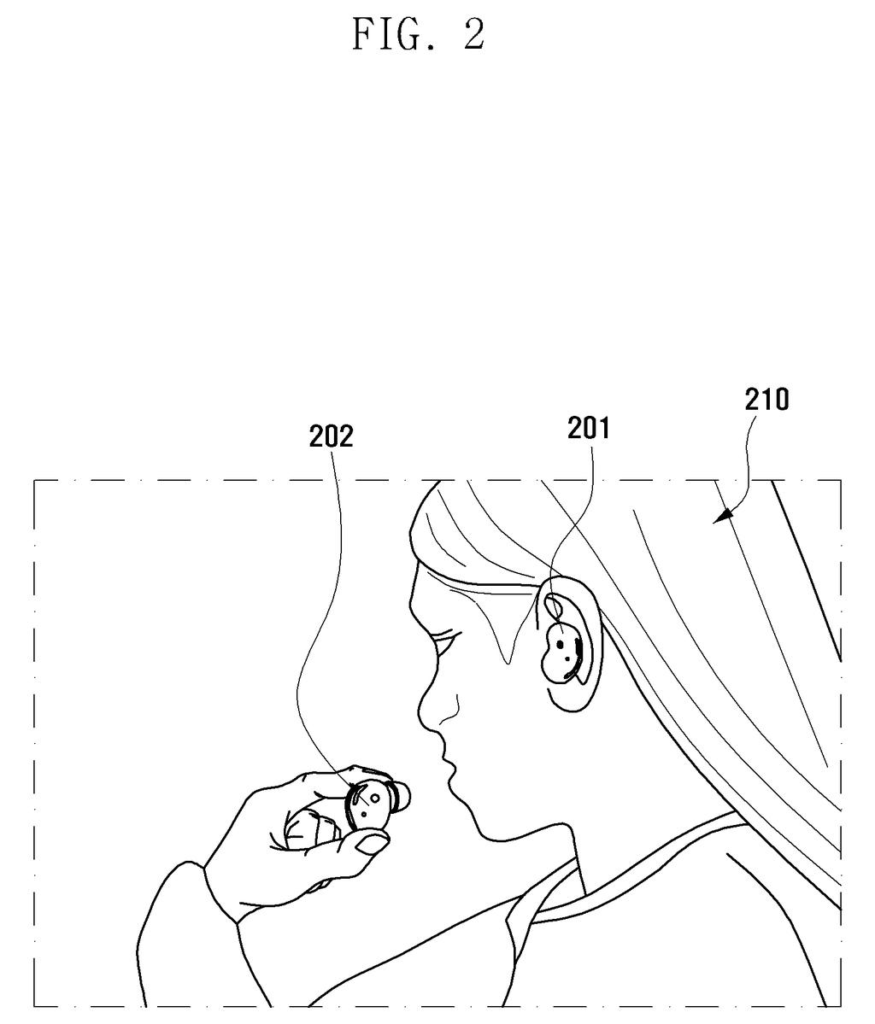
Imagine you're on a voice call with your Samsung phone in your pocket while wearing a Galaxy Watch. Normally, your phone just uses its own microphone, even if a strong wind is blowing directly across it and your watch is picking up crystal-clear audio. Samsung's new patent describes a system that would fix that.
The idea is simple: the moment you start speaking, both your wearable and your phone record a tiny audio sample at the same instant. They then compare notes, sharing basic quality scores with each other. Whichever device caught the cleaner audio wins and takes over microphone duties for that call or command.
The wearable can detect when it's actually being worn, so it only joins this competition when it makes sense. You'd never know any of this was happening. The switch is handled in the background, and you'd just hear cleaner audio on the other end.
… acquire utterance time point information of a user using the utterance detection sensor …
Translation: It figures out exactly when you started speaking.
How the two devices compare and vote on audio quality
The patent describes a first electronic device (think a smartwatch or earbuds) that works in tandem with a second device (a phone) to always send the best possible audio during a call or voice interaction.
Here's the basic sequence:
- A wearing detection sensor confirms the wearable is actually on the user's body before anything else happens.
- An utterance detection sensor spots the exact moment the user starts speaking, logging what the patent calls "utterance time point information" (basically a timestamp for when speech began).
- That timestamp is shared with the paired phone over the wireless connection between the two devices.
- Both devices then independently measure voice quality information starting from that same moment, so they're comparing apples to apples.
- The quality scores are compared, and the device with the better reading gets its microphone selected for use.
The key technical detail is the shared timestamp. Without it, each device would be evaluating audio from slightly different moments, making a fair comparison impossible. By anchoring both assessments to the same instant, the system ensures the quality contest is meaningful.
… select one of the first electronic device or the second electronic device based on the first voice quality information and the second voice quality information …
Translation: It compares the audio quality from all your devices to pick the clearest one.
What this means for Galaxy wearables and call quality
Microphone selection is a surprisingly messy problem for multi-device users. Your phone might be in a bag or jacket pocket muffled by fabric, while your smartwatch sits right on your wrist near your mouth. Right now, most systems don't dynamically switch based on real-time quality. Samsung's Galaxy ecosystem is one of the few places where a watch and phone are tightly paired, which is exactly the setup this patent is designed for.
For you as a user, the payoff would be fewer complaints about muffled calls and better voice assistant accuracy in noisy environments. It's the kind of background improvement that's invisible when it works and annoying when it doesn't, which is exactly why the engineering matters.
This is unglamorous but genuinely useful infrastructure work. The shared-timestamp approach is the smart part of an otherwise simple idea, and Samsung's tightly integrated Galaxy Watch-and-phone pairing is the right environment to actually ship it. If this makes it into Galaxy devices, most users will never notice it working, and that's exactly the point.
There are more where this came from
We read every patent application Big Tech publishes and send you the ones worth knowing. Plain English, free, every week.
The drawings
9 drawing sheets from US 2026/0230764 A1 · click any drawing to enlarge


Want this weekly breakdown for a company we don't cover? Patentlyze Pro →
Be the first to weigh in