
Apple Patents a System That Picks the Nearest Speaker When You Hit Play
What if your iPhone just knew to play music through the kitchen HomePod because that's the room you walked into? Apple's new patent describes exactly that — using hardware-level ranging to auto-route audio to whichever speaker is physically closest to you.
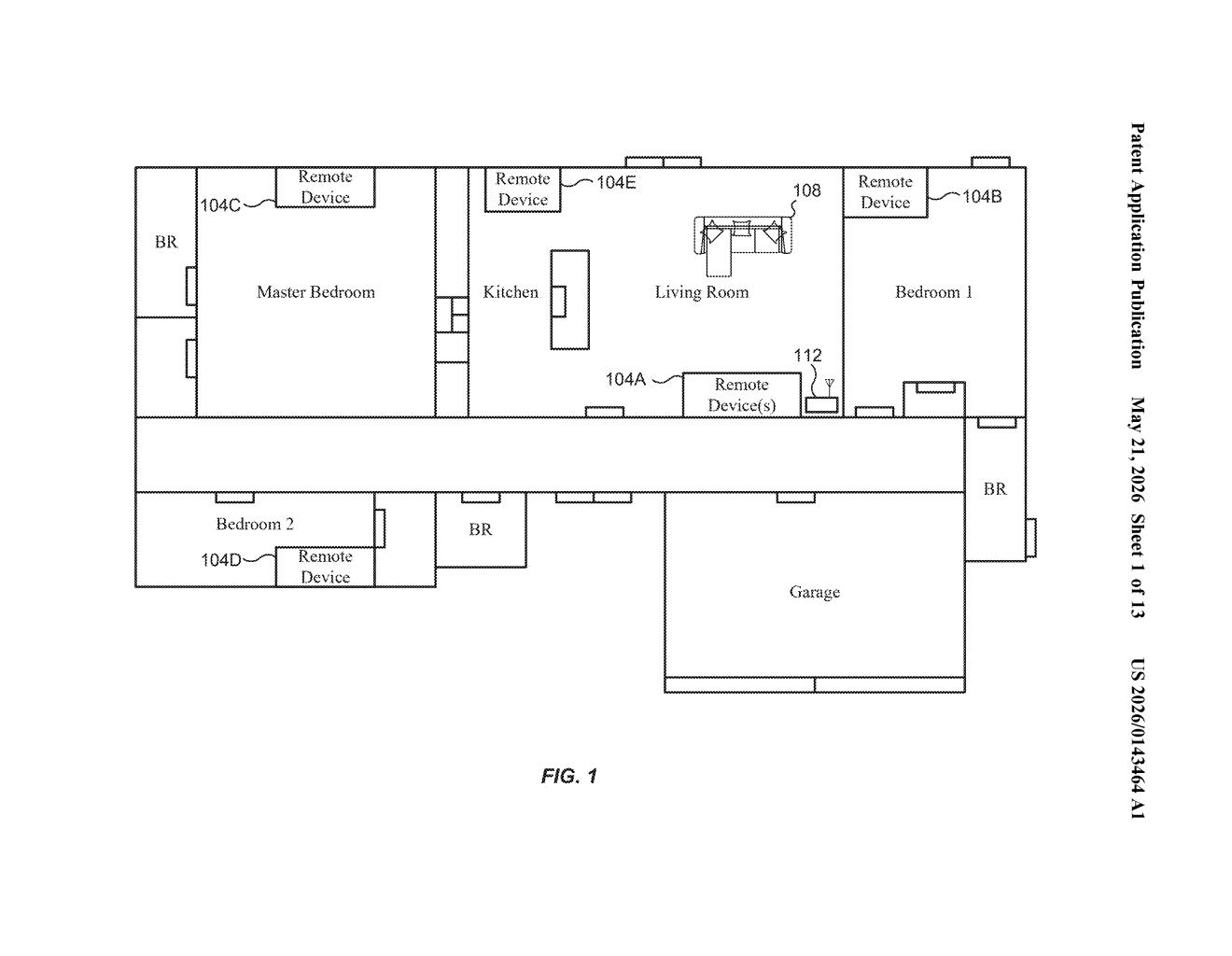
How Apple's proximity-based speaker selection works
Imagine you're walking through your house with your phone and you tap play on a song. Right now, your iPhone might default to whatever speaker you last used — even if that speaker is two rooms away. Apple's patent wants to fix that.
The idea is that your iPhone would first check whether nearby speakers support a feature called ranging — essentially the ability to measure distance and direction. If they do, the phone quietly takes a reading of how far away each speaker is and which way you're facing relative to them.
When you hit play on a track, the phone uses those distance and orientation readings to automatically pick the closest or most contextually appropriate speaker — no menu-diving required. Think of it like your phone choosing the room you're already standing in, instead of making you remember to switch manually.
How ranging data ranks and selects a playback device
The patent describes a method running on a mobile device — almost certainly an iPhone — that coordinates speaker selection using ranging information (think ultra-wideband or similar proximity tech that gives you distance and orientation, not just signal strength).
Here's the flow the patent lays out:
- The phone first checks whether nearby playback devices support ranging — it won't attempt this on legacy hardware that lacks the capability.
- If they do, it conducts ranging with each eligible device to build a map of distances and orientations between the phone and every speaker in range.
- When the user selects a media item, the phone uses that proximity map to identify the best playback device — presumably the closest one, or one filtered by orientation cues (e.g., the speaker you're facing).
- That device then receives and plays the streamed audio.
The use of orientation data is notable — it's not just "which speaker is nearest" but potentially "which speaker am I pointing toward," which opens the door to intentional gesture-like selection. The patent is a continuation of an earlier 2023 filing (now granted as US 12,543,144), so this is a refined, more specific iteration of an already-active patent family.
What this means for AirPlay and multi-room audio
For anyone with multiple HomePods or AirPlay 2 speakers scattered around their home, manual device switching is a constant minor annoyance. This patent targets that friction directly — turning a multi-tap menu interaction into something that just works based on where you physically are.
The deeper strategic angle is that Apple's U1 / UWB chip (and its successor) has always needed more consumer-facing use cases beyond AirDrop and Find My. Auto-routing audio to the nearest speaker is exactly the kind of everyday, invisible feature that justifies that silicon investment — and could give Apple's HomePod ecosystem a meaningful edge over Sonos or Amazon Echo setups that rely on manual room assignment.
This is a genuinely useful quality-of-life patent, not a speculative moonshot. The friction it solves is real and daily for anyone with a multi-room audio setup. The interesting wrinkle is the orientation component — if Apple ships this with directional intent (point your phone at the speaker you want), it could feel almost magical. Worth watching closely as HomePod hardware evolves.
Get our take in your Top Stories
Liked this breakdown? Add Patentlyze as a preferred source on Google, and our plain-English take shows up more often in your Top Stories the next time Apple patent news breaks.
There are more where this came from
We read every patent application Big Tech publishes and send you the ones worth knowing. Plain English, free, every week.
Want this weekly breakdown for a company we don't cover? Patentlyze Pro →