
Qualcomm Patents Technology That Rebuilds Detailed 3D Objects From Compact Video Streams
Streaming a realistic 3D model of a person or object in real time is a data nightmare. Qualcomm's new patent describes a smarter way to decode compressed 3D shapes, one vertex at a time, using a math trick borrowed from signal processing.
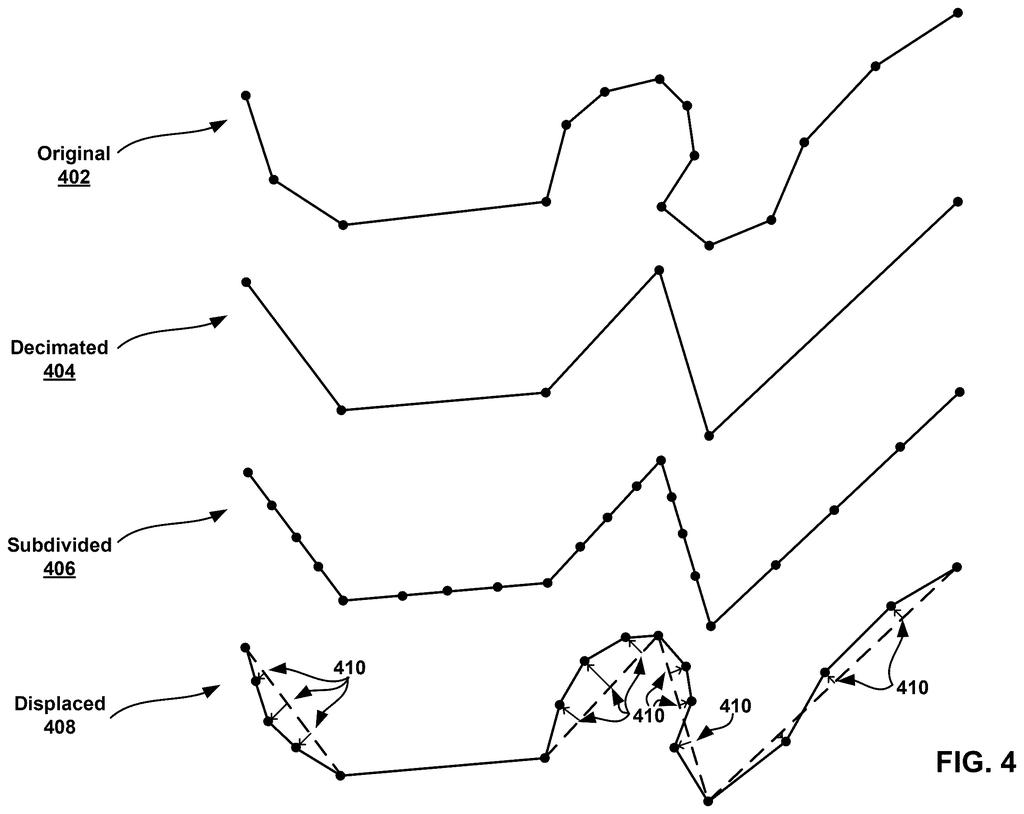
What Qualcomm's 3D mesh decoder actually does
Imagine trying to send a 3D sculpture over the internet and have it rebuild itself perfectly on the other end. The sculpture is made of thousands of tiny triangles stitched together, and every corner point needs to land in exactly the right place. Compressing all that geometric data without losing quality is a hard problem, and decompressing it quickly on a phone or headset is even harder.
Qualcomm's patent describes a decoding method that uses two small numbers, a base value and an exponent, to figure out how far each corner point of a 3D shape should move during reconstruction. Think of it like scientific notation: instead of storing one huge precise number, you store a compact pair that the decoder can expand on the fly.
The system then applies a technique called a directional lifting transform to calculate the exact position of each point on the mesh. The end result is a faithfully reconstructed 3D shape from a much smaller data package, which matters a lot when you're trying to stream volumetric video in real time to a VR headset or AR glasses.
… perform an inverse directional lifting transform to determine a displacement vector for a target vertex of a base mesh based on one or more of a first scale value, a second scale value, or a third scale value determined based on the delta scale value …
Translation: It calculates how specific points on a basic 3D shape must move to reconstruct the detailed object.
How the directional lifting transform rebuilds mesh geometry
The patent covers a decoding pipeline for V-DMC (Video-based Dynamic Mesh Coding), a standard being developed for compressing animated 3D meshes, the kind used in volumetric video where a real person or object is captured as a full 3D model rather than a flat video frame.
The decoder receives two compact values from the bitstream: a base value and an exponent value. Together, these define a delta scale value, essentially a scaling factor encoded in a floating-point-like shorthand to keep the data payload small. This delta scale is then used to derive up to three separate scale values that govern how far a given vertex (a corner point in the 3D mesh) should be displaced from its starting position.
The core operation is an inverse directional lifting transform, a mathematical process (borrowed from wavelet signal processing) that works along specific geometric directions in the mesh rather than treating all directions equally. This directional awareness helps reconstruct fine surface details more accurately than simpler averaging approaches would.
- Receive base and exponent values from the compressed bitstream
- Compute a delta scale factor from those two numbers
- Derive up to three scale values from the delta scale
- Apply the inverse directional lifting transform to calculate vertex displacement
- Deform the base mesh using those displacements to produce the final decoded mesh
… deform the base mesh based on the displacement vector to determine a deformed base mesh; and determine a decoded mesh based on the deformed base mesh.
Translation: It reshapes the foundational structure using those calculated movements to output the final 3D object.
What this means for volumetric video and AR streaming
Volumetric video, where a person or scene is captured as a live 3D model rather than a flat recording, is one of the key promises of AR and VR. But the data sizes involved are enormous, and current codecs struggle to compress and decompress that geometry quickly enough for real-time playback on mobile hardware.
By encoding scale information as a compact base-exponent pair and using a direction-aware transform to reconstruct geometry, Qualcomm's approach could reduce decoder complexity while keeping visual fidelity high. Given that Qualcomm makes the chips inside most Android phones and many XR headsets, a decoding method like this, if it lands in a hardware-accelerated form, could directly affect how 3D streaming performs on your next phone or pair of mixed-reality glasses.
This is deep standards-layer work tied to the emerging V-DMC codec, which means it's not glamorous but it's the kind of thing that determines whether volumetric video ever becomes practical outside a lab. Qualcomm filing here is a signal that it intends to shape the hardware side of that standard, which is worth tracking even if the patent itself reads like a math textbook.
There are more where this came from
We read every patent application Big Tech publishes and send you the ones worth knowing. Plain English, free, every week.
The drawings
16 drawing sheets from US 2026/0230646 A1 · click any drawing to enlarge


Want this weekly breakdown for a company we don't cover? Patentlyze Pro →
Be the first to weigh in