
Microsoft Patents Technology That Reads All Your Code Before AI Answers Questions
Most AI coding assistants read your code the way you might skim a novel by opening to a random page. Microsoft's new patent describes a system that first builds a map of everything in a codebase, then lets an AI fill in that map with extra context before answering any questions.
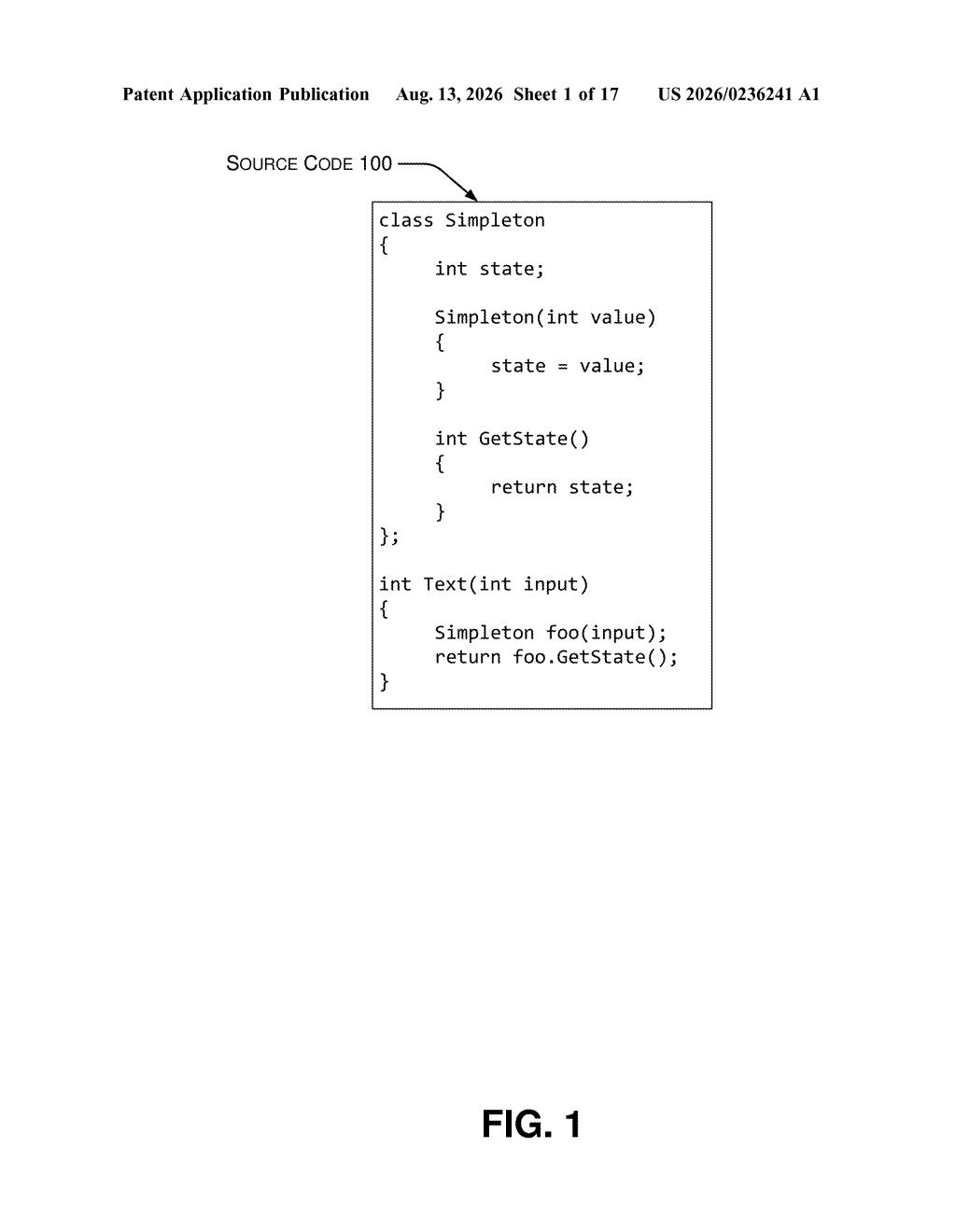
How Microsoft's code-graph idea helps AI assistants see the full picture
Today's AI coding tools often work with whatever code you paste in front of them. They don't automatically know that the function you're asking about is called by three other files, or that a class it depends on was deprecated last month.
Microsoft's patent describes a process that reads a codebase and builds a relationship map, essentially a diagram where every function, class, and variable is a dot, and lines connect the dots that depend on each other. An AI then annotates each dot with extra information it infers from the surrounding connections.
The result is an enriched map that a subsequent AI session can consult when you ask a question. Instead of guessing from a snippet, the model can look up what your function actually connects to and give you a more grounded answer.
… generating a graph having nodes representing the entities in the source code and edges representing relationships among the entities …
Translation: It builds a map connecting different parts of your code together based on how they relate.
How the augmented graph feeds context back into the language model
The patent describes a method called retrieval-augmented generation (RAG) applied specifically to source code. RAG is a technique where an AI is given a structured pool of reference material to look things up in before generating a response, rather than relying purely on what it learned during training.
Here the reference material is a graph (a network of nodes and edges, like a family tree) built by scanning a codebase:
- Nodes represent code entities: functions, classes, variables, modules.
- Edges represent relationships: this function calls that one, this class inherits from another.
- An AI is then asked to generate augmentation data (summaries, inferred documentation, dependency notes) for each node, informed by that node's position in the graph.
The enriched result, the augmented graph, is stored and made available for later operations. When a developer asks a question about the code, the system can pull the relevant nodes and their AI-written annotations as context, giving the language model a much fuller picture than a raw snippet would provide.
The key design choice is the two-pass approach: one AI pass to build and annotate the graph, and a separate AI pass to answer the actual developer question using that graph as a reference.
… prompting a generative language model to generate augmentation data for the entities based at least on the relationships …
Translation: The system asks an AI to create extra details about each code piece using those connections.
What this means for AI coding tools like GitHub Copilot
For everyday developers, this kind of system would mean an AI assistant that knows your project the way a senior teammate does, aware of which parts of the code touch each other and why. That matters most in large codebases where a single change can have consequences across dozens of files that no single developer holds in their head at once.
Microsoft owns GitHub and ships GitHub Copilot, so there is an obvious home for this kind of infrastructure. The filing is part of a broader wave of new Big Tech patents aimed at making AI coding tools more context-aware across entire repositories, not just single files.
Everything here is software built on models and APIs that already exist inside Microsoft's stack, which means the path from filing to shippable feature is relatively short. The main missing piece is the engineering work to run graph-construction and annotation at scale on real-world repositories without ballooning costs or latency. Microsoft already has the distribution channel in Copilot and the model infrastructure in Azure OpenAI, so the friction is operational rather than inventive. Whether the patent itself adds meaningful legal protection is a separate question, but as a product roadmap signal it points directly at making Copilot repository-aware.
Get our take in your Top Stories
Liked this breakdown? Add Patentlyze as a preferred source on Google, and our plain-English take shows up more often in your Top Stories the next time Microsoft patent news breaks.
There are more where this came from
We read every patent application Big Tech publishes and send you the ones worth knowing. Plain English, free, every week.
The drawings
17 drawing sheets from US 2026/0236241 A1 · click any drawing to enlarge


Want this weekly breakdown for a company we don't cover? Patentlyze Pro →
Be the first to weigh in