
IBM Patents Technology That Stores AI Search Data to Speed Up Query Results
Every AI system that does semantic search, recommendation, or similarity matching depends on storing millions of high-dimensional vectors somewhere. IBM's new patent tackles a surprisingly unglamorous problem: where exactly those vectors go inside a database, and how to remember why they went there.
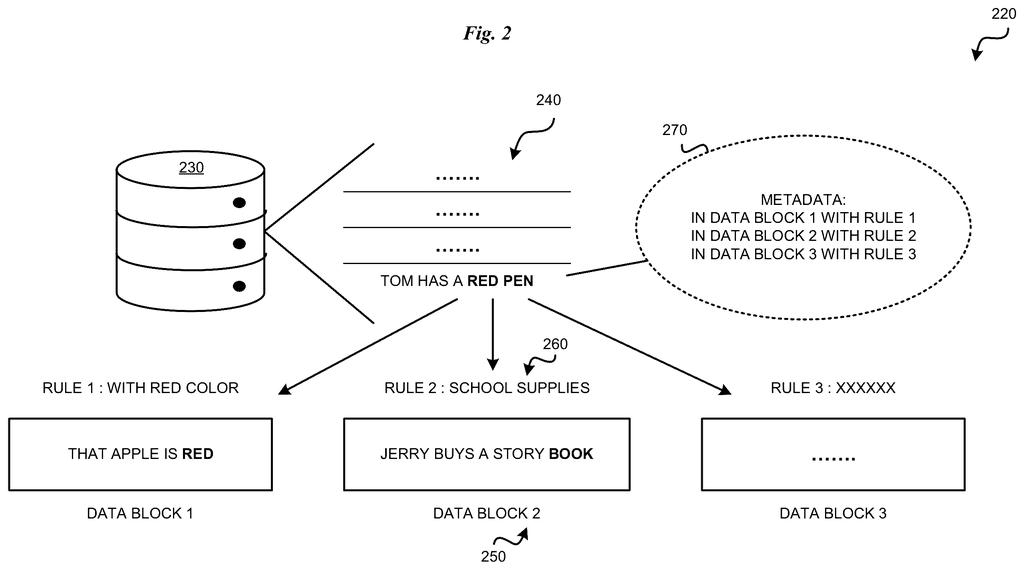
How IBM wants to organize AI vectors in a database
AI databases today often store vectors, the numerical fingerprints that let a system recognize similar content, without any record of the logic used to decide where each one landed. That means future reads and maintenance can't take shortcuts because the system has no memory of how the data was arranged.
IBM's patent describes a method that changes the write step: when a vector arrives, a rule that reflects something about that vector's own characteristics decides which storage block it goes into. The system then records both the block's ID and the rule itself in a metadata field, so the database always knows what logic drove each placement decision.
You wouldn't see this directly, but every AI app that searches, recommends, or classifies things depends on a database layer like this. Faster, more organized vector storage means those apps return results more quickly and use fewer computing resources doing it.
… performing the write operation of the vector embedding to the block of the data store wherein the block is determined according to a rule, the rule comprising a characteristic of the vector embedding wherein performing the write operation according to the rule reduces computer load and enhances performance of the data store of the system …
Translation: The system organizes AI data into specific storage blocks based on its traits to make searching faster and more efficient.
How the rule, block ID, and metadata work together
The patent describes a computer-implemented method for handling write operations on a vector embedding store (a database designed to hold the numerical representations that AI models use for similarity search).
When a write request arrives, the system:
- Confirms the incoming request is specifically a vector embedding write, not a generic data write
- Applies a rule based on a characteristic of that vector (for example, its magnitude, origin, or category) to determine which storage block should receive it
- Executes the write to that block, with the claim that following the rule reduces CPU and I/O load compared to undirected placement
- Extracts the block's identifier and writes both that ID and the rule itself into the store's metadata, creating a persistent record of how the data was organized
The metadata modification is the key differentiator here. Most storage layers write data and move on. This approach creates a self-documenting layout where any future operation, whether a query, a compaction job, or a migration, can read the metadata and understand the organizational logic without re-deriving it.
The patent is written at the software layer. It describes a method, not new hardware, so it could in principle sit on top of existing block storage systems.
An embodiment includes responsive to receiving a request by a system, determining if the request is a write operation of a vector embedding to a block of a data store of the system. The embodiment includes performing the write operation of the vector embedding to the block of the data store wherein the block is determined according to a rule.
Translation: The software checks if incoming AI data needs to be saved and then follows a specific rule to decide where to store it.
What this means for AI database performance at scale
Vector databases are the infrastructure layer behind most modern AI features: product recommendations, semantic search, fraud detection, and document retrieval all rely on storing and retrieving these numerical fingerprints at speed. As the number of vectors grows into the billions, disorganized storage becomes a real performance bottleneck, and any technique that reduces unnecessary reads or compute load during writes compounds across enormous workloads.
IBM's approach is squarely aimed at enterprise customers running large AI pipelines on their own infrastructure, which lines up with IBM's watsonx platform strategy. The filing is narrow enough to be a realistic software-level addition to an existing data store product, and the gap between this patent and a shippable feature looks relatively short since no new hardware is required. Coverage of AI data infrastructure filings like this one sits in the broader stream of Big Tech patent news tracking how enterprise giants are reinforcing the plumbing beneath AI products.
IBM's patent is a focused piece of workhorse database engineering: rule-driven block placement with self-documenting metadata. The ship path is short because the entire method lives at the software layer and requires no new silicon or specialized hardware, just a modification to how a write operation is orchestrated and recorded. The most realistic route to a product is a configuration option inside a watsonx or Db2 vector store, and the metadata-tracking piece in particular looks like something an engineering team could prototype in weeks rather than years.
There are more where this came from
We read every patent application Big Tech publishes and send you the ones worth knowing. Plain English, free, every week.
The drawings
7 drawing sheets from US 2026/0236475 A1 · click any drawing to enlarge


Want this weekly breakdown for a company we don't cover? Patentlyze Pro →
Be the first to weigh in