
IBM Patent Keeps Cloud Services Running by Instantly Switching to a Backup Server
Most cloud services can spread work across many servers, but some tasks must run on exactly one at a time. IBM's new patent tackles what happens when that one server dies.
What IBM's singleton failover system actually does
Imagine a busy office where one person holds the master key to an important locked room. If that person calls in sick, nobody else can get in, and work stops. IBM's patent is designed to stop that exact situation from happening in cloud software.
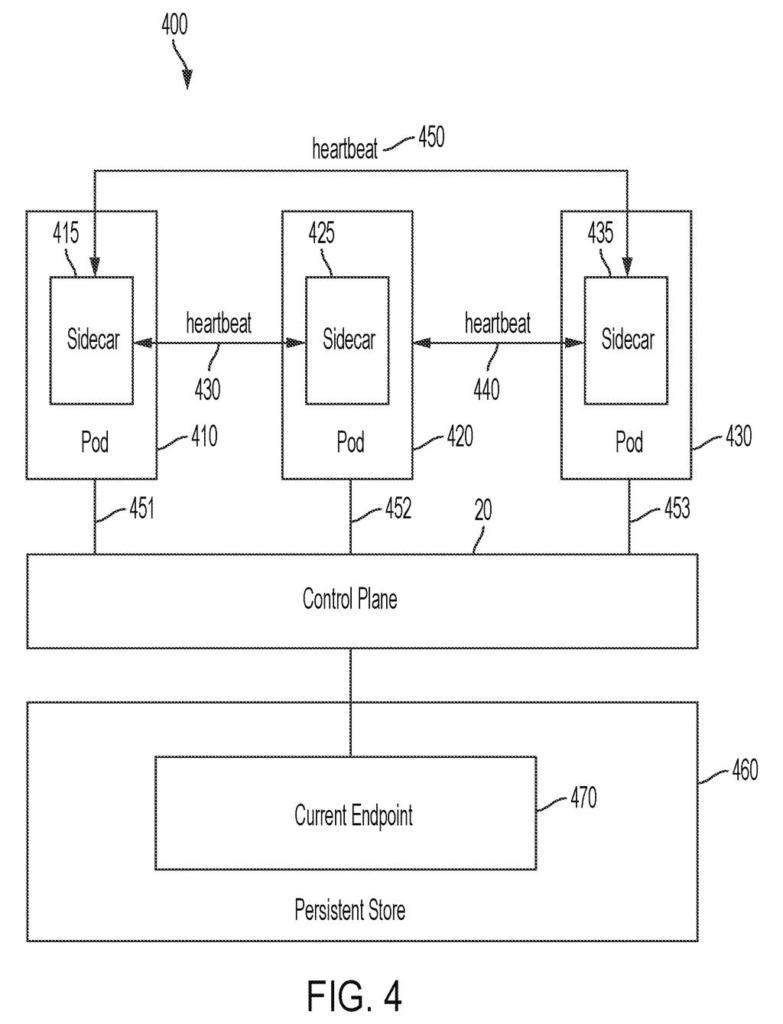
In cloud computing, a singleton service is a task that only one server (called a "pod") is allowed to handle at any moment. That's fine until that server crashes. IBM's system watches for failures and, the moment a server goes offline, it redirects the job to a backup server by updating the address other services use to find it.
You might never notice this as a user, which is the point. The goal is to keep apps running without anyone having to manually step in to fix things.
determining that a first pod of multiple pods is unavailable; ascertaining that the singleton service’s endpoint is a network address of the first pod; and in response to said ascertaining, selecting a second pod of the multiple pods as a next provider of the singleton service …
Translation: The system detects when a server fails and immediately picks a replacement to take over its tasks.
How IBM detects failure and swaps the network address
The patent describes a system for managing a singleton service endpoint, meaning the single network address (think of it like a phone number) that the rest of an application dials to reach a specific job that only one server should run at a time.
Here is how it works step by step:
- Monitoring: The system continuously watches a pool of server pods to detect when one becomes unavailable.
- Verification: It checks whether the failed pod is actually the current holder of the singleton service, because not every downed pod is the critical one.
- Replacement: If it is, the system picks a different pod from the pool and rewrites the endpoint, pointing the "phone number" to the new pod so traffic flows there automatically.
The key technical challenge this addresses is that standard cloud orchestration tools (like Kubernetes) are designed to spread load across many pods, but they don't have a clean built-in answer for services that must not run on more than one pod simultaneously. IBM's approach adds that logic as a layer on top, dynamically updating the routing record rather than relying on a human operator.
A method, computer program product, and computer system for dynamically changing an endpoint of a singleton service. The endpoint is a network address of a pod that provides the singleton service.
Translation: This technology automatically updates the digital address of a service so it stays online even if a server crashes.
What this means for businesses running cloud software
When a singleton service crashes and no automatic recovery exists, the impact can range from delayed batch jobs to full application outages, depending on what that service controls. Database locks, distributed transaction coordinators, and scheduled task managers are common real-world examples. Every minute of manual recovery in those scenarios has a direct cost.
For companies running large enterprise applications on cloud infrastructure, this kind of automatic failover logic is table stakes for reliability. IBM has deep roots in exactly that market, and this filing fits a pattern visible across plain-English patent summaries covering enterprise cloud infrastructure, where incremental but operationally important automation is where the real competitive work happens.
A singleton service failure can cascade into broader outages while manual recovery crawls, which makes this a real production-environment problem. The proposed fix is appropriately scoped, a targeted routing update rather than an overhaul of how pods work, and it matches the size of the problem well. Enterprise middleware vendors have been building this style of reliability engineering into products for years, though, so IBM's claim here mostly formalizes an established approach as IP.
There are more where this came from
We read every patent application Big Tech publishes and send you the ones worth knowing. Plain English, free, every week.
The drawings
13 drawing sheets from US 2026/0238547 A1 · click any drawing to enlarge


Want this weekly breakdown for a company we don't cover? Patentlyze Pro →
Be the first to weigh in