
Samsung's New Patent Enables Silent Remote Calls That Share Field Worker Locations
Samsung has patented a way to automatically share a device's location during a "remote ambient call", a type of silent, one-way monitoring call used by police, firefighters, and field crews, so the person listening in always knows exactly where the other party is.
What Samsung's silent-call location sharing actually does
A dispatcher at a control room opens a silent monitoring call to a field officer's phone, without the officer doing anything. That kind of call already exists in public-safety radio systems, but there's been no reliable way to also pull the officer's location into that same call automatically.
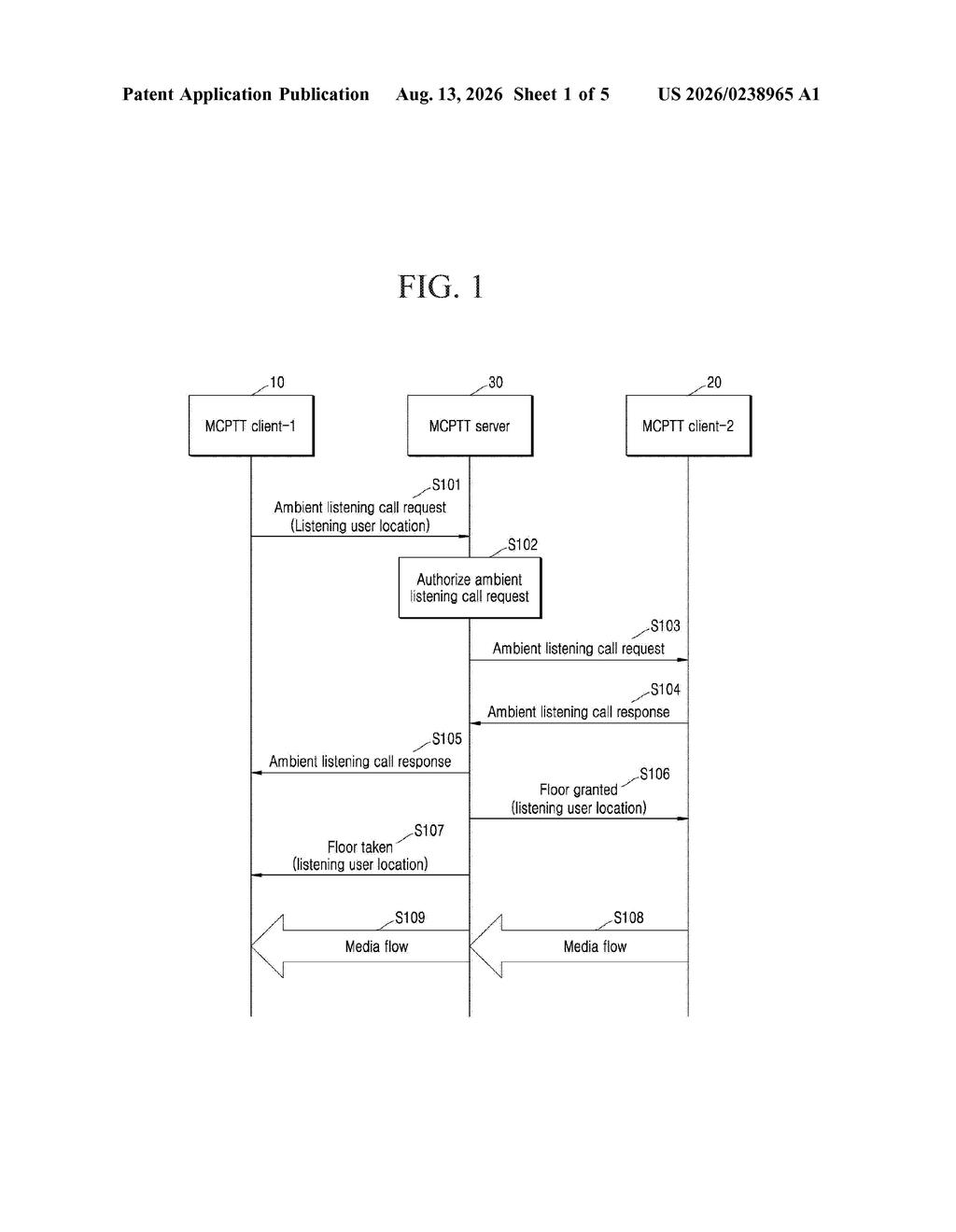
This patent describes how Samsung wants to fix that gap. When the monitoring call connects, the server sends a special message to the field device that says, in effect, "you must reply, and include your current location when you do." The field device checks whether the user's profile allows location sharing, and if it does, it sends that data back. The server then forwards the location to whoever initiated the monitoring call.
The result: a dispatcher can hear what's happening at a scene and see where the officer is, all through the same connection, without the officer needing to press a single button.
… receiving, from the server, a floor granted message including an acknowledgment required indication indicating whether an Acknowledgment is required; and transmitting, to the server, a floor acknowledgement message, wherein the floor acknowledgment message comprises location information of the second device …
Translation: The second device acknowledges the call and automatically shares its current GPS coordinates.
How the floor-grant handshake delivers the location data
The patent operates within MCPTT (Mission Critical Push-to-Talk) networks, the digital radio standard built for police, firefighters, and emergency services. These networks support "remote ambient calls," where one device can silently listen to the environment around another device without that device's user actively participating.
Here's the sequence the patent describes:
- A first device (say, a dispatch console) initiates a remote ambient listening call to a second device (say, an officer's handset) through an MCPTT server.
- The server sends a floor grant message (a "floor grant" is the push-to-talk term for permission to transmit audio) that also carries an acknowledgment required indication, a flag telling the receiving device it must reply.
- The second device checks the user's profile settings. If location sharing is permitted, it packages its current location data into the acknowledgment message it sends back.
- The server then relays that location data to the first device inside a floor taken message, the standard signal announcing that audio transmission has started.
The key design choice is piggybacking the location exchange onto existing MCPTT control messages rather than inventing a separate location-request channel. The profile-based permission check means location sharing can be turned off on a per-user or per-role basis, which matters for privacy and policy compliance in large agencies.
… sending a floor grant message to the MCPTT second electronic device wherein the floor grant message includes mandatory acknowledgment required indication set for the MCPTT second electronic device to share the location information of the MCPTT second electronic device with the MCPTT first electronic device by an MCPTT server.
Translation: The server commands the worker's device to confirm the call and transmit its location data.
What this means for first responders and field teams
For a dispatcher managing an incident, not knowing where a field unit is during a silent monitoring call is a real operational gap. This patent closes it in a way that requires no action from the person being monitored, which is exactly the point of ambient calls: the field worker is occupied. Getting location data into the same session means one less separate system to check, one less radio call to make, and one less second lost in an emergency.
The patent is narrow in scope, applying specifically to MCPTT networks rather than consumer apps, but the principle of tying location consent and delivery to existing call-control signaling is the kind of quiet infrastructure work that shapes how public-safety communications evolve. Samsung's push into mission-critical radio software sits alongside many other interesting tech patents covering how device identity, location, and real-time audio get woven together in professional wireless networks.
The person who benefits most from this patent is the dispatcher who currently has to juggle a monitoring call in one system and a location map in another. Collapsing those two into one automatic exchange removes a real failure point during high-stress incidents where split attention costs time. The profile-based permission gate also gives agencies a workable answer to the privacy question before it becomes a grievance issue, so the system is designed to actually get deployed rather than stall in policy review.
There are more where this came from
We read every patent application Big Tech publishes and send you the ones worth knowing. Plain English, free, every week.
The drawings
5 drawing sheets from US 2026/0238965 A1 · click any drawing to enlarge


Want this weekly breakdown for a company we don't cover? Patentlyze Pro →
Be the first to weigh in