
Sony Patents a Way to Find a Light Source by Reading the Glare in a Photo
That bright, washed-out glare on someone's face or a shiny object in a photo turns out to be a surprisingly precise compass pointing straight back to the light source. Sony's new patent is built entirely on that insight.
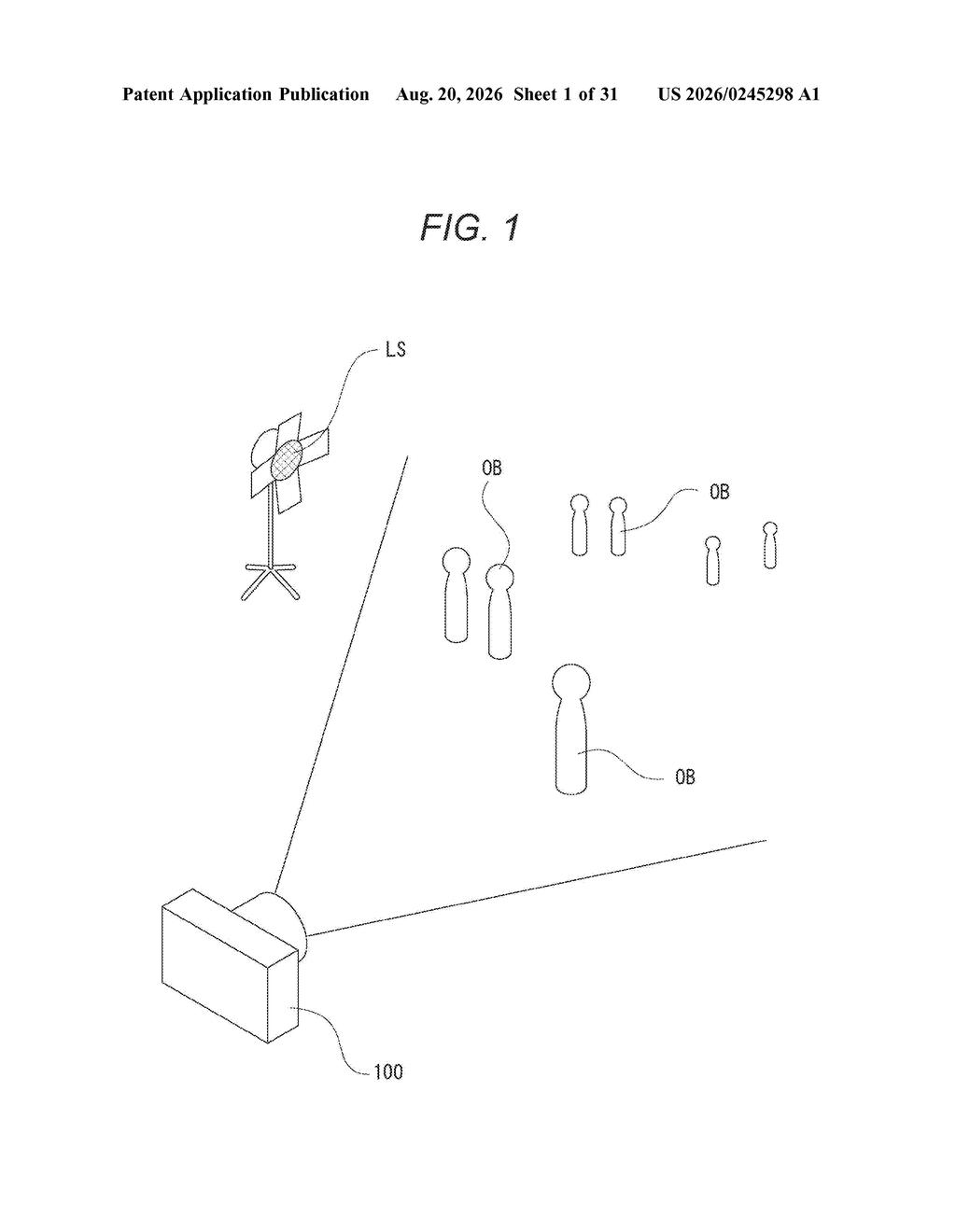
What Sony's glare-reading light-detection actually does
You're looking at a photo and there's a little bright spot on someone's cheek or on a glossy surface. Most of the time you'd ignore it, but that spot is actually a clue: it shows you exactly where the light was coming from.
Sony's patent describes a system that finds that bright spot, calculates the angle of the surface at that point, and uses that to work out which direction the light source is in. The whole process is automatic, requiring only the photo itself, with no extra sensors or special equipment.
This kind of light-direction data matters a lot when you're trying to blend real and virtual objects together, or when a camera app needs to understand the scene it's looking at. By treating glare as information rather than noise, Sony is teaching its devices to read a scene more like a human eye would.
… a normal vector at a shininess center located at a center of a shiny area that is an area on a subject and is a bright area reflecting light from a light source …
Translation: The software identifies the exact middle of a glare spot on an object to determine how light is hitting it.
How the system turns a shiny spot into a direction vector
The patent centers on two connected components working in sequence.
Normal vector calculation: A "normal vector" is a line pointing straight out from a surface, perpendicular to it. When light bounces off a smooth, shiny surface, the angle of that bounce is predictable. By locating the shininess center (the brightest pixel at the middle of the glare spot) and calculating which direction the surface is facing at that exact point, the system gets a precise geometric reading of how the light arrived.
Light source location specifying: Once the system has that normal vector, it applies the physics of light reflection to trace the path back. If you know the viewing angle and the surface angle, the incoming light direction is simply the mirror of the outgoing reflection. The system uses that relationship to state definitively which direction the light source sits in, relative to the camera or the subject.
The input is nothing more exotic than a standard captured image. No depth sensor, no lidar, no special camera mode required. The patent claims this approach works on any shiny area on any subject.
… a light source location specifying unit that specifies, on the basis of the normal vector, a light source direction that is a direction in which the light source is located.
Translation: The system uses the angle of the glare to calculate the precise direction of the light source.
What this means for cameras and AR scene understanding
Light-source detection from a single image is a hard problem that AR systems, virtual production tools, and portrait photography software all care about deeply. If your phone or headset doesn't know where the light is coming from, any virtual object it draws into the scene will look wrong: lit from the wrong angle, casting shadows in the wrong direction. Sony's approach gives a device an answer from data it already has.
The technique is also relevant well beyond AR. Automatic photo editing, video call background replacement, and even security camera analysis can all benefit from knowing where light originates in a scene. Sony covers imaging hardware across cameras, smartphones, and sensors, so this kind of computational photography patent fits neatly into that broader portfolio. Readers following new Big Tech patents in computational imaging and AR scene reconstruction will recognize this as part of a wider push to extract richer environmental data from ordinary cameras.
Sony's 341st filing among the patents we've tracked since May follows ideas like cross-world avatar display and play-based trailer building.
Claim 1 covers two simple steps: find the center of a glare spot on a shiny surface, then use that to calculate where the light is coming from. That is the entire claim. It says nothing about what you are photographing, what camera you use, or how the math is done, so almost any system that does those two steps could fall inside it.
That broad reach matters to any company building a feature that figures out lighting from a single photo. The real question is whether older inventions already did this same thing. If they did not, this claim holds real ground.
Get our take in your Top Stories
Liked this breakdown? Add Patentlyze as a preferred source on Google, and our plain-English take shows up more often in your Top Stories the next time Sony patent news breaks.
There are more where this came from
We read every patent application Big Tech publishes and send you the ones worth knowing. Plain English, free, every week.
The drawings
31 drawing sheets from US 2026/0245298 A1 · click any drawing to enlarge


Want this weekly breakdown for a company we don't cover? Patentlyze Pro →
Be the first to weigh in