
Sony Patents a Way to Show Avatars from One Virtual World Inside Another
Sony is working on a way to let your avatar show up inside a virtual world you're not even logged into, appearing as a clearly marked visitor while your real presence stays in a different metaverse entirely.
What Sony's cross-metaverse avatar system actually does
Every time two friends try to meet up in different online games, they hit the same wall: each platform is its own sealed box, and there's no way to see each other across that boundary. Sony's patent takes direct aim at that wall.
The idea is straightforward. If you're spending time in one virtual world and a friend is in a completely different one, your avatar could still appear inside their world, or theirs in yours, visually flagged so everyone knows you're a visitor from elsewhere. You wouldn't need to quit your own session or create a new account to have a presence somewhere else.
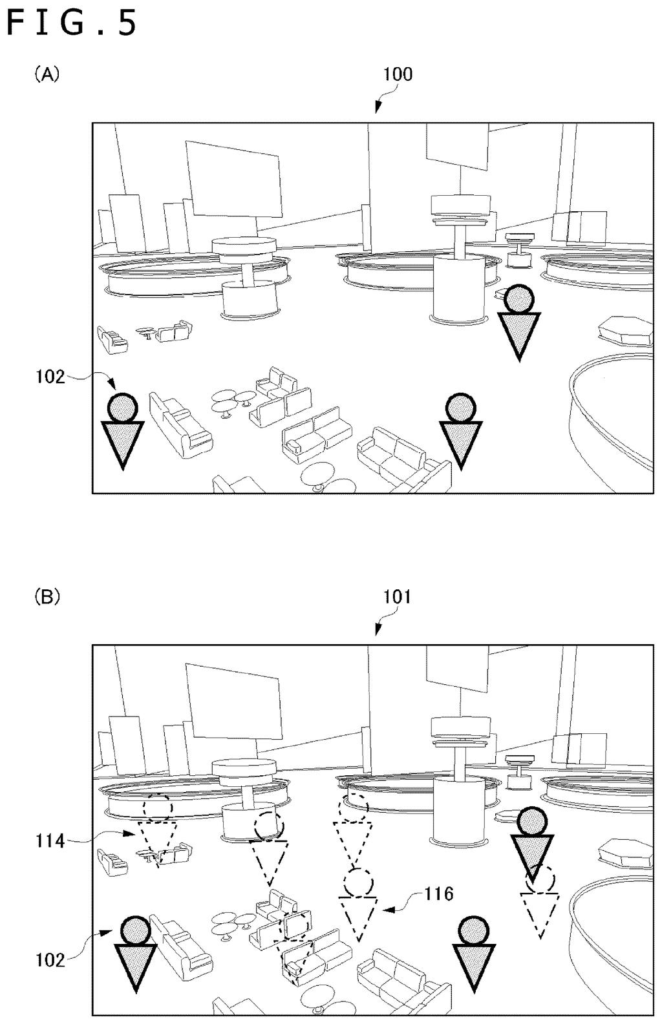
The key detail is that the cross-world avatar looks different from the regular residents. It's not identical to how local users appear, which keeps things clear for everyone in the room.
… the avatar setting section further places, in the first metaverse, an avatar corresponding to a second user using a second metaverse that is different from the first metaverse, in a form distinct from the avatar corresponding to the first user.
Translation: The system can insert a person from a different virtual world into your current one while making them look different.
How the avatar setting system marks cross-world visitors
The patent describes a metaverse server that manages avatar placement across distinct virtual environments. It handles two separate roles at once: placing a normal avatar for a user who is actively logged into a given metaverse (called the first metaverse), and placing a second avatar for a user who is actually logged into a different metaverse (the second metaverse).
The cross-world avatar appears in the first metaverse in a visually distinct form. The patent doesn't nail down exactly how that distinction looks (a different color, a badge, a translucent effect), but the claim specifically requires that local avatars and visiting avatars be visually separable. Users viewing the scene through an HMD (a head-mounted display, like a VR headset) would see both kinds of avatars in the same shared space.
The architecture involves:
- A central avatar setting section on the server that coordinates placement across worlds
- A display control section that renders the combined scene on the user's device
- A user device paired with an HMD that shows the resulting image
The system doesn't require the visiting user to join the first metaverse. Their avatar is a representation of their presence elsewhere, not a full session transfer.
A metaverse server 12 places, in a first metaverse, an avatar corresponding to a first user using the first metaverse. A user device 14 displays an image of the first metaverse on an HMD 16 .
Translation: A central server manages your avatar while your headset shows you the virtual environment.
What this means for PlayStation's virtual world ambitions
For PlayStation users, this patent sketches out what cross-platform social presence could look like if Sony's virtual world projects ever expand. The practical payoff is simple: you could see where your friends are, or let them see you, without everyone having to agree on the same platform first. That's a friction point that anyone who has tried to coordinate online gaming across different services knows well.
The larger bet here is that virtual worlds will eventually need to talk to each other in some form, and Sony is staking out its preferred approach: server-managed, visually honest about who belongs where. Sony's metaverse identity work sits alongside a wave of interesting tech patents in the virtual environment space filed by major platform holders in the past two years, all circling the same unresolved question of how separate online worlds might one day acknowledge each other.
Sony's 340th filing we've tracked in our Sony coverage since May joins earlier applications like the custom game trailer builder and the video decoding shortcut.
If you've ever wished a friend in a different game could at least see your name in the lobby, this patent is the formal, technical version of that wish. The reader-facing payoff is real but narrow: it solves a social coordination problem that matters most to people who already split time across multiple virtual platforms, which today is a small but growing group. The visual distinction requirement is the part worth watching, because it protects users from confusion without forcing every platform into the same mold.
There are more where this came from
We read every patent application Big Tech publishes and send you the ones worth knowing. Plain English, free, every week.
The drawings
7 drawing sheets from US 2026/0245311 A1 · click any drawing to enlarge


Want this weekly breakdown for a company we don't cover? Patentlyze Pro →
Be the first to weigh in