
Sony Patents a System That Reads Scripts and Maps Out Scene Layouts Automatically
Writing a script is one thing. Turning that text into a spatial map of where every character and prop sits in a scene is a separate, tedious job. Sony is patenting a way to skip that manual step entirely.
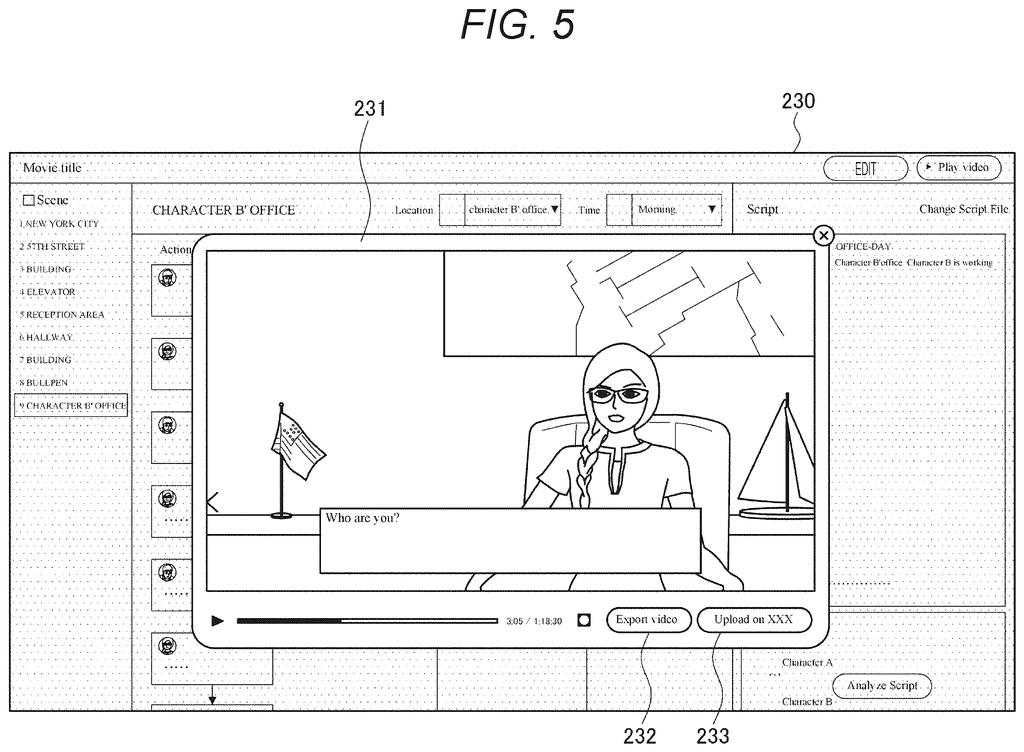
What Sony's script-to-scene layout tool actually does
A screenwriter types a scene: two characters face each other across a table, a window behind one of them. Right now, someone else has to read that description and manually place every element in a 3D environment or storyboard. You can imagine how many hours that adds up to across a whole film or game.
Sony's patent describes a system that reads a script directly and figures out where each piece of a scene belongs relative to everything else. It takes the named components, works out their positional relationships, and outputs that layout information automatically.
The idea is that the spatial structure of a scene is often already implied in the script's language. Sony wants software to extract that structure so artists and directors can start from a rough map rather than a blank canvas.
a control unit that acquires information regarding a component from an input script, performs processing of generating, from the information regarding the component, information indicating a positional relationship of one or more components forming a scene …
Translation: The system reads a script to identify characters or objects and calculates where they should be placed in a scene.
How the system pulls positions from script components
The patent centers on an information processing device with a control unit that does three things in sequence.
- Acquires component information from an input script. A "component" here means any discrete element named or described in the script: a character, a prop, a location marker, a spatial reference like "behind" or "across from."
- Generates positional relationship data from those components. The system processes what it knows about each element and produces a structured representation of how the elements relate to one another in space, essentially building a relative layout.
- Outputs that positional information in a form downstream tools or users can act on.
The claim is broad by design. It covers any device that reads a script, derives spatial relationships, and outputs them, without specifying the exact parsing method or output format. That flexibility suggests Sony is staking out foundational territory here rather than describing one narrow implementation.
The core insight is that scripts already contain implicit geometry: words like "facing," "beside," "in front of," and "across" encode spatial meaning that a system can parse and formalize into something a production pipeline can use.
Making it possible to output information indicating a positional relationship of components acquired from a script.
Translation: The goal is to automatically generate a spatial layout of a scene based on the details written in a script.
What this means for film and game pre-production pipelines
For anyone working in film pre-production, game development, or virtual production, the most expensive thing is time. Taking a script from words to a spatial layout currently requires a human to read every scene, interpret the implied geography, and manually recreate it in software. This patent targets exactly that gap, automating the translation from written narrative to positional data.
The practical payoff for a director or production designer would be arriving at the layout stage with a rough spatial draft already generated, rather than starting from nothing. Whether Sony builds this into existing production tools or uses it as a foundation for AI-assisted virtual production software remains to be seen, but the filing sits squarely in the area of Big Tech patent news around AI-assisted creative tooling, where automation of pre-production grunt work has become one of the more active fronts.
Sony's 357th filing we've tracked since May, in our Sony coverage, adds to a run that includes storing touch in 3D files and camera-driven audio control.
The reader-facing payoff here is real but unhurried. A screenwriter or director using a Sony production tool wouldn't notice this working in the background until they opened a project and found a scene layout already roughed out for them. That moment, not having to start from a blank grid, is exactly the friction this filing targets. The claim is abstract enough that the distance between this patent and a finished tool is still long.
Get our take in your Top Stories
Liked this breakdown? Add Patentlyze as a preferred source on Google, and our plain-English take shows up more often in your Top Stories the next time Sony patent news breaks.
There are more where this came from
We read every patent application Big Tech publishes and send you the ones worth knowing. Plain English, free, every week.
The drawings
10 drawing sheets from US 2026/0245323 A1 · click any drawing to enlarge


Want this weekly breakdown for a company we don't cover? Patentlyze Pro →
Be the first to weigh in