
Microsoft Patent Describes Attack Bots That Test AI Models for Security Flaws
Before a company ships an AI product, someone has to try to break it. Microsoft's new patent describes a system that does that automatically, by deploying AI agents whose only job is to attack other AI models.
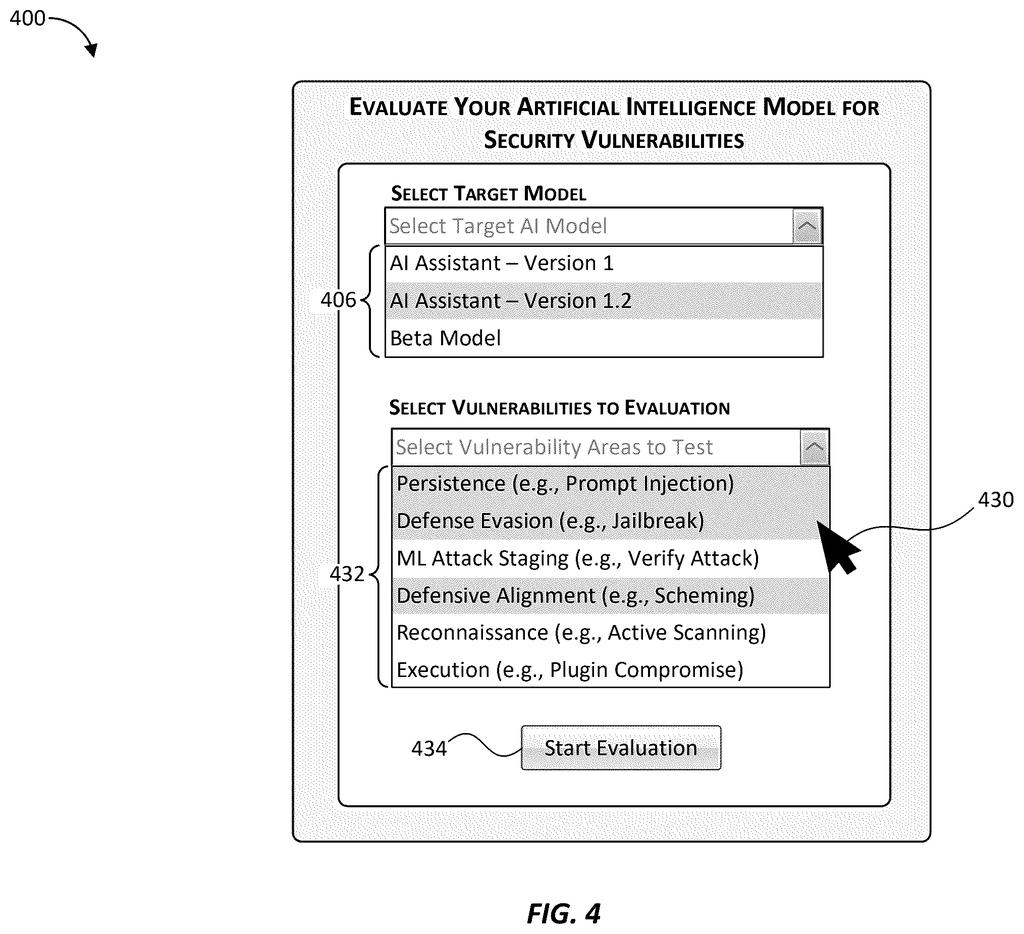
What Microsoft's AI attack-bot testing system actually does
A security researcher stares at a freshly deployed AI chatbot, trying to think of every weird, hostile, or misleading question that might make it say something harmful. That job is exhausting, slow, and easy to get wrong.
Microsoft's patent describes a system that automates this process. Instead of a human manually probing an AI, a dedicated "threat emulation engine" deploys one or more attack agents, each of which is also an AI. Those agents generate hostile inputs, called adversarial prompts, feed them to the AI being tested, and then score how the target AI responds. If the target fails a test, the system logs it as a vulnerability.
Think of it as a fire drill for AI, except the drill itself is also automated. The system keeps score, so developers get a concrete read on where their model is weak before real users encounter the same problems.
… generate, by a first attack agent of the one or more attack agents, a first adversarial prompt based on the first adversarial action; submit, by an executor agent, the first adversarial prompt to the target AI model …
Translation: One AI agent creates a tricky prompt to test the target system, and another agent sends it.
How the executor agent scores each adversarial prompt
The patent describes a multi-agent platform built around three distinct roles working together:
- Attack agents: AI components that receive a description of a specific adversarial action (for example, "try to get the model to reveal private information" or "try to make it produce harmful instructions") and then generate a prompt designed to accomplish that goal.
- Executor agent: The coordinator. It submits the attack prompt to the target AI model, collects the response, and produces a numerical score measuring how badly (or well) the target handled the attack.
- Target AI model: The system being tested. It could be any AI model, not necessarily one Microsoft built.
The scoring step is where the intelligence lives. The executor agent compares the target's response against the intended adversarial action and assigns a pass or fail. Passing in this context means the attack succeeded, which counterintuitively means the model has a vulnerability, not that it is safe.
The system is designed to be modular. Different attack agents can be swapped in for different threat categories, which means the same engine could test for prompt injection (tricking an AI with hidden instructions), data leakage, or harmful content generation, all in one automated pipeline.
… threat emulation engine identifies a first adversarial action to identify vulnerabilities and instructs a first attack agent to generate a first adversarial prompt to perform a first adversarial action for detecting the vulnerability.
Translation: The security system picks a test strategy and tells an attack agent to build a prompt to find weaknesses.
What this means for companies deploying AI in the wild
For any company building a product on top of an AI model, security testing is a real operational cost. Right now, that work is largely manual, expensive, and inconsistent from team to team. A system like this, if it performs as described, could bring more standardized, repeatable testing to AI development pipelines, the same way automated code-scanning tools changed software security a decade ago.
The patent is also strategically interesting for Microsoft, which sells AI infrastructure and developer tools through Azure. A standardized vulnerability-testing layer fits naturally into that ecosystem, and the plain-English patent summaries covering AI security filings show that this area is one of the more active corners of tech intellectual property right now.
This is the 14th Microsoft filing we've tracked since July in our AI guardrails race, joining a deepfake physics checker and an AI voice catcher.
Claim 1 covers any computing system that picks an attack strategy, uses an AI agent to write a probing question based on that strategy, sends that question into another AI model, and scores what comes back. There is no limit on which AI model gets tested, which attack strategy gets used, or how the scoring works. That scope is wide enough to cover a broad category of automated testing tools, not just one specific product.
Any software that uses AI agents to hunt for weaknesses in another AI model and grades the results could fall inside this claim. The real test will be whether existing research on attacking AI systems narrows what gets granted. That field has years of published work behind it, and the patent office will likely push back.
But even a trimmed version of this claim would give the holder meaningful legal ground over a fast-growing corner of the AI safety market.
Get our take in your Top Stories
Liked this breakdown? Add Patentlyze as a preferred source on Google, and our plain-English take shows up more often in your Top Stories the next time Microsoft patent news breaks.
There are more where this came from
We read every patent application Big Tech publishes and send you the ones worth knowing. Plain English, free, every week.
The drawings
7 drawing sheets from US 2026/0252702 A1 · click any drawing to enlarge


Want this weekly breakdown for a company we don't cover? Patentlyze Pro →
Be the first to weigh in