
Microsoft Patents a System for Catching AI-Generated Voices
As AI voice cloning gets cheaper and more convincing, Microsoft is building a detector that learns to spot synthetic speech by studying the audio from three different angles at once.
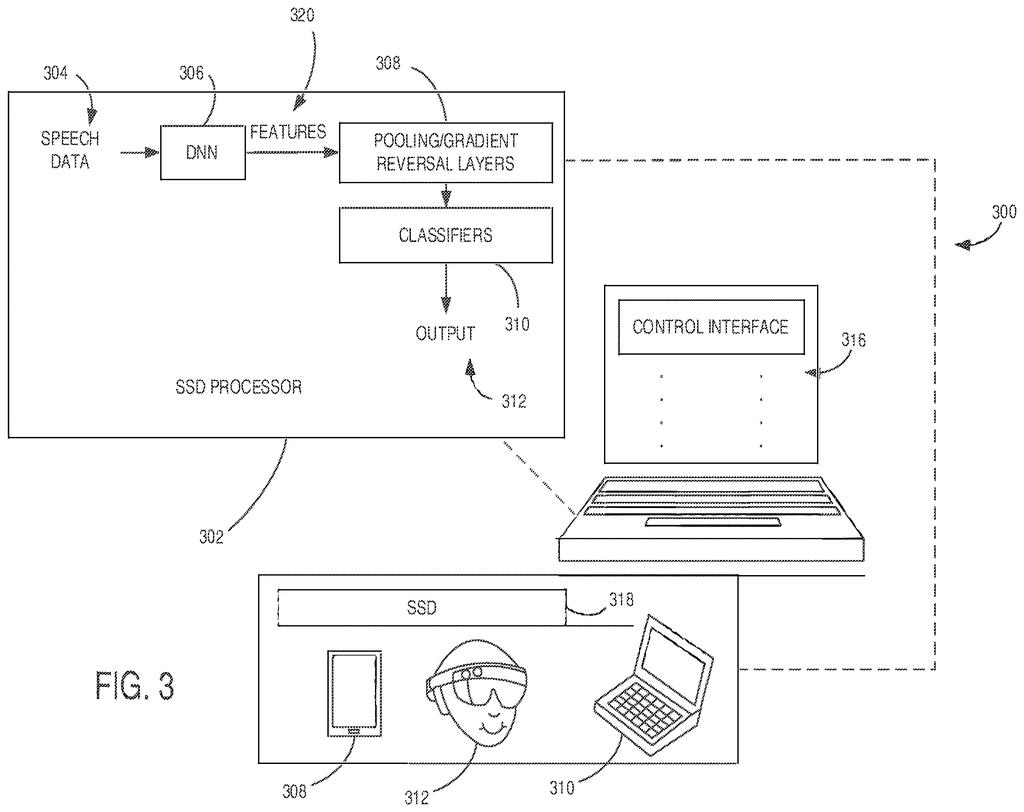
How Microsoft's voice-forgery detector actually works
Imagine getting a phone call from someone who sounds exactly like your boss, asking you to wire money. The voice is fake, generated by an AI, but your ear can't tell the difference. That's the problem Microsoft is trying to solve.
The patent describes a system that listens to audio and extracts subtle acoustic fingerprints from the sound. Those fingerprints are then run through multiple neural networks (pattern-recognition engines trained on examples) to pull out deeper, more abstract clues about the audio's origin.
The clever part is that the system trains itself on three questions simultaneously: Is this speech synthetic? Who is the speaker? And what recording channel or device was used? By learning all three at once, the system builds a richer picture of what "real" versus "fake" audio looks like, making it harder for AI-generated voices to slip through.
Training of an SSD task, a speaker classification task, and a channel classification task are performed at a same time, using the feature vector.
Translation: The system juggles multiple checks at once to figure out who is speaking and how the audio was recorded.
How the three-task training approach flags synthetic audio
The patent describes a synthetic speech detection (SSD) pipeline that works in several stages:
- Acoustic feature extraction: The system first pulls low-level sound characteristics from the input audio, things like pitch patterns, frequency distribution, and timing cues that differ between human and machine-generated voices.
- Neural network processing: Those features are fed through multiple neural networks that compress and abstract the raw data into higher-level representations, similar to how image recognition models go from raw pixels to "this looks like a face."
- Pooling into a feature vector: The outputs are collapsed into a single compact summary (a feature vector) using a pooling operation, which averages or selects the most meaningful signals across the audio clip.
- Multi-task training: This feature vector is then used to train three classifiers at the same time: one that decides if speech is synthetic (SSD task), one that identifies the speaker, and one that identifies the recording channel or device type. Training jointly forces the model to learn features that generalize across all three problems, which tends to improve accuracy on each one.
At inference time (when the system is actually deployed), the trained SSD classifier flags whether a given audio sample is AI-generated or human.
What this means for deepfake audio and voice fraud
Voice cloning tools are now widely available and capable of producing convincing fakes from just a few seconds of real audio. That creates real risks in phone-based fraud, voice authentication systems, and media manipulation. A detector that can reliably flag synthetic speech could sit inside call centers, authentication pipelines, or content moderation systems to catch fakes before they cause damage.
The multi-task training approach is worth paying attention to because it addresses a known weakness of single-task detectors: they tend to fail when the audio conditions change, like a different microphone or an unfamiliar speaker. By forcing the model to also learn speaker identity and channel type, Microsoft's system is designed to stay accurate across varied real-world conditions, not just clean lab recordings.
This is a genuinely useful area for Microsoft to be working in, given how much AI-generated audio is flooding communications platforms. The multi-task training angle is a real technical idea, not just a defensive filing. That said, the first independent claim is listed as canceled, which is a yellow flag for how this patent ultimately gets scoped.
There are more where this came from
We read every patent application Big Tech publishes and send you the ones worth knowing. Plain English, free, every week.
The drawings
8 drawing sheets from US 2026/0229248 A1 · click any drawing to enlarge


Want this weekly breakdown for a company we don't cover? Patentlyze Pro →
Be the first to weigh in