Microsoft
Microsoft · Security · Filed Feb 26, 2025 · USPTO published Aug 27, 2026 · Aug 27 release
Microsoft Patent: AI Chatbots That Automatically Rewrite Security Rules Against Manipulation
Every AI chatbot runs on a hidden instruction sheet called a system prompt, and right now, keeping that sheet secure is almost entirely a manual job. Microsoft wants to automate it.
- Publication number
- US 2026/0252707 A1(US20260252707A1)
- Applicant
- Microsoft Technology Licensing, LLC
- Filed · Published
- Feb 26, 2025 · Aug 27, 2026
- Inventors
- Asaf HARARI, Idan HEN, Ariel BRUKMAN, Ron KELLER
- Status when we published
- Examiner raised objections; the company can respond
- Document
- 20 claims
- US classification
- 726/1
- Examiner
- FARROW, FELICIA (Art Unit 2437)
How Microsoft's auto-prompt security fix actually works
Every time a user sends a message to an AI assistant, that assistant is following a set of background rules its developers wrote. Those rules, called a system prompt, tell the AI what it can and can't do. The problem is that bad actors have learned to send cleverly worded messages that trick the AI into ignoring those rules, and patching the vulnerabilities usually means a developer has to notice the attack, figure out what went wrong, and rewrite the instructions by hand.
Microsoft's patent describes a system that does that patching work automatically. It watches the conversation happening between your application and an AI model, spots patterns that look like a security problem, and then generates an updated set of instructions to block that kind of attack going forward.
The result is that an AI assistant could defend itself against manipulation without anyone having to manually rewrite its rules every time a new trick shows up. That's a meaningful shift for any company running an AI product that talks to the public.
… identify, based on the first data, a first security vulnerability of the application, generate a system prompt comprising instructions specifying how the generative AI model is to respond to a second user prompt, the instructions comprising a first rule for mitigating the first security vulnerability …
Translation: The system detects a security flaw and automatically writes new instructions to prevent the AI from being tricked again.
How the system scans sessions and rewrites prompt rules
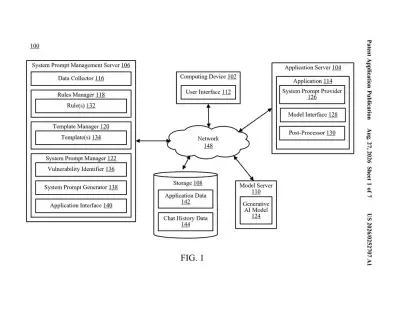
The system works in a loop. First, it ingests data from a live or recorded session between an application and a generative AI model, such as a customer-facing chatbot. It analyzes that data to identify a security vulnerability, which in AI terms often means a prompt injection attack (a case where a user's input is crafted to override the AI's original instructions).
Once a vulnerability is identified, the system generates or updates a system prompt: the behind-the-scenes instruction text that tells the AI how to behave. Crucially, the new system prompt includes a specific rule targeting the vulnerability that was just found, not just a generic warning.
The updated prompt is then automatically delivered to the application, which passes it to the AI model. From that point forward, the AI responds to user messages according to the new, tightened rules. The patent also describes a version where the AI model itself helps determine what the new rule should say, essentially asking the model to help write its own security patch.
Key components described include:
- A vulnerability-detection step that reads session data
- An automated prompt-generation step that produces targeted fix rules
- A delivery mechanism that pushes the updated prompt back into the live application
- An optional loop where the AI model participates in generating its own guardrails
Techniques are disclosed for automatically generating and/or updating system prompts for applications that interface with generative artificial intelligence (AI) models. In an aspect, data associated with an application for facilitating interactions with a generative AI model is received.
Translation: Microsoft is patenting a way for software to rewrite its own security instructions when it talks to AI models.
What this means for businesses running AI assistants
For any business that has plugged an AI assistant into a customer-facing product, keeping that assistant from being manipulated is a constant, labor-intensive problem. Right now, the standard practice is closer to a fire drill: someone notices an exploit, escalates it, and a developer rewrites the system prompt manually. Microsoft's approach, if it works as described, would compress that cycle from days to near real-time.
The security AI space is moving fast, and Microsoft is well-positioned to bake this kind of protection into Azure AI services or Microsoft Copilot deployments, though nothing announced yet confirms that path. For readers tracking new Big Tech patents in AI security and enterprise software, this filing fits a clear pattern of companies racing to make AI deployments safer to operate at scale.
That makes this Microsoft's 16th filing we've tracked since July in our AI safety guardrails watch, following one on tricking AI into leaking secrets and one on bots that probe AI for flaws.
Source: US 2026/0252707 A1 at the USPTO (PDF). Full patent text and figures are in the official publication.
Get our take in your Top Stories
Liked this breakdown? Add Patentlyze as a preferred source on Google, and our plain-English take shows up more often in your Top Stories the next time Microsoft patent news breaks.
Add Patentlyze on Google
One click.
There are more where this came from
We read the new patents from Big Tech, carmakers and more and send you the ones worth knowing. Plain English, free, every week.
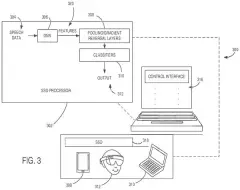
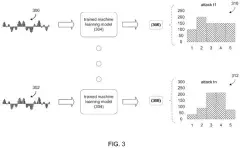
The drawings · 7 sheets
7 drawing sheets from US 2026/0252707 A1 · click any drawing to enlarge


More from Microsoft
All 681 Microsoft patents →
More in Security
All 354 Security patents →
IBM
IBM Patents an Automated System for Finding Gaps in AI Safety Filters
Salesforce
Salesforce Patents a System to Block Harmful Requests Before They Reach Its Cloud Servers
AMD
AMD Patent Would Stop AI Chatbots From Producing Harmful Outputs Before They Escape
Salesforce