
Samsung Patents a Way to Scroll Two Similar Pages at Once
Samsung has filed a patent for a split-screen feature that watches what you have open in two windows and, when the content is similar enough, lets a single swipe scroll both at the same time.
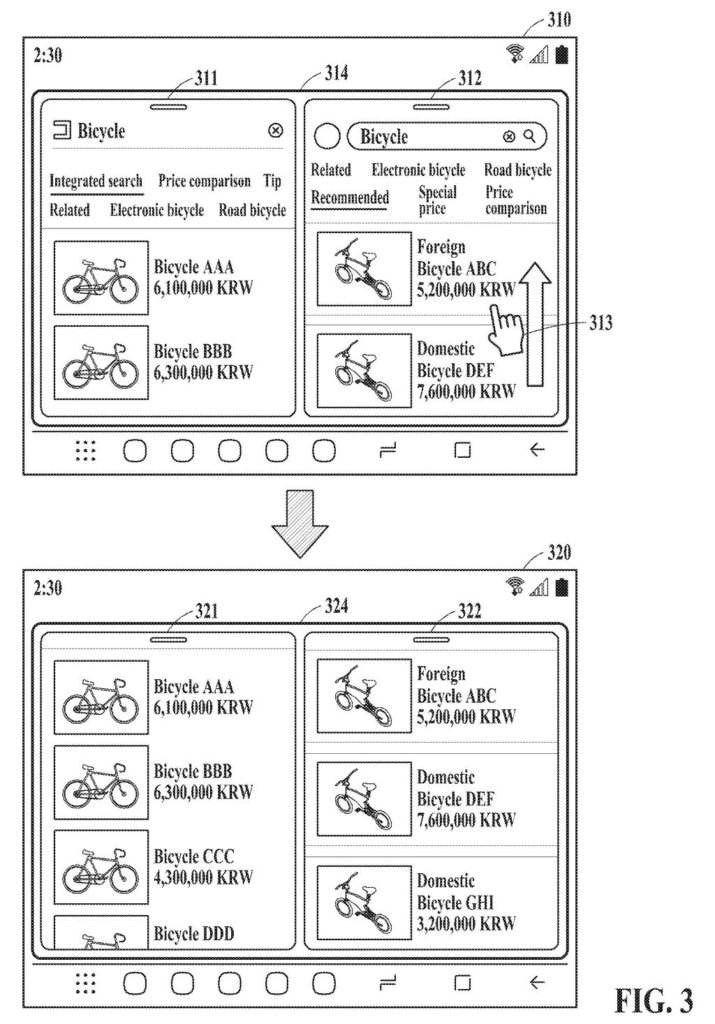
What Samsung's synchronized split-screen scrolling actually does
You're comparing two documents side by side on your tablet and have to scroll each one separately, constantly switching your finger between the two windows. It's a small annoyance that adds up fast.
Samsung's new patent describes a system that checks whether the two pages you have open look alike. If they do, it links them so that scrolling one scrolls both. One swipe handles both windows at once, keeping your place in each without any extra steps.
Concurrent scrolling only kicks in when the device decides the pages are similar, so unrelated windows still scroll independently. Think of it as the phone or tablet deciding, on your behalf, when it makes sense to treat two pages as a pair.
… determine a similarity between the first page and the second page, based on the similarity between the first page and the second page, enable concurrent scrolling between the first page and the second page …
Translation: The device checks if two open pages are alike and then lets you scroll both at the same time.
How the device decides when to link two windows together
The patent describes an electronic device (phone, tablet, or foldable) that runs two pages in separate side-by-side windows. While both are visible, the device measures a similarity score between the two pages. The patent doesn't pin down exactly how similarity is calculated, leaving the implementation open.
Once the similarity crosses a threshold, the system enables concurrent scrolling. From that point, a swipe gesture on either window is applied to both simultaneously, keeping the two views in sync.
If the similarity isn't there, the windows scroll independently, just as they do today. The feature is automatic, not a toggle the user has to find in a menu.
Key elements covered by the claim:
- Displaying portions of two pages in separate windows at the same time
- Determining a similarity between those pages
- Enabling concurrent scrolling based on that similarity
- Applying a single swipe input to both pages
… while the concurrent scrolling is enabled, based on obtaining a swipe input, apply the obtained swipe input to the first page and the second page.
Translation: Once linked, a single swipe on the screen will move both windows downward together.
What this means for Galaxy tablets and foldable screens
For Samsung's Galaxy foldables and larger tablets, where split-screen is a daily workflow, this kind of automatic sync could reduce friction for anyone comparing documents, reading bilingual texts, or reviewing two versions of the same file. The device handles the coordination decision so you don't have to open a settings panel or remember a keyboard shortcut.
The broader picture is that Samsung is investing in making multi-window interaction feel as natural as single-window use, an area where Android tablets have historically trailed iPad. The latest Big Tech patents in the display-interaction space show a sustained push to make large-screen multitasking feel deliberate rather than bolted on, and this filing fits squarely into that effort.
This is the 1102nd Samsung filing in our Samsung coverage since May, adding to audio work like cleaner call audio and split Bluetooth streams.
Claim 1 covers any electronic device that shows two pages side by side, measures how similar they are, and then scrolls both at once when you swipe. There is no requirement for a specific way to measure similarity, no minimum screen size, and no named app or interface. That means the claim, as written, could apply equally to a phone, a tablet, or a laptop running almost any split-screen app.
The practical reach of a claim this broad is significant. Any developer building a feature that syncs two side-by-side scrolling views based on their content relationship would be working inside this claim's boundaries, potentially without a license.
Whether the claim survives examination at this width is the real question. Patent examiners routinely push back on broad similarity language by demanding proof that no prior product did the same thing, which often forces narrowing amendments that make the final patent far easier to work around.
Get our take in your Top Stories
Liked this breakdown? Add Patentlyze as a preferred source on Google, and our plain-English take shows up more often in your Top Stories the next time Samsung patent news breaks.
There are more where this came from
We read every patent application Big Tech publishes and send you the ones worth knowing. Plain English, free, every week.
The drawings
9 drawing sheets from US 2026/0252232 A1 · click any drawing to enlarge


Want this weekly breakdown for a company we don't cover? Patentlyze Pro →
Be the first to weigh in