
Qualcomm Patents a Way to Connect Your Phone to Two Satellites at Once
Most phones today can talk to one satellite network at a time, if they can talk to any at all. Qualcomm is patenting a chip-level approach that keeps two separate satellite connections open at the same time, on two different radio frequencies.
What Qualcomm's dual-satellite connection actually does
Imagine you're driving through a dead zone where your regular cell carrier has no signal. Your phone switches to a satellite connection, which works fine, until that satellite passes out of range and you briefly lose everything before the next one picks up.
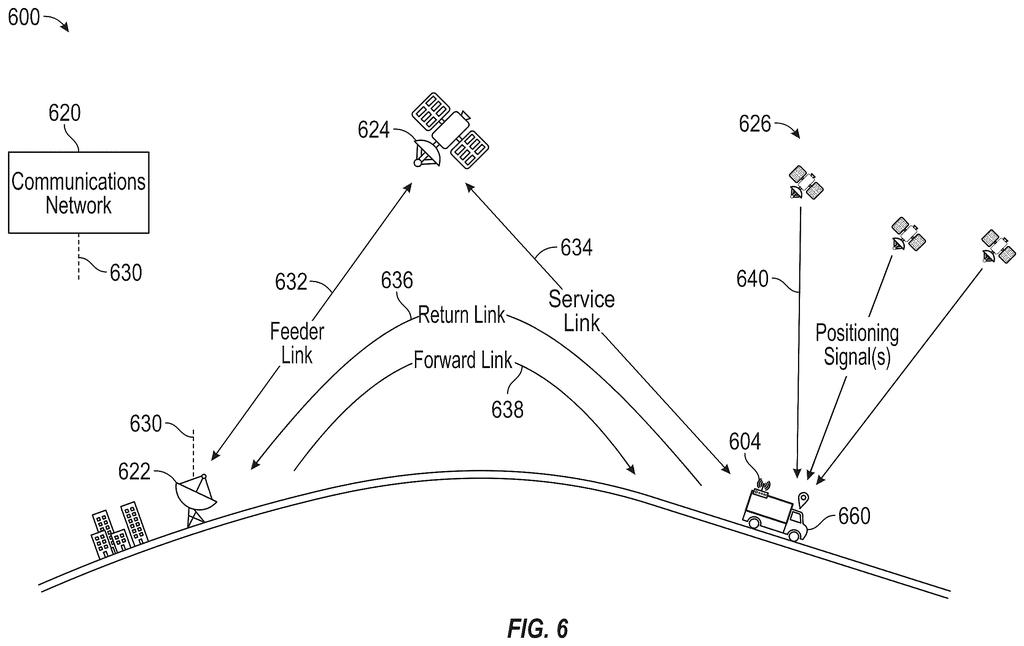
Qualcomm's patent describes a way for a phone to hold two satellite connections open at the same time, each on a different radio frequency. One frequency lane might be the same band your carrier already uses for ground-based towers; the other would be a dedicated satellite frequency. Both run at once, so there is no gap.
The practical idea is that your device never has to drop one satellite link before grabbing the next. Qualcomm's push into non-terrestrial networking has been building across several filings, and this one targets the radio hardware at the center of every phone and modem.
communicate on a first component carrier (CC) with a first non-terrestrial network entity (NE), wherein the first CC is in a first frequency band; and communicate, while the first CC is active, on a second CC with a second non-terrestrial NE …
Translation: Your phone can talk to two space stations at the same time using two different radio channels.
How the two frequency bands divide the satellite links
The patent covers a user equipment (the technical term for your phone or modem) that can maintain two active component carriers simultaneously. A component carrier is essentially a dedicated radio channel, similar to how a highway has multiple lanes.
The first carrier sits in a terrestrial band, meaning a frequency range originally designed for ground-based cell towers but here used to reach a non-terrestrial network entity (a satellite or high-altitude platform). The second carrier sits in a mobile satellite service band, a set of frequencies specifically licensed for satellite communications.
The key constraint the patent addresses is timing: the second connection must come up while the first is still active. That "while active" language is the core of what the invention is trying to protect, the ability to hold both links open in parallel, not sequentially.
The system requires a processing unit inside the device to coordinate both channels without them interfering with each other, which is the harder engineering task the patent describes.
What this means for satellite phone coverage
For ordinary users, this matters because satellite phone coverage today tends to be slow, unreliable, and patchy between handoffs. A device that can bridge two satellite connections at once, on different frequency bands, could maintain a steadier link during those transition moments, the same way a dual-band Wi-Fi router can balance traffic across two channels.
For the industry, this is about who controls the radio modem inside devices that connect to emerging satellite networks from companies like SpaceX and AST SpaceMobile. Qualcomm supplies the modem chips in a large share of the world's smartphones, so a patent at this level (the chip's radio coordination logic) could put Qualcomm in a strong licensing or supply position as satellite-to-phone service expands.
Qualcomm's 370th filing in our Qualcomm coverage since May adds to a run that includes wider AR glasses views and earbud radio dodging.
Claim 1 is genuinely broad in one respect and narrow in another, and that combination matters. The broad part: it covers any device that runs two satellite-linked component carriers at the same time on different bands. It does not require a specific satellite operator, a specific protocol, or specific hardware. Anything that does this could fall within the claim.
The narrow part: it requires one band to be a terrestrial band and the other to be a mobile satellite service band. That pairing is specific, and it means a device using two dedicated satellite bands simultaneously would not be covered. That distinction probably reflects real spectrum licensing realities, but it also limits what the claim actually blocks.
If granted, the claim could be meaningful in licensing talks with device makers as satellite-direct phone features become mainstream. Whether it survives prior art scrutiny is a different question, multi-carrier aggregation across bands is well-established in 5G, and the patent's novelty hinges on whether doing it across a terrestrial-plus-satellite pairing is sufficiently distinct.
Get our take in your Top Stories
Liked this breakdown? Add Patentlyze as a preferred source on Google, and our plain-English take shows up more often in your Top Stories the next time Qualcomm patent news breaks.
There are more where this came from
We read every patent application Big Tech publishes and send you the ones worth knowing. Plain English, free, every week.
The drawings
20 drawing sheets from US 2026/0261330 A1 · click any drawing to enlarge


Show the other 12 sheets


Want this weekly breakdown for a company we don't cover? Patentlyze Pro →
Be the first to weigh in