
Qualcomm Patents a Wi-Fi Switch That Holds Your Old Connection Until the New One Is Stable
Every time your phone switches from one Wi-Fi access point to another, there's a brief moment where it's connected to neither. Qualcomm's new patent is designed to eliminate exactly that gap.
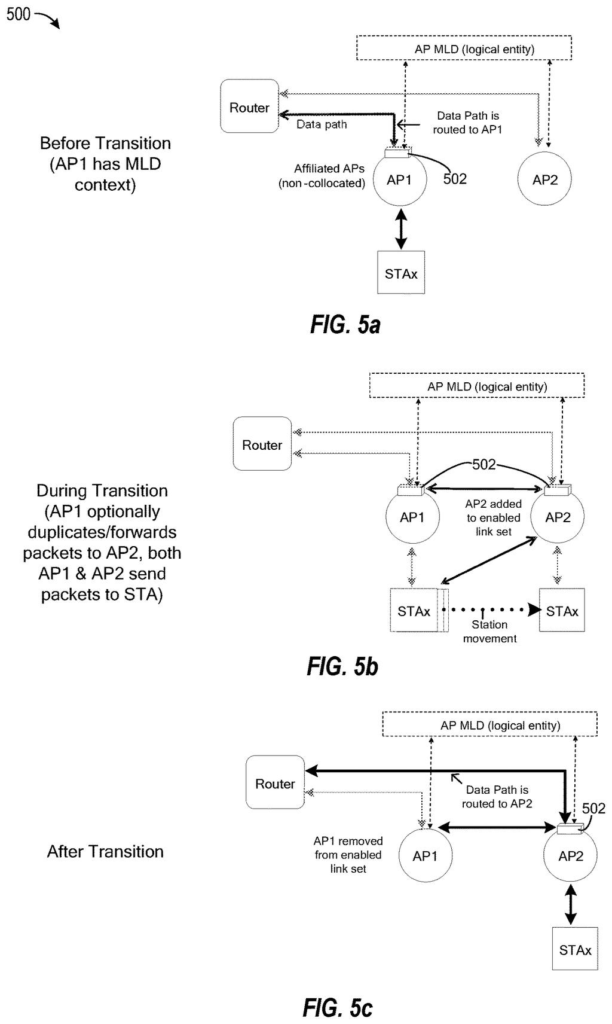
How Qualcomm's make-before-break Wi-Fi switching works
Every time you walk from one room to another with your phone or laptop on Wi-Fi, your device eventually decides to hop from one router or access point to a closer one. That handoff is usually invisible when it goes well, but it can cause a video call to freeze, a download to stall, or a game to spike with lag.
Qualcomm's patent describes a system where your device connects to the new access point before it cuts ties with the old one. Instead of the usual "break, then make" approach, this is "make, then break." Your device tells the first access point it's leaving, waits for confirmation that your connection history (passwords, session details) has been passed along to the second one, then starts using the new link while the old one is still technically active.
Only after the new connection is confirmed solid does the device finally disconnect from the original access point. The whole process happens in the background, so you shouldn't notice the switch at all.
… disabling the first link with the first AP device after obtaining a third indication that triggers the wireless node to disable the first link with the first AP device …
Translation: The old Wi-Fi connection finally shuts down only when the new one is fully stable and ready.
How the handover sequence coordinates both access points
The patent describes a handover process for Wi-Fi networks where both the old and new access points are part of the same Single Mobility Domain (SMD) entity, which is a group of access points managed together so they can coordinate with each other, similar to how a corporate office or stadium might run dozens of Wi-Fi nodes under one unified system.
Here's the sequence the patent lays out:
- Your device (the "wireless node") sends a message to the first access point signaling it wants to hand over to a second one.
- The first access point transfers your context information (session credentials, security keys, network state) to the second access point.
- Your device receives a confirmation that this context transfer is done, then begins communicating with the second access point over a new link, while still maintaining the first link.
- Finally, a separate trigger signal tells the device it is safe to drop the original connection entirely.
The key technical detail is that the device doesn't have to re-authenticate from scratch with the new access point, because the session context was handed off ahead of time. That pre-transfer is what makes a true overlap period possible. Without it, the new access point wouldn't know who you are until you formally reconnected, which forces the traditional break-first approach.
What this means for dropped calls and buffering on Wi-Fi
For most home users, this patent probably describes an improvement you'd only notice by its absence. A video call that doesn't stutter when you move between rooms, a file download that doesn't pause for a second as your laptop hops to a closer access point. The benefit is felt as nothing going wrong.
The larger opportunity is in dense Wi-Fi environments: airports, hospitals, offices, stadiums, and warehouses where devices are constantly moving between dozens of access points. In those settings, even a half-second reconnection gap adds up. Qualcomm's chips go into a wide range of Wi-Fi hardware, so a technique like this, if it makes it into deployed products, could improve reliability across a lot of infrastructure people depend on daily.
Qualcomm's 433rd filing in our Qualcomm coverage since May extends a pattern that includes predicting signal problems and tighter Wi-Fi time sync.
The concrete promise here is simple: your Wi-Fi connection hands off from one access point to the next without dropping. That matters most in places like airports, hospitals, and convention centers, where you're moving through a building and your call, video stream, or file transfer just dies mid-step.
The reason it usually dies is that the new access point doesn't know who you are until you've already left the old one. This approach moves your credentials ahead of you, so the new access point is ready before you arrive and nothing has to restart.
Most people will never know this is happening, which is exactly the point. The failure it prevents is familiar: the frozen video call, the dropped download, the moment you reconnect and have to start over. If this works at scale, those moments simply stop occurring.
There are more where this came from
We read every patent application Big Tech publishes and send you the ones worth knowing. Plain English, free, every week.
The drawings
23 drawing sheets from US 2026/0292639 A1 · click any drawing to enlarge


Want this weekly breakdown for a company we don't cover? Patentlyze Pro →
Be the first to weigh in